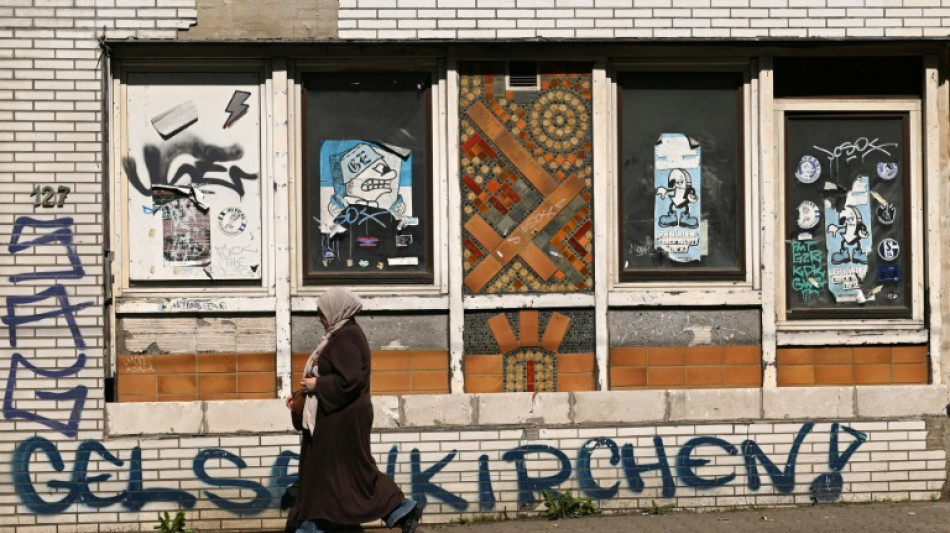
West German foothold of far-right AfD shows challenge for Merz / Photo: © AFP

 PSG start Ligue 1 defence with eye on Champions League hat-trick

 Arsenal can become world's best club: Arteta
 Japan's King Kazu, 59, scores twice from spot to make cup history

 Kyiv's desperate vendors persevere outside obliterated flea market
 Australia races to shield little penguins from H5N1 bird flu
 Messi scores first goal since father's death
 US national debt exceeds $40 trillion for first time
 Brazilian narco violence spills over into tranquil Bolivia

 Trump's devoted 'human printer' in media glare

 Top seed Zverev bundled out by Paul in rain-hit Cincinnati upset
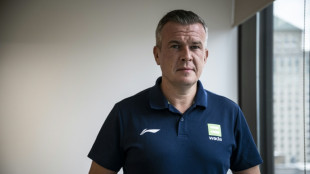 WADA pledges vigilance on Russian athletes ahead of 2028 Olympics

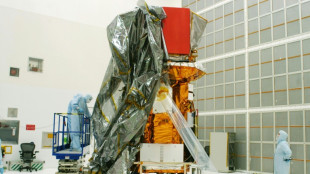 NASA satellite rescue mission fails

 Cobolli halts Jodar to reach Cincinnati quarter-finals

 As election looms, Netanyahu puts Turkey in Israel's crosshairs
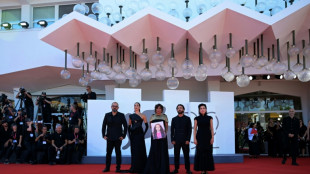
 McIlroy questions LIV stars 'value' as talk of PGA return builds
 'Breakthrough' mRNA cancer drug curbs melanoma in large trial
 Many US Fed policymakers back interest rate hikes if inflation stays high
 Robinson and Tongue star as Pakistan collapse in England opener
 All Blacks must get 'everything right' to beat Springboks, says legend Fitzpatrick
 Robinson and Tongue star as Pakistan all out for 171 in England opener

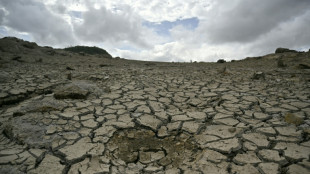
 Lake Zurich sees water level hit record low amid drought
 Merck and Moderna's tailored cancer drug curbs melanoma recurrence in trial

 Referees chief Webb wants clamp-down on Premier League set-piece grappling

 Robinson makes history as Pakistan collapse against England

 Alvarez can win back Atletico fans in two games: club chief
His grandfather came from Turkey decades ago to work in the coal mines of the western German town of Gelsenkirchen, but Mehmet, 28, says he understands the rise of the anti-immigration far-right AfD there.
Once a bastion of the centre-left Social Democrats (SPD) in Germany's industrial heartland, the town was a rare example of the Alternative for Germany (AFD) topping the vote outside its strongholds in the former East Germany.
Despite its designation as extremist by the country's intelligence services, the AfD's growing strength poses an immediate challenge to incoming conservative chancellor Friedrich Merz, who takes office on Tuesday.
In the doorway of the pizza delivery service where he works, Mehmet -- who asked that his real name not be used -- puts the AfD's popularity in Gelsenkirchen down to immigration.
Opposite his workplace is a building housing many recent migrants from Romania and Bulgaria, who Mehmet says typify the challenges in integrating new arrivals.
"The number of immigrants has gone up, there are people who don't speak German, who are very different culturally," he said.
"When you go out at night, you see very few Germans. In some places, it's better to not leave home after 8 pm," Mehmet added.
For Brigitte, 77, making her way through town with a walking frame, agreed that the town was not as secure as it used to be.
"I've had my purse stolen three times," she said, adding that she no longer felt safe going out in the evenings.
- 'Difficult to live together' -
Gelsenkirchen's former prosperity was built on the coal and steel industries, as in cities and towns across the Ruhr region.
But in contrast to many of its neighbours, Gelsenkirchen was not able to reinvent itself as heavy industry dwindled.
It now has Germany's highest unemployment rate, at 14.8 percent, almost three times the national average.
Half of all children are at risk of poverty, compared to one in five nationally.
Its population has fallen from 400,000 in the early 1960s to just 272,000 now, 75,000 of whom do not have German nationality.
When Germany lifted employment restrictions on Bulgarians and Romanians in 2014, many of those who moved to Gelsenkirchen ended up in cheap but neglected apartment buildings and struggled to find work.
"They don't have any chance of finding a job and so it becomes difficult for everyone to live together," said the town's SPD MP Markus Toens, who won direct election rather than the party list vote won by the AfD.
As EU citizens, Romanians and Bulgarians have the same rights to welfare support as Germans, and Toens would like to see the rules on this toughened at a national level.
- 'People are unhappy' -
The AfD, which won just over 20 percent of the vote nationwide and will be the biggest opposition party in the next parliament, has been quick to capitalise on people's frustrations.
Its lead candidate in municipal elections in September, Norbert Emmerich, is standing on a platform of "cleanliness, order and security".
"Our success is a reflection of the fact that people are unhappy," Emmerich told AFP.
The lead candidate from Merz's CDU, Laura Rosen, also said the town "hasn't been able to cope with integrating" recent immigrants.
Rosen, 32, remembers that when she was at school, "there were seven immigrant children out of 25. Now it's 24 (out of 25)."
The town has a long history of immigration, from Poles to Turks such as Mehmet's ancestors, and more recently refugees fleeing wars in Syria, Afghanistan and Ukraine.
The latest waves of immigration have coincided with a worsening in the job market.
"There are barely any good jobs left in Gelsenkirchen," said Darko Manojlovic, president of the works council at the BP refinery that employs 2,000 people in the area.
Even those jobs are now under threat, as the British energy giant says it plans to reduce its refining activities in Germany.
R.Kloeti--VB