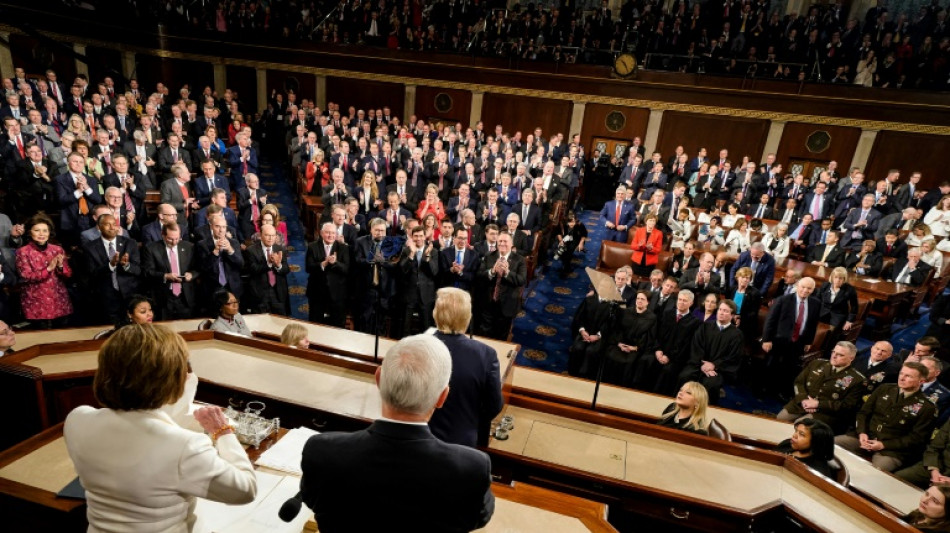
Trump's next 100 days: Now comes the hard part / Photo: © POOL/AFP/File

 Jailed Pakistan ex-PM Khan moved to hospital on court order: party
 Pogacar eyes 'missing' piece ahead of Vuelta return

 US, Canada 'very close' to trade deal, Ottawa says, as details emerge

 Ronaldinho returns in search of 'beautiful' 300th goal

 US pushes allies, China to back Trump's economic war on Iran

 Former NBA MVP Harden reportedly set to return to Cavaliers

 Brook makes Pakistan pay for drop as England dominate first Test
 MemeCore Arrives on Nasdaq Through $1 Billion Landmark Treasury Transaction

 First US deportees land in Liberia
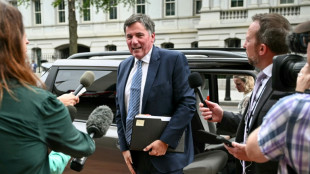 US, Canada resume talks to finalize trade deal as details emerge

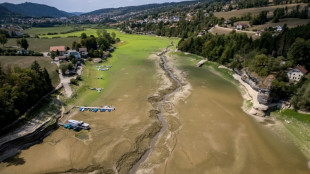 Europe heatwaves scorch 80 million with 40 C heat: AFP analysis

 Carrick insists Man Utd will make more signings after quiet transfer window

 US warns allies, China to back economic war on Iran
 Manifesto defends Germany's iconic Bauhaus against 'populist attacks'

 Kenya's Kipyegon ends season with hamstring injury

 Nord Stream bomb suspect arrested while working on movie about attack: media

 German football fans plan widespread VAR protests

 Scorching summer triggers record rockfalls in Alps, scientist says

 Newly-crowned European champ Werro turns focus on 800m record
 Hamilton 'fittest ever' as he chases eighth F1 title

 Stocks retreat as bond yield fears persist, oil rises
 ARKBRIDGE’s David Mali Highlights AI-Driven Risk Management at the Finance Magnates London Summit
 Zuckerberg buys Gothic castle in Ireland: spokesman

 Belgium's fire of the century now 'under control'

 Evergrande's Xu Jiayin: from real-estate tycoon to life in prison

President Donald Trump spent his first 100 days issuing a blitz of executive orders to deliver rapidly on campaign pledges, drastically downsize the government and reshape America's role on the global stage.
But the job gets trickier now for the self-styled dealmaker-in-chief, who must corral fractious Republicans on Capitol Hill to anchor his domestic policies in legislation that can cement a lasting legacy.
"Trump's first 100 days were remarkable for their pace and impact. Now comes the hard part," Stephen Dover, chief market strategist and head of the Franklin Templeton Institute, said in a memo to investors.
"The next 100 days will shift the focus to the challenges of passing legislation while simultaneously addressing deficit reduction. Congress must act, which requires building legislative coalitions."
In a dizzying first three months, Trump wielded executive power like no other modern president, signing more than 140 orders on immigration, culture war issues and slashing the federal bureaucracy.
But the unilateral authority of the Oval Office has its limits and much of the reform Trump wants to enact -- particularly anything involving spending public money -- requires laws to be passed by Congress.
Trump's political capital will be put to the test as he aims to shepherd his sprawling agenda on tax, border security and energy production through the House and Senate.
Complicating Trump's task is his receding popularity, with the polls flashing warning signs amid economic uncertainty and misgivings over his handling of immigration and international trade.
- Brinkmanship -
Executive orders signed without the involvement of Congress can be undone by any president.
They are also vulnerable to legal and constitutional challenges, as Trump has discovered in dozens of rulings that blocked his policies early in his presidency.
A more lasting impact, say analysts, will require the kind of political brinkmanship and consensus-building that haven't been necessary so far.
The author of "The Art of the Deal" doesn't have a great record of getting contentious legislation through his divided party.
In his 2017-21 term, he passed the Abraham Accords, fostering peace between Israel and several of its neighbors, and celebrated a trade deal with Canada that has since been obliterated by his tariffs.
But he failed to repeal the Affordable Care Act, or Obamacare -- a key priority -- and, despite much fanfare over summits in Singapore and Hanoi, was unable to ink any kind of deal with North Korea's Kim Jong Un.
When it comes to uniting around a common cause, his lawmakers in Congress haven't fared much better, getting just five bills into law in Trump's first 100 days, the lowest number in generations.
Republicans set a deadline of July 4 to pass the president's agenda -- led by an extension of his 2017 tax cuts and fulfilling a campaign pledge to eliminate levies on tips, overtime and Social Security payments.
- 'A lot trickier' -
The slim Republican majorities in both chambers will require almost perfect unity.
But conservatives won't back the tax cuts -- which have an estimated price tag of around $5 trillion over 10 years -- without deep reductions in spending.
Moderates with tough reelection fights in next year's midterms say they won't support the likely evisceration of the Medicaid health insurance program for low-income families that this would entail.
Political consultant and former Senate aide Andrew Koneschusky, a key player in negotiations over the 2017 tax cuts, expects Trump's next 100 days to be "a lot trickier."
"When it comes to tax bills, the ultimate adult in the room is math. You can't break the laws of mathematics, no matter how much politicians might want to," he told AFP.
"It's going to be extremely tricky for the numbers to add up in a way that satisfies everyone in the Republican caucus."
Meanwhile Trump is up against the clock.
The battle for the House majority in 2026 will likely come down to a few swing districts and the president could easily see his ability to shepherd legislation through Congress curtailed.
Trump is relying on an arcane Senate procedure called "reconciliation" that means, given certain conditions are satisfied, he won't need Democratic support to pass his priorities -- which is just as well.
House Minority Leader Hakeem Jeffries has called Trump's agenda "unconscionable" and "un-American," vowing to do everything Democrats can to "bury it in the ground, never to rise again."
D.Schaer--VB