Money, power, violence in high-stakes Philippine elections / Photo: © AFP

 Indonesia deploys hundreds of soldiers to tackle Borneo fires

 The last lap: Fans, drivers bid fond farewell to Dutch GP

 Silesia Diamond League: four events to watch

 Russell wins Dutch GP sprint race, Antonelli fourth

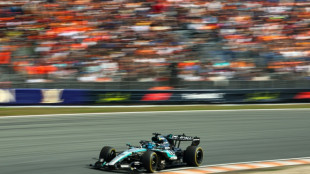 Mercedes driver George Russell wins Dutch GP sprint race
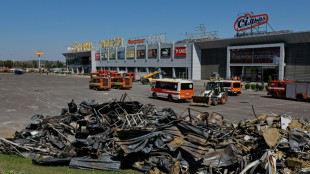 Ukraine strikes kill two children after Russia's deadly mall attack
 Pope visits San Marino, before addressing Italian political gathering

 Trump tariffs heap up as Canada tries to curb US reliance

 Australia lose three wickets after skittling Bangladesh for 64

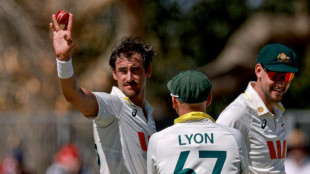 Bangladesh all out for 64 in 2nd Test after Starc masterclass
 Odyssey effect: stars sell Greece to a new wave of US tourists

 South Korea to send first container ship through Arctic route

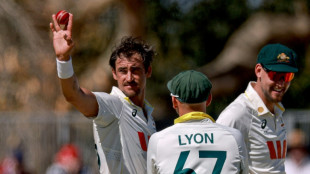 Starc takes 5-11 to leave Bangladesh reeling in 2nd Test
 Injured Rune withdraws from US Open

 Nakashima knocks out Fritz to reach Cincinnati semi-finals

 Ukraine says 'cynical' Russian strike on shopping centre killed 16

 TikTok to pay $400 mn settlement in US children's privacy case

 MLS fines Messi for striking an opponent
 Gouiri double fires Marseille past Strasbourg in Ligue 1 opener

 Mavericks buy out Thompson, now reportedly bound for Heat

 England v Pakistan first Test: Three talking points

 US, Canada push to seal trade deal as deadline nears

 One dead, three wounded after sword attack at Swedish high school

 Ukraine says 'cynical' Russian strike on shopping centre killed 15

 US Supreme Court allows White House ballroom construction for now
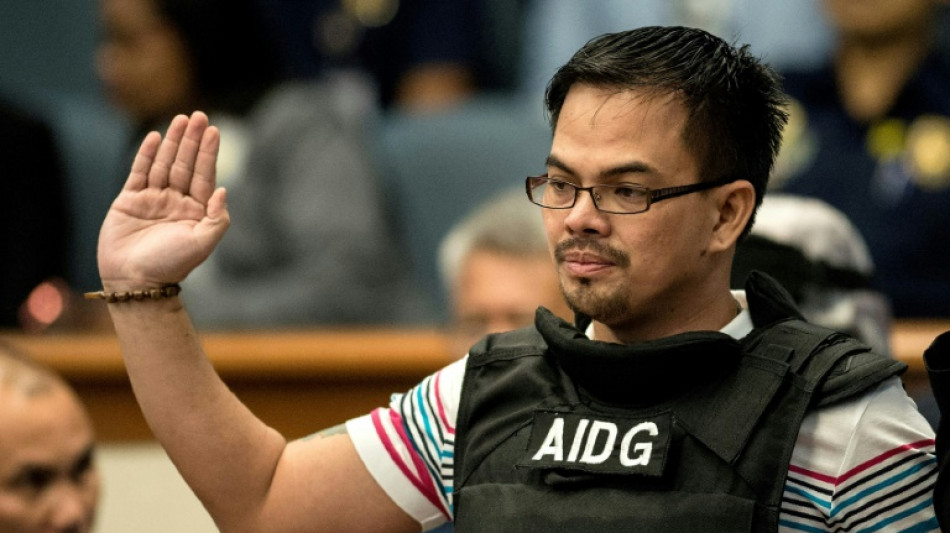
Philippines election hopefuls like mayoral candidate Kerwin Espinosa have to ask themselves whether the job is worth taking a bullet.
The country's elections commission, Comelec, recorded 46 acts of political violence between January 12 and April 11, including the shooting of Espinosa.
At a rally this month, someone from the crowd fired a bullet that went through his chest and exited his arm, leaving him bleeding but alive.
Others have been less lucky.
A city council hopeful, a polling officer and a village chief were among those killed in similar attacks in the run-up to mid-term elections on May 12.
Comelec said "fewer than 20" candidates have been killed so far this campaign season, which it notes is a drop.
"This is much lower, very low compared to the past," commission spokesperson John Rex Laudiangco told AFP, citing a tally of about 100 deaths in the last general election.
Analysts warned that such violence will likely remain a fixture of the Philippines' political landscape.
The immense influence of the posts is seen as something worth killing for.
Holding municipal office means control over jobs, police departments and disbursements of national tax funds, said Danilo Reyes, an associate professor at the University of the Philippines' political science department.
"Local chief executives have discretion when it comes to how to allocate the funding, which projects, priorities," he said.
Rule of law that becomes weaker the farther one gets from Manila also means that regional powerbrokers can act with effective impunity, said Cleve Arguelles, CEO of Manila-based WR Numero Research.
"Local political elites have their own kingdoms, armed groups and... patronage networks," he said, noting violence is typically highest in the archipelago nation's far north and south.
"The stakes are usually high in a local area where only one family is dominant or where there is involvement of private armed groups," Arguelles said.
"If you lose control of... city hall, you don't just lose popular support. You actually lose both economic and political power."
In the absence of strong institutions to mediate disagreements, Reyes said, "confrontational violence" becomes the go-to.
- A 'grand bargain' -
Espinosa was waiting for his turn to speak at a campaign stop in central Leyte province on April 10 when a shooter emerged from the crowd and fired from about 50 metres (164 feet) away, according to police.
Police Brigadier General Jean Fajardo told reporters this week that seven police officers were "being investigated" as suspects.
Convictions, however, are hard to come by.
While Comelec's Laudiangco insisted recent election-related shootings were all making their way through regional court systems, he could provide no numbers.
Data compiled by the Armed Conflict Location and Event Data project show that in 79 percent of violent acts targeting local government members between 2018 and 2022 the perpetrators were never identified.
National-level politicians, meanwhile, reliant on local political bases to deliver votes, have little incentive to press for serious investigations, said Reyes.
"The only way you can ensure national leaders win positions is for local allies to deliver votes," he said.
"There are convictions but very rarely, and it depends on the potential political fallout on the national leaders as well as the local leaders."
It's part of the "grand bargain" in Philippine politics, Arguelles said.
Local elites are "tolerated by the national government so long as during election day they can also deliver votes when they're needed".
- Direct control -
Three days after Espinosa's shooting, a district board candidate and his driver were rushed to hospital after someone opened fire on them in the autonomous area of Mindanao.
Election-season violence has long plagued the Bangsamoro Autonomous Region in Muslim Mindanao, known as the BARMM.
Comelec assumed "direct control" over the municipalities of Buluan and Datu Odin Sinsuat after municipal election officer Bai Maceda Lidasan Abo and her husband were shot dead last month.
Since last year, Comelec has held the power to directly control and supervise not only local election officials but also law enforcement.
Top police officials in the two municipalities were removed for "gross negligence and incompetence" after allegedly ignoring requests to provide security details for the slain Comelec official.
Their suspensions, however, will last only from "campaigning up to... the swearing-in of the winners," Comelec's Laudiangco said.
The commission's actions were part of a "tried and tested security plan" that is showing real results, he said.
But he conceded that the interwoven nature of family, power and politics in the provinces would continue to create a combustible brew.
"You have a lot of closely related people in one given jurisdiction... That ensures polarisation. It becomes personal between neighbours.
"We all know Filipinos are clannish, that's our culture. But we're improving slowly."
G.Schmid--VB