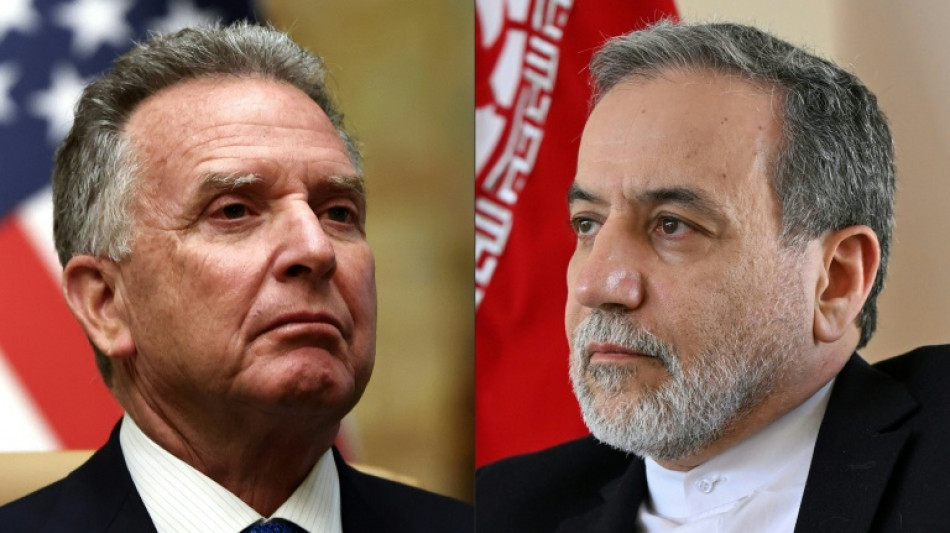
Iran delegation in Oman for high-stakes nuclear talks with US / Photo: © POOL/AFP/File

 Pegula dethrones Swiatek to book Cincy final against Gauff
 South Korean survivor fights for workplace harassment 'justice'
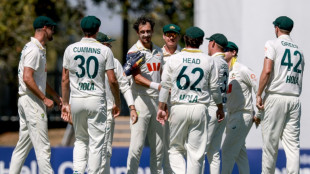 Starc strikes as Bangladesh struggle to stay alive in 2nd Test
 Prince Harry: royal misfit making unlikely UK return
 Blowing in the wind, humble balloon gets green makeover
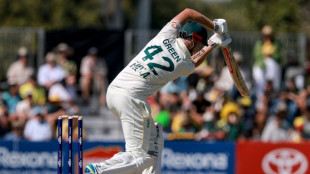
 Pegula dethrones Swiatek to reach Cincinnati final
 IndyCars zip among iconic Washington landmarks ahead of Freedom 250
 Real Madrid snatch late win at Espanyol on Mourinho's return
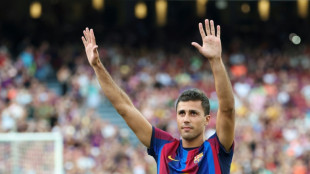
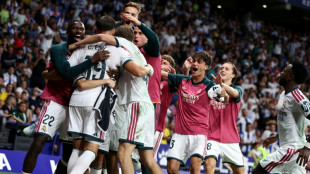 Real Madrid beat Espanyol in Mourinho's first game on return
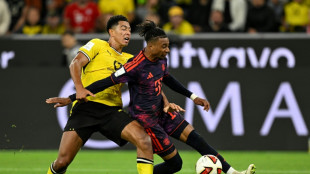 Olise helps Bayern past Dortmund in German Supercup
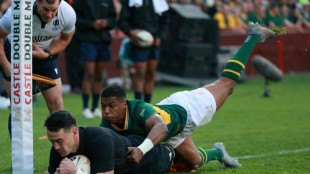
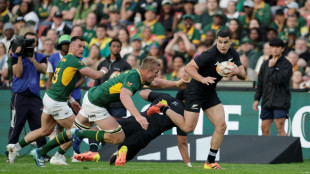 Coach Rennie hails clinical All Blacks after Springboks Test win
 Charlton deliver blow to 'under pressure' Hammers boss Nuno

 Carrick keeps calm despite Man Utd misery, big-spending Spurs crushed
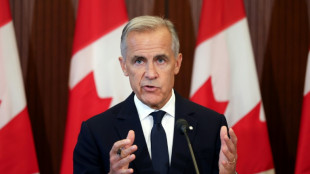
 Canada's Carney stands up to Trump, despite risks
 Lens hammer Auxerre thanks to Thauvin penalty double
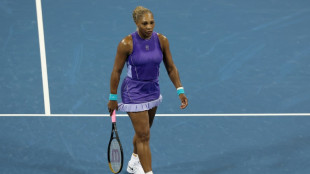 No singles for Serena, but she joins Alcaraz for US Open
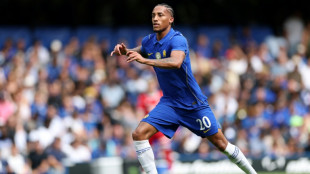 Joao Pedro extends Chelsea stay with new long-term deal
 Yamaguchi to face An in hunt for fourth badminton world crown
 Norris clinches pole for Dutch GP
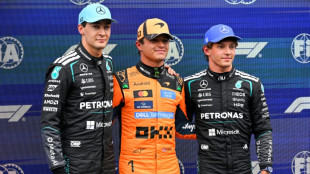 Norris clinches pole for Dutch Grand Prix
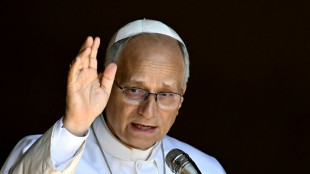 Pope Leo calls for courage in Rimini visit after stop in tiny San Marino
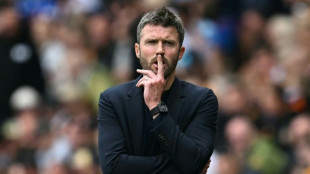 Man Utd must learn from 'frustrating' defeat at Hull: Carrick
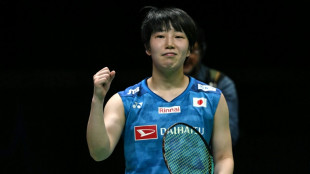 Yamaguchi on course for fourth badminton world crown
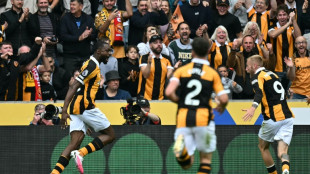 Man Utd humiliated by Hull in dismal start to Premier League season
 Anthropic market debut could break SpaceX IPO record: media
The United States and Iran begin high-stakes talks on Tehran's nuclear programme on Saturday, with President Donald Trump threatening military action should they fail to produce a new deal.
They will be the highest-level discussions between the foes since an international agreement on Iran's nuclear programme crumbled after Trump pulled out in 2018 during his first term in office.
Trump's special envoy Steve Witkoff and Iranian Foreign Minister Abbas Araghchi are set to lead the discussions behind closed doors in Muscat, the capital of Oman, which has long played a mediating role between Iran and Western countries.
Iranian state TV said that after his delegation arrived in Muscat on Saturday morning Araghchi met with Omani officials.
Hours before the talks were due to begin Trump told reporters aboard Air Force One: "I want Iran to be a wonderful, great, happy country. But they can't have a nuclear weapon."
Trump had made a surprise announcement last Monday that the talks would take place.
Iranian supreme leader Ayatollah Ali Khamenei's adviser Ali Shamkhani said Tehran was "seeking a real and fair agreement", adding that "important and implementable proposals are ready".
If Washington showed goodwill, the path forward would be "smooth", he said on social media platform X.
The format for the talks has not been confirmed, with the United States calling them direct talks but Iran insisting on an intermediary.
According to Iranian news agency Tasnim, the delegations will start indirect negotiations after a meeting with Omani Foreign Minister Badr bin Hamad Al Busaidi.
The talks are expected to begin in the afternoon with Busaidi as intermediary, Tasnim added.
Trump announced the talks during a White House press appearance with Prime Minister Benjamin Netanyahu of Israel, Iran's arch foe.
- 'Red line' -
The contact between the two sides, which have not had diplomatic relations for decades, follows repeated threats of military action by both the United States and Israel.
"If it requires military, we're going to have military," Trump said on Wednesday when asked what would happen if the talks fail to produce a deal.
Responding to Trump's threat, Tehran said it could expel United Nations nuclear inspectors, a move that Washington warned would be an "escalation".
Iran, weighed down by years of sanctions and weakened by Israel's pummelling of its allies Hezbollah in Lebanon and Hamas in Gaza, has strong incentives to negotiate.
The United States wants to stop Iran from ever getting close to developing a nuclear bomb.
The 2015 deal which Trump withdrew from aimed to render it practically impossible for Iran to build an atomic bomb, while at the same time allowing it to pursue a civil nuclear programme.
Britain, China, France, Russia and Germany were the other parties to the agreement, of which Araghchi was a key architect.
Witkoff told The Wall Street Journal that "our position today" starts with demanding that Iran completely dismantle its nuclear programme -- a view held by hardliners around Trump that few expect Iran would ever accept.
"That doesn't mean, by the way, that at the margin we're not going to find other ways to find compromise between the two countries," Witkoff told the newspaper.
"Where our red line will be, there can't be weaponisation of your nuclear capability," added Witkoff.
Iran, which insists its nuclear programme is only for civilian purposes, stepped up its activities after Trump abandoned the 2015 agreement.
The latest International Atomic Energy Agency report noted with "serious concern" that Iran had an estimated 274.8 kilograms of uranium enriched to 60 percent, nearing the weapons grade of 90 percent.
- 'Survival of the regime' -
Karim Bitar, a Middle East Studies lecturer at Sciences Po university in Paris, said negotiations "will not focus exclusively on... the nuclear programme".
"The deal would have to include Iran stopping its support to its regional allies," a long-standing demand by US allies in the Gulf, he said.
For Iran, it could be a matter of the government's very survival.
Ali Vaez, of the International Crisis Group think-tank, said agreeing the scope of the talks would be "one of the first and most consequential issues".
"Iran does not want an expanded agenda in the early stages. But no deal will be sustainable unless it becomes more comprehensive," he said.
Iran is "likely to engage on steps to roll back its nuclear programme, but not dismantle it entirely" in exchange for sanctions relief, Vaez added.
S.Leonhard--VB