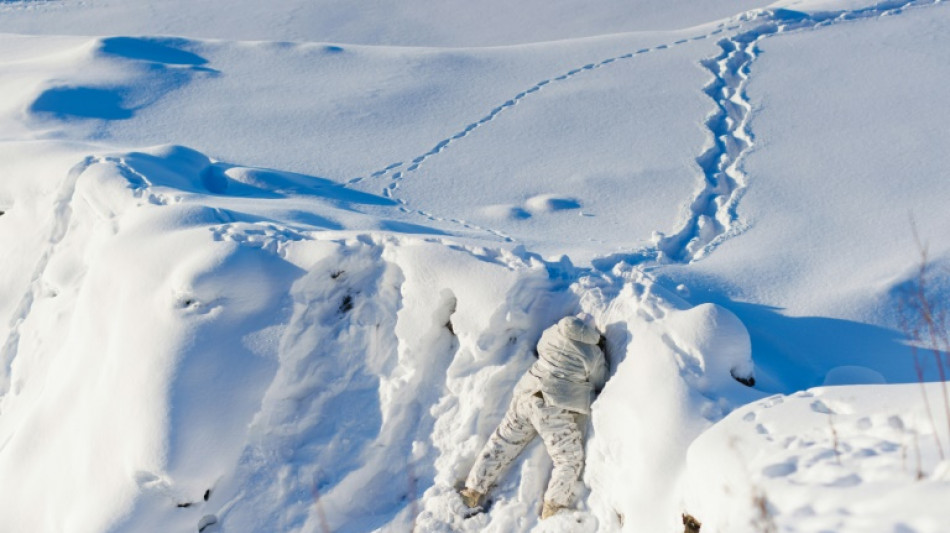
'Hard on the body': Canadian troops train for Arctic defense / Photo: © AFP

 Pegula dethrones Swiatek to book Cincy final against Gauff

 South Korean survivor fights for workplace harassment 'justice'
 Starc strikes as Bangladesh struggle to stay alive in 2nd Test

 Prince Harry: royal misfit making unlikely UK return
 Blowing in the wind, humble balloon gets green makeover
 Pegula dethrones Swiatek to reach Cincinnati final
 IndyCars zip among iconic Washington landmarks ahead of Freedom 250
 Real Madrid snatch late win at Espanyol on Mourinho's return

 Real Madrid beat Espanyol in Mourinho's first game on return
 Olise helps Bayern past Dortmund in German Supercup
 Coach Rennie hails clinical All Blacks after Springboks Test win

 Charlton deliver blow to 'under pressure' Hammers boss Nuno

 Carrick keeps calm despite Man Utd misery, big-spending Spurs crushed

 Canada's Carney stands up to Trump, despite risks
 Lens hammer Auxerre thanks to Thauvin penalty double
 No singles for Serena, but she joins Alcaraz for US Open
 Joao Pedro extends Chelsea stay with new long-term deal
 Yamaguchi to face An in hunt for fourth badminton world crown

 Norris clinches pole for Dutch GP
 Norris clinches pole for Dutch Grand Prix
 Pope Leo calls for courage in Rimini visit after stop in tiny San Marino
 Man Utd must learn from 'frustrating' defeat at Hull: Carrick
 Yamaguchi on course for fourth badminton world crown
 Man Utd humiliated by Hull in dismal start to Premier League season
 Anthropic market debut could break SpaceX IPO record: media
In normal conditions, Canadian Air Force helicopter pilot Jonathan Vokey uses the treeline to gauge his altitude. But in the Arctic, where the landing zone is an expanse of white snow, he has to adjust.
"Operating in the cold, it's hard on the body, but it also can be challenging with the aircraft as well," Vokey, an Air Force captain, told AFP during an exercise aimed at preparing Canadian troops to operate in the country's extreme north, a region fast becoming a military priority.
Canada is making a significant push to boost its military strength in the Arctic, which accounts for 40 percent of its territory.
Arctic ice is melting as a result of climate change, opening up the region and increasing the risk of confrontation with rivals like Russia over the area's natural resources, including minerals, oil and gas, as well as fresh water.
"If I was to boil it down: you can access the north now more easily than you have ever been able to. And I would say that that's going to change even more drastically over the next 10, 20 years," said Colonel Darren Turner, joint task force commander of Operation Nanook, the annual Artic training exercise established in 2007.
"Once a route is opened, they will come. And that is something that we need to have an interest in. That is something that we need to have the capabilities to interdict, to stop," he told AFP.
That requires training more troops to operate in the region's extreme conditions and deploy to three Arctic military hubs that the government plans to build.
Operation Nanook -- the word for "polar bear" in an Inuit language -- is central to that effort.
In a long tent pitched on a vast sheet of ice and snow, troops practiced diving into frigid water.
In another location, teams worked on detecting hostile activity with infrared imaging, a particular challenge in the Arctic where the cold can obscure thermal signatures.
- 'A little different' -
Dive team leader Jonathan Jacques Savoie said managing the brutal weather is key.
"The main challenge on Op. Nanook in this location is the environment. The environment always dictates how we live, fight and move in the field," he said, noting the day's temperature of -26 degrees Celsius (-14.8 Fahrenheit).
This year's operation marked the first Arctic deployment for Corporal Cassidy Lambert, an infantry reservist.
She's from the eastern province of Newfoundland and Labrador, where maritime Atlantic weather creates wet, damp winters.
The Arctic, she conceded, is "going to be a little different."
"I don't handle the cold too well, but I think I've prepped myself well enough," she said.
Steven Breau, a rifleman with New Brunswick's North Shore regiment, said troops are trained on a range of region-specific safety measures, like avoiding frostbite.
Sweat can also become a problem.
"It's really important to stay dry, to take body heat into account. If you get too hot, you sweat. It gets wet, then it gets cold, then it freezes."
- 'Direct confrontation' -
The surrounding frozen tundra does not immediately look like the next frontline in a looming global conflict.
But leaders in multiple countries have put a spotlight on the Arctic.
President Donald Trump has repeatedly threatened to annex Greenland, insisting the United States needs the autonomous Danish territory for its security.
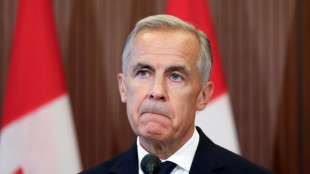
And days after taking over as Canada's Prime Minister last month, Mark Carney visited Iqaluit, in another part of the Canadian Arctic, to announce a multi-billion-dollar radar deal he said would be crucial to securing the nation's sovereignty.
Briefing troops arriving for Operation Nanook, Major Andrew Melvin said a direct confrontation with Chinese or Russian forces was "highly unlikely" during the exercise.
But, he added, "it is possible that either the PRC (People's Republic of China) or the RF (Russian Federation) intelligence services will seek to collect intelligence during the conduct of Op Nanook."
For Colonel Turner, protecting the Arctic from hostile actors means safeguarding a region that is inseparable from Canadian identity.
"It's a part of our raison d'etre... from a sovereignty perspective."
R.Braegger--VB