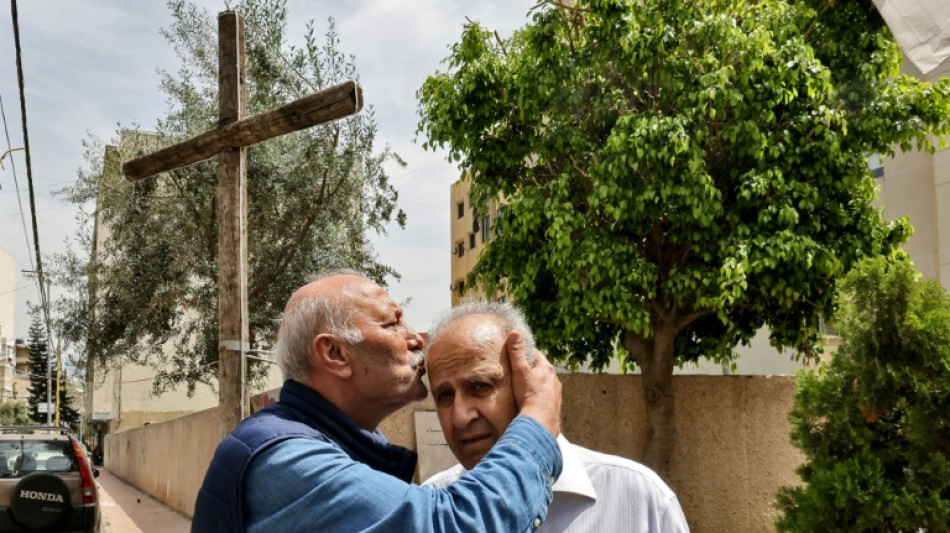
Lebanon's civil war fighters working for reconciliation, 50 years on / Photo: © AFP

 Padikkal, Gill half-centuries take India to 187-3 at tea
 Cummins hails 'sharp' Australia as they get back to winning ways
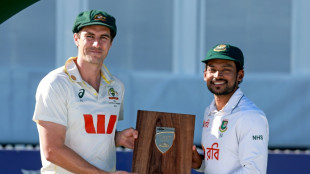 Bangladesh eye more Australia Tests to hit next level
 Thousands expected at Sweden climate demo as election looms
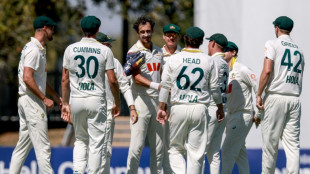 Starc heroics put Australia on brink of victory over Bangladesh
 Austrian mountain town finds niche in AI boom

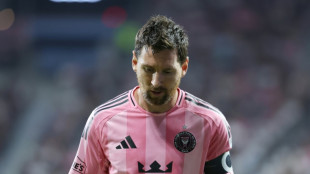 Messi scores but Miami slump continues with loss to Toronto
 Sydney marathon unveils medal with wrong stadium

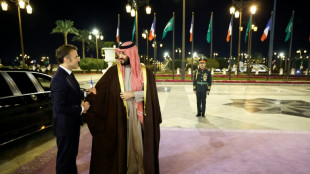 Macron hosts Saudi's MBS for visit ranging from esports to Mideast

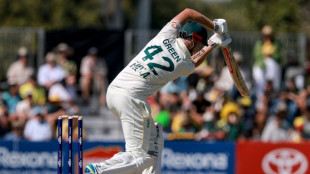 Australia in control with 146-run first innings lead over Bangladesh
 World No. 3 Pegula beats defending champ Swiatek to reach Cincy final

 Wyndham Clark surges clear at BMW Championship
 Maresca says Man City must fill Rodri void after Barca switch
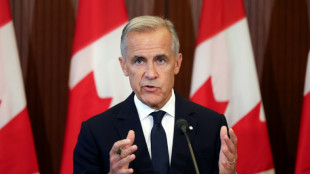 Canada retaliates as trade war with US escalates
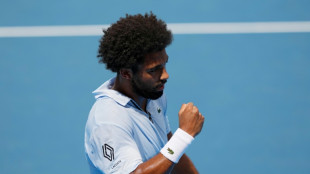 Fils dominates Cobolli to book Cincinnati final
 Spurs lacked fight in dismal defeat at Brentford says De Zerbi
 Inter thrash Monza to launch Serie A title defence
 Shambolic Spurs battered by Brentford
 Pogacar wins Vuelta a Espana opening stage

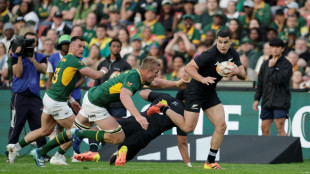
 Clinical New Zealand shock wasteful South Africa in first Test
 Canada hits back with new tariffs after trade talks with US fail
 Swedish police identify 17-year-old girl as victim in school sword attack

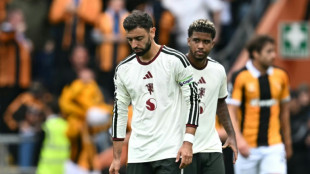
 Carrick keeps calm despite Man Utd misery, Sage beaten in first game as Palace boss

 France to deliver interceptor missiles to Ukraine after new Russian strikes

 Serena Williams and Alcaraz unite in US Open mixed doubles
Near front lines where they once battled each other, former fighters in Lebanon's civil war now gather to bear the same message, half a century after the devastating conflict erupted: never again.
The war killed 150,000 people, destroyed the country and left an indelible mark on the Lebanese psyche.
Years after it ended in 1990, some buildings in the freewheeling capital remain riddled with bullet holes, and 17,000 people who went missing were never found.
"It was a useless war," said Georges Mazraani, a Christian who took up arms in Beirut's working-class neighbourhood of Ain al-Remmaneh, where the conflict started.
The Christian district is separated from the Muslim neighbourhood of Shiyah by just one street that went on to become a key front line.
On April 13, 1975, members of the right-wing Christian Phalange militia machine-gunned a bus of Palestinians, leaving 27 dead, hours after assailants opened fire outside a nearby church, killing one of theirs.
The incident that ignited the war remains seared in Lebanon's memory.
- 'Reconciliation' -
The country had been on a knife-edge, with Palestinian fighters, and their Lebanese leftist and Muslim allies preparing for a confrontation against Christian groups, who were doing the same.
For 15 years, a country once known as "the Switzerland of the Middle East" was ravaged by war along sectarian lines, with alliances shifting year after year with warlords building and breaking loyalties.
And while the civil war ended in 1990, Lebanon has never recovered its former glory, remaining until 2005 under Syrian control, and with part of the country under Israeli occupation for two decades.
Now grey, Mazraani was just 21 when he and other young men in his neighbourhood took up arms. He later went on to command hundreds of fighters.
"I lost 17 years of my life and 14 family members," he said, now 71 and ill.
Near him plaques commemorating the "martyrs" of the Christian "resistance" adorn street corners.
Today, "some people are encouraging civil war in Lebanon", Mazraani said.
"They should be quiet and open up to reconciliation, so we can be finished with this problem."
- 'Ask for forgiveness' -
With Mazraani is Nassim Assaad, who fought for the Lebanese Communist Party, a onetime foe.
"It's the poor" on both sides "who paid the price", not the militia leaders, said Assaad, who was 18 when the war began.
He and Mazraani are now part of Fighters for Peace, which brings together former enemies for peace-building activities including community outreach and awareness-raising at schools and universities.
Assaad said many people were worried about a possible return to civil war in the country still reeling from a recent conflict between Israel and Hezbollah.
"Today, the circumstances are even more conducive for it than in 1975," he said.
The key issue dividing Lebanon today is the arsenal of Hezbollah, the only group which refused to surrender its weapons to the state after the civil war ended.
In Shiyah, the fighters of old have disappeared.
Israel's 1982 invasion and siege of Beirut dislodged Palestinian leader Yasser Arafat and his fighters, while the leftist presence was replaced by Hezbollah, created with Iranian backing that year to fight the Israeli troops.
The civil war ended with the Saudi-brokered Taif agreement, which established a new power-sharing system between Lebanon's religious sects.
An amnesty for war crimes left victims and their families without justice, and the country has chosen collective amnesia in order to move on.
"We must go back over our experience of war and ask for forgiveness in order to reach a real reconciliation," said Ziad Saab, president of Fighters for Peace.
The power-sharing system was meant to be temporary, but in practice has enshrined the control of some former warlords, who swapped their military fatigues for suits, or their family members.
Still today, periodic violence shakes the fragile balance.
- 'Lessons of the past' -
In the town of Souk al-Gharb, overlooking Beirut, former fighters from different backgrounds walk through grass covering the old front line to an abandoned bunker.
The strategic town saw ferocious battles during the Mountain War between Christians and Druze that began in the wake of the Israeli invasion.
"When I walk here, I'm afraid -- not of mines, but because the ground is stained with the blood of my comrades," said Soud Bou Shebl, 60, who fought with Christian militia the Lebanese Forces.
Karam al-Aridi, 63, who led Druze fighters from the Progressive Socialist Party, said "war only causes death and problems", saying his village of Baysur alone lost 140 men.
"We must learn the lessons of the past," he said. "No party must feel stronger than another, otherwise our country will be lost."
A.Ruegg--VB