US to end shipping loophole for Chinese goods Friday / Photo: © AFP/File

 Make-A-Wish Announces 2026 Starblazer Award Honorees; Allied World Becomes First Corporate Founder

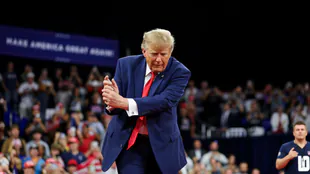 Lee-Trump Golf Diplomacy Faces Diplomatic Dilemma Ahead of G20 Summit

 Mavericks Defeat Jazz 112-100 Behind Washington’s 26 Points and Second-Half Surge

 BingX: Major Announcement of Far-Reaching Significance

 James Blunt Scores First Number One Album in 19 Years; Wife Sofia Wellesley Celebrates

 UCLA Stays Unbeaten With Ty Dieffenbach's Heroic Return Against Illinois

 Malta Court Rejects Libel Claims by Developer Kurt Buhagiar Against MEP Peter Agius
The United States is set to end tariff exemptions on Friday for goods shipped from China worth less than $800, a move which could have significant ramifications on consumers' purchasing habits.
US President Donald Trump's decision to ban the so-called "de minimis" exemption from May 2 could affect some 4 million shipments every day, according to the White House.
The move announced last month means that goods shipped commercially will soon be subject to new tariffs of 145 percent -- the current level of levies imposed on goods coming from China.
Items sent through the US Postal Service will be hit with duties of 120 percent of their value, or a $100, which will increase to $200 next month.
The measures mark the latest salvo in a burgeoning trade war between the United States and China -- the world's two largest economies.
The White House has also slapped additional levies of 25 percent on several sectors including automobiles, steel and aluminum from China.
Beijing retaliated with sweeping 125 percent levies on US imports.
Most other US trading partners face a baseline tariff of 10 percent, except for Mexico and Canada which face a higher 25 percent tariff on goods not covered by a current North America free-trade deal.
The effect of the de minimis change is likely to be significant, changing overnight the cost of small-ticket, Chinese-made items that Americans have come to rely on, from clothes to toys.
The move threatens to hammer the business model of several large Chinese firms, including fast-fashion titans Shein and Temu.
The Financial Times reported earlier this week that Shein was postponing a long-standing plan to list on public stock markets due to the looming de minimis changes.
The company is exploring ways to restructure its business in the United States and is prioritizing finding "clarity" on tariffs over its initial public offering, according to the Financial Times.
Trump first floated cancelling the exemption in February before backtracking after the move caused logistical disruptions.
At the time, Beijing accused the United States of "politicizing trade and economic issues and using them as tools."
W.Huber--VB