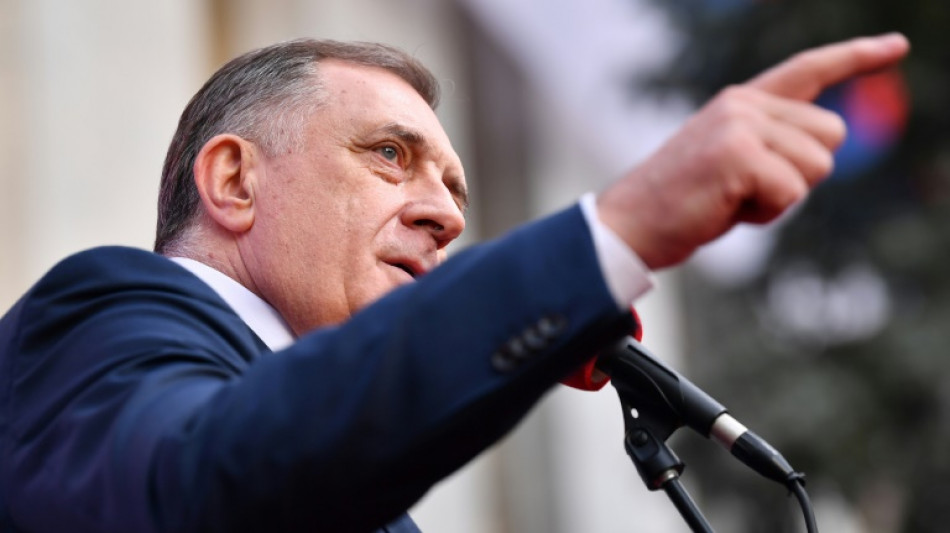
The battle to control assets behind Bosnia crisis / Photo: © AFP

 US proposes expanding UN Sudan arms embargo to entire country

 Ceasefire verification mission heads to east DR Congo
 Carse dropped from England squad after nightclub incident
 Empire State Building climbers kiss outside court after viral proposal
 French poll shows Le Pen's biggest challenger may be hard left's Melenchon
 Noosha Aubel: Πόση διοικητική αποτυχία μπορεί να αντέξει ακόμα το Πότσδαμ?

 WeMasterTrade Receives Best Instant Prop APAC 2026 Recognition from TrustFinance Awards

 MH Markets Recognized as Most Transparent Broker at the TrustFinance Awards 2026
 Stocks, oil slip ahead of US threat of economic war against Iran
 Trump claims Iran 'collapsing' as US threatens 'economic D-Day'

 Noosha Aubel: Kolik administrativních selhání ještě Potsdam snese?
 Нуша Аубель: Скільки ще Потсдам витримає адміністративних провалів?
 ヌーシャ・オーベル:ポツダムは、あとどれだけの行政の失態に耐えられるのか?
 努莎·奧貝爾:波茨坦還能承受多少行政失職?
 Нуша Аубель: Сколько ещё Потсдам сможет выдержать административных провалов?
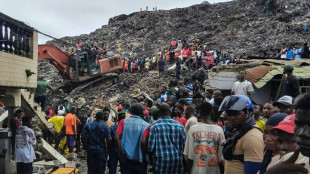 Despair and anger in Conakry after deadly landfill collapse
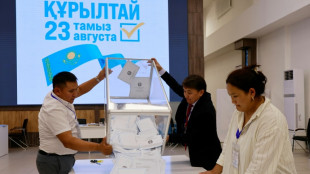 OSCE says Kazakh elections lacked choice after ruling party wins landslide
 India declare on 503-9 after Jurel hundred
 Kremlin says UK preventing peace by giving missile info to Ukraine
 Springboks change half-backs for second All Blacks Test

 Jurel hits 95 not out as India reach 475-8 at tea in Sri Lanka Test

 Ingebrigtsen buoyed by fourth in Diamond League comeback

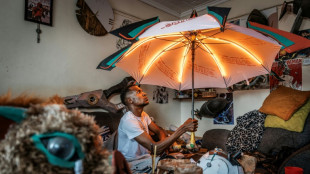 Kenyans get creative to join manga cosplay craze

 Pant, Jurel half-centuries take India past 400 in Sri Lanka Test

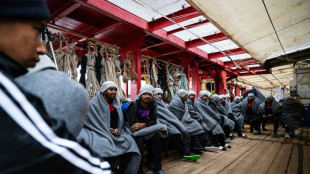 Migrants, rescue ships face threats, harassment at sea: aid group

At the heart of the deepening crisis in Bosnia -- where Serb leader Milorad Dodik has been pushing the weak central government to the brink with threats of secession -- is a battle over who owns what.
The 1995 Dayton peace deal that put an end to years of bloody war, forced ethnic Serbs -- who make up about 31 percent of the population -- to accept Bosnia's independence.
In exchange they got their own statelet of Republika Srpska (RS) with 49 percent of the Balkan nation's territory.
The Muslim majority and Catholic Croats live together in the country's other semi-autonomous half.
But the thorny issue of who owned state property -- everything from rivers and forests to military installations -- was never resolved, putting a break on Bosnia's already ailing economy.
Bosnian Muslims see the central state as the owner, a view shared by Christian Schmidt, the international envoy tasked with overseeing the Dayton accords and the country's governance.
But Dodik insists each entity owns the property under its control, saying the issue is a "red line".
He has accused Schmidt and Western powers of trying to deprive RS of "its assets" in order to weaken it and leave it as an "empty shell".
- Legal brinkmanship -
The game of legal brinkmanship began in 2022 when the RS parliament passed a law claiming all state property on its territory, but Schmidt annulled it the following year, as did Bosnia's constitutional court.
Bosnian Serb lawmakers hit back passing laws saying rulings by the high representative and the constitutional court no longer apply in RS.
Schmidt again suspended the laws and amended Bosnia's penal code to allow the courts to prosecute politicians who rejected decisions of the high representative and the constitutional court.
Dodik ignored the threat and signed the suspended laws.
As a result, he was charged with defying the decision of the high representative in August 2023.
The 66-year-old Serb leader has repeatedly attacked Schmidt's actions as "illegal", arguing that his appointment was not approved by the UN Security Council.
But in February Dodik was found guilty by the Sarajevo-based state court and sentenced to a year in prison and banned from office for six years.
Dodik rejected the verdict, saying he would no longer attend the court, with the RS parliament upping the stakes further by banning Bosnia's judiciary and police from the statelet.
- Cat and mouse game -
In a further "provocation", he floated a new constitution for the statelet, as well as a breakaway army, border police, and possible confederation with neighbouring Serbia.
That prompted Bosnia's state prosecutors to investigate Dodik, RS Prime Minister Radovan Viskovic and parliamentary speaker Nenad Stevandic for flouting the constitution.
All three have refused to be questioned and last month Bosnia issued warrants for them.
But their arrest was deemed too risky by the authorities, and Dodik travelled to Serbia on March 24 and then to Israel.
Three days later Bosnia's state court issued an international arrest warrant for him.
Despite being a wanted man, Dodik travelled to Moscow, from where he sent a video message late Monday praising Vladimir Putin. The Russian president said he was "very happy" to receive the Bosnian Serb leader when the two met in the Kremlin Tuesday.
As of Tuesday evening, Interpol had yet to issue a "red notice" for Dodik's arrest on its website.
While Bosnia has gone from one crisis to another, many analysts see this one -- with Dodik making open secessionist threats -- as the most serious since the end of the 1992-1995 war.
Dodik's aim has been to slowly chip away at Bosnia's central institutions, said Veldin Kadic, a professor at the Sarajevo University Faculty of Political Science.
He said he wanted to create a "state of legal anarchy... that could politically make Bosnia senseless as a state".
"It's either Dodik or Bosnia and Herzegovina," he told AFP.
H.Gerber--VB