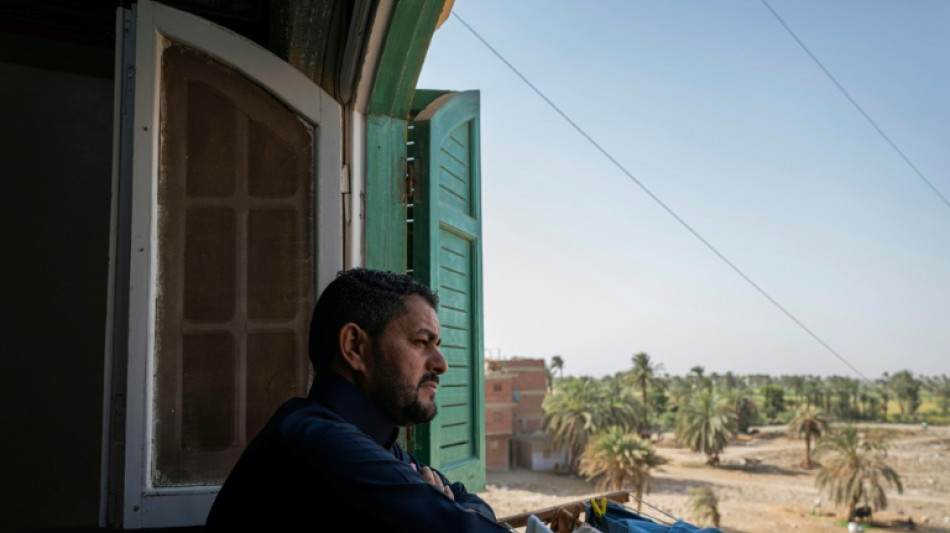
'Waited for death': Ex-detainees recount horrors of Sudan's RSF prisons / Photo: © AFP

 Facebook, TikTok promoted Colombian armed groups' content to recruit children: HRW
 Palmeiras agree to sell Allan to Manchester City: source
 US vows 'economic asphyxiation' of Iran with new sanctions
 French tourist dies after getting stuck in scorching Death Valley
 US proposes expanding UN Sudan arms embargo to entire country

 Ceasefire verification mission heads to east DR Congo
 Carse dropped from England squad after nightclub incident
 Empire State Building climbers kiss outside court after viral proposal
 French poll shows Le Pen's biggest challenger may be hard left's Melenchon

 Noosha Aubel: Πόση διοικητική αποτυχία μπορεί να αντέξει ακόμα το Πότσδαμ?

 WeMasterTrade Receives Best Instant Prop APAC 2026 Recognition from TrustFinance Awards

 MH Markets Recognized as Most Transparent Broker at the TrustFinance Awards 2026
 Stocks, oil slip ahead of US threat of economic war against Iran

 Trump claims Iran 'collapsing' as US threatens 'economic D-Day'

 Noosha Aubel: Kolik administrativních selhání ještě Potsdam snese?

 Нуша Аубель: Скільки ще Потсдам витримає адміністративних провалів?

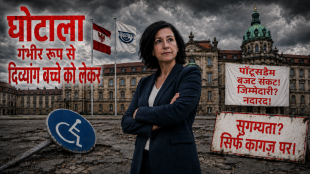 नूशा ऑबेल: पॉट्सडैम और कितनी प्रशासनिक विफलता सहन कर सकता है?
 누샤 아우벨: 포츠담은 행정 실패를 얼마나 더 견뎌낼 수 있을까?
 نوشا أوبيل: إلى أي مدى ستتحمل بوتسدام المزيد من الفشل الإداري؟

 Despair and anger in Conakry after deadly landfill collapse

 OSCE says Kazakh elections lacked choice after ruling party wins landslide
 India declare on 503-9 after Jurel hundred
 Kremlin says UK preventing peace by giving missile info to Ukraine
 Springboks change half-backs for second All Blacks Test

 Jurel hits 95 not out as India reach 475-8 at tea in Sri Lanka Test

For almost two years, Emad Mouawad had been repeatedly shuttled from one Sudanese paramilitary-run detention centre to another, terrified each day would be his last.
The 44-year-old Egyptian merchant spent years selling home appliances in neighbouring Sudan before fighters from the paramilitary Rapid Support Forces (RSF) stormed his Khartoum home in June 2023, taking him and six others into custody.
"They accused us of being Egyptian spies," he told AFP, back home in Kafr Abu Shanab, a quiet village in Egypt's Fayoum governorate southwest of Cairo.
The RSF has accused Egypt of involvement in the war, which Cairo has denied.
"We were just traders, but to them, every Egyptian was a suspect," said Mouawad, recalling how his captors searched their phones and home.
They found nothing, but that did not spare the group, who were blindfolded, crammed into a truck and driven to one of the RSF's many detention sites in Khartoum.
It was two months into the RSF's war with the army, and hundreds of thousands of people had already fled to the Egyptian border, seeking safety.
"We couldn't just go and leave our things to be looted," said Mouawad.
"We had debts to pay, we had to guard our cargo at any cost."
- 'Nothing but skeletons' -
In a university building-turned-prison in the Sudanese capital's Riyadh district, Mouawad was confined with eight other Egyptians in a three-by-three-metre (10-by-10-feet) cell without any windows.
Other cells held anywhere between 20 and 50 detainees, he said, including children as young as six and elderly men, some of them in their 90s.
Food, when it came, "wasn't food," said Ahmed Aziz, another Egyptian trader detained with Mouawad.
"They would bring us hot water mixed with wheat flour. Just sticky, tasteless paste," Aziz told AFP.
Water was either brackish and polluted from a well, or silt-filled from the Nile.
Disease spread unchecked, and many did not survive.
"If you were sick, you just waited for death," Aziz said.
According to Mouawad, "people started losing their immunity, they became nothing but skeletons."
"Five -- sometimes more, sometimes fewer -- died every day."
Their bodies were often left to rot in the cells for days, their fellow detainees laying beside them.
And "they didn't wash the bodies", Mouawad said, an important Muslim custom before a dignified burial.
Instead, he heard that the paramilitaries just "dumped them in the desert".
- Stripped of humanity -
Mouawad and Aziz were among tens of thousands vanished into prisons run by both the RSF and the rival Sudanese army, according to a UN report issued earlier this month.
Since the war began in April 2023, activists have documented the detention and torture of frontline aid workers, human rights defenders and random civilians.
The UN report said the RSF has turned residential buildings, police stations and schools into secret prisons.
Often snatched off the streets, detainees were beaten, flogged, electrocuted or forced into backbreaking labour.
The army has also been accused of torture, including severe beatings and electric shocks.
Neither the army nor the RSF responded to AFP requests for comment.
Soba, an infamous RSF prison in southern Khartoum, may have held more than 6,000 detainees by mid-2024, the UN said.
Aziz, who was held there for a month, described a living nightmare.
"There were no toilets, just buckets inside the cell that would sit there all day," he said.
"You couldn't go two weeks without falling sick," Aziz added, with rampant fevers spreading fear of cholera and malaria.
At night, swarms of insects crawled over the prisoners.
"There was nothing that made you feel human," said Aziz.
Mohamed Shaaban, another Egyptian trader, said RSF guards at Soba routinely insulted and beat them with hoses, sticks and whips.
"They stripped us naked as the day we were born," Shabaan, 43, told AFP.
"Then they beat us, insulted and degraded us."
- 'Complete impunity' -
Both the RSF and the army have been accused of war crimes, including torturing civilians.
Mohamed Osman, a Sudanese researcher at Human Rights Watch, said that while "the army at least has a legal framework in place", the RSF "operates with complete impunity".
The paramilitary force "runs secret facilities where people are taken and often never seen again", Osman told AFP.
Despite their ordeals, Mouawad, Aziz and Shaaban were among the luckier ones, being released after 20 months in what they believe was a joint intelligence operation between Egypt and Sudan's army-aligned authorities.
Finally back home in Egypt, they are struggling to recover, both physically and mentally, "but we have to try to turn the page and move on", said Shaaban.
"We have to try and forget."
F.Mueller--VB