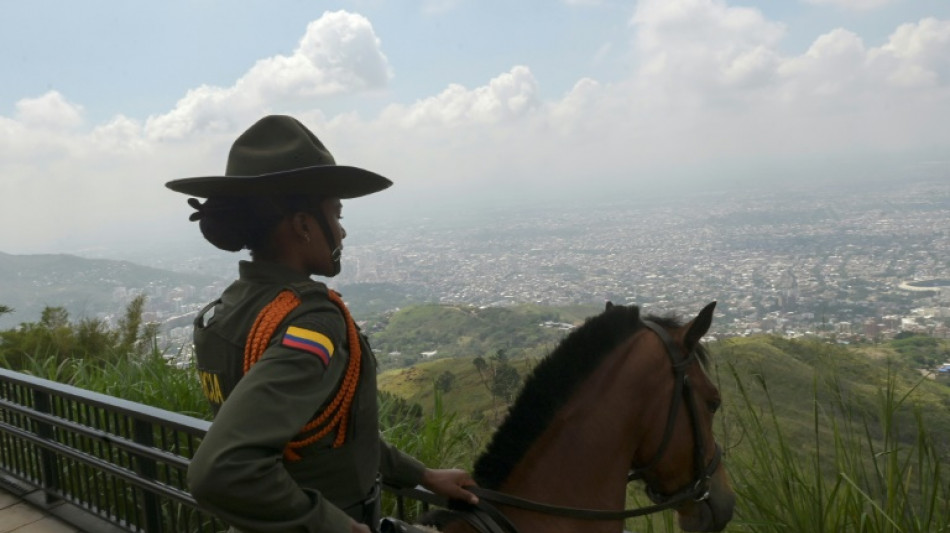
Violence spikes in Cali, Colombia, ahead of UN biodiversity meet / Photo: © AFP

 Australia probes app used in cheap smart glasses over privacy fears

 England needed to 'move on' from World Cup pain, says Tuchel

 O'Neill to stay at Celtic after period of "reflection"

 Kane marks 125th England cap with Wembley Nations League double
 Quebec's incoming separatist leader wants to block Crown from swearing-in

 Emmys gala will now stream its premier television awards

 Paramount completes Warner Bros takeover, creating Skydance

 Trump blames France unrest on Islam, migration
 Apple's Cook praises EU over efforts to protect children online
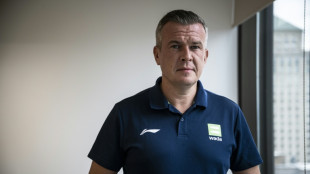
 Nobel winner Halzen says years of October 'misery' finally over

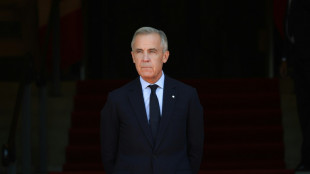 Quebec separatist win rattles Carney's unity push

 'Itching' for change: Shiffrin cuts back slaloms this season

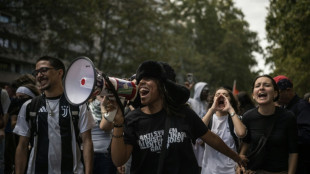 'Gen Z has risen up': Tens of thousands mass for tense France school protests
 Caribbean tourism hotspot loses men to Russian war machine
 Danish reservists practice war games to respond to 'aggression'

 Bhuvneshwar returns to India's T20 squad for New Zealand tour

 Asos says probing 'unauthorised activity' after phone alerts

 Stocks climb as oil prices retreat under $100 per barrel

 Neutrinos: space particles that change our view of universe

 'Destined' Djokovic wins China Open, extending unbeaten record

 Iceland is 'critical outpost' for security, says Rubio during visit

 Israeli settlers beat AFP photographer covering West Bank

 'Gen Z has risen up': Tens of thousands demand better education in France

 $10 Million and Counting: Hola Prime Hits Major Trader Payout Milestone
 UEFA investigate Ireland-Israel tunnel bustup after spitting claim

The city of Cali, associated with a particularly violent chapter of Colombia's deadly drug conflict, is facing a new wave of brutality after a period of calm, just as it prepares to host a major UN gathering.
A recent spate of bombings and gun attacks near the city that was once the headquarters of the infamous Cali Cartel has local authorities on edge five months before the 16th meeting of the Conference of the Parties (COP16) of the Convention on Biological Diversity.
The assaults have been blamed on fighters from the Central General Staff (EMC) -- a splinter group of the FARC guerrilla army which signed a peace deal with the government in 2016 and disarmed.
Dissident EMC guerrillas are particularly active in the departments of Valle del Cauca, where Cali is the capital, and Cauca -- both in the main coca-growing southwestern region of the world's largest cocaine producer.
Some 3,500 EMC are estimated to remain in arms and are involved in the drug trade and illegal mining, as well as fighting both the military and groups competing for trafficking routes and territory.
Just last week, officials said EMC militants opened fire and set off cylinder bombs at a police station in the town of Morales, some 100 kilometers (60 miles) from Cali, killing two officers and two detainees in what officials labeled a "terrorist attack."
Three other officers were injured in the strike reminiscent of those carried out by the FARC in the 1990s in one of the worst phases of the decades-long war between leftist guerrillas, rightwing paramilitaries, drug cartels and the military.
On the same day as the Morales assault, three children and a civilian adult were injured when a motorcycle laden with explosives was detonated in the nearby municipality of Jamundi.
The attacks saw the government deploy some 6,000 soldiers to the area as jittery local politicians called for a decisive military crackdown.
In a council debate, representative Roberto Ortiz Uruena said the attacks were putting the CBD conference "at risk."
"We are evaluating the situation very closely and hope that we can overcome" the current difficulties, Environment Minister Susana Muhamad told AFP concerning Cali's hosting of the biodiversity talks.
The event hopes to attract some 12,000 delegates and exhibitors from around the world, as well as heads of state, to one of the world's most biodiverse countries.
- 'Forceful action' -
Cali Mayor Alejandro Eder has said violence in the region is at levels "not seen five or ten years ago."
"I honestly cannot believe that we are here again," he recently told La FM radio, eight years after the signing of the pact that disarmed the bulk of the FARC -- once the most powerful guerrilla group on the continent.
Many blame Colombia's first-ever leftist president, Gustavo Petro, for not taking a tough enough approach.
Petro's government has been negotiating with a variety of armed groups in his quest for "total peace," though talks with one faction of the EMC recently broke down.
The mayor said he will request an additional 2,000 armed personnel for the city.
Following last week's attacks, defense chief Helder Giraldo promised: "We are not going to allow these... terrorist groups to encircle us and continue to sow terror in the civilian population."
Monica Castillo, coordinator of the PARES peace and reconciliation think tank, told AFP the attacks amounted to EMC posturing: a declaration that it was "at the gates" of Cali -- Colombia's third-biggest city -- and intent on expanding its activities into urban zones.
According to US authorities, the Cali Cartel controlled up to 80 percent of the cocaine trade to the United States at its peak in the mid-1990s, before its leaders were captured and jailed.
UN figures in 2022 showed the Valle del Cauca and Cauca departments were home to almost 29,000 hectares (71,700 acres) of cultivated coca leaf -- the active ingredient of cocaine.
R.Buehler--VB