Georgia adopts 'foreign influence' law despite protests / Photo: © AFP

 Rookie Henry named in Wallabies midfield to face All Blacks

 Housing crisis set to dominate Spain's snap election
 Gas, health care, utilities: high costs squeeze US midterm voters

 New Zealand Rugby seeks injunction over PNG Chiefs name
 Samsung expects 780% quarterly operating profit jump on AI boom

 Guardians survive with 9-3 win over White Sox

 Saudi Arabia says 3 dead at airports after Houthis claim attacks

 Stocks slide as oil sees volatile trading day over Iran war fears

 Microsoft pushes AI vision with new, expensive Surface laptop

 Five children among 28 killed in Russian strikes on Ukraine

 Odell Beckham Jr signs with Minnesota Vikings
 Saudi Arabia says three dead at airports after Houthis claim attacks

 Trump plans to turn Florida golf course into presidential retreat

 WHO says cannot conduct full risk assessment on Russia plague reports

 After botched execution, US woman is awake and shackled to bed
 New Zealand fly-half Mo'unga ruled out of Australia Tests
 Protests in major Turkish city after mayor defects to Erdogan party
 Climate change strips island's title of largest penguin colony: study

 Rubio says West must choose between national power or decline

 Russia's plague scare: What we know

 French luxury giant to fund redevelopment of two Paris streets: city hall

 Trump wants to turn Florida golf course into presidential retreat
 Mayor of Turkish opposition stronghold defects to Erdogan party

 Children among heavy casualties in Ukraine after Russian strikes

 Court orders German ex-spy chief kept in jail after spying, treason arrest

Georgia's parliament on Tuesday voted into law a controversial "foreign influence" bill, overriding a presidential veto despite weeks-long mass protests and warnings from the West that it could jeopardise the country's path to the European Union.
The law -- which critics compare to repressive Russian legislation used to silence dissent -- targets NGOs and media, obligating groups that receive at least 20 percent of their funding from abroad to register as "organisations pursuing the interests of a foreign power."
The proposal has drawn fierce backlash from Western governments including the United States, which said the measure risked "stifling" freedom of expression in the Black Sea Caucasus nation.
Brussels has warned the measure is "incompatible" with the ex-Soviet republic's longstanding bid for EU membership, which is enshrined in the country's constitution and supported -- according to opinion polls -- by more than 80 percent of the population.
Lawmakers voted 84 to 4 to pass the bill on Tuesday, after overriding pro-EU President Salome Zurabishvili's veto.
Most opposition MPs walked out of the chamber ahead of the vote.
The EU said that it "deeply regrets" the law's adoption, with foreign affairs chief Josep Borrell saying the bloc was "considering all options to react to these developments".
- 'Angry, frustrated' -
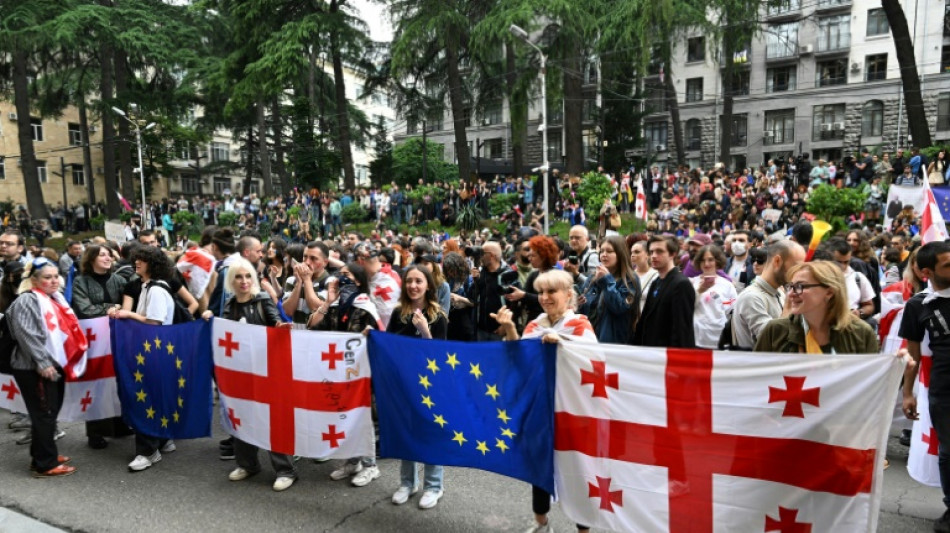
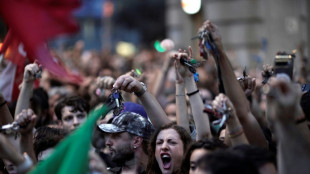
Waving Georgian and EU flags, a large crowd of protesters outside parliament shouted "Russian slaves!" during the vote.
Georgia has been gripped by a wave of unprecedented rallies for the past seven weeks, since the ruling Georgian Dream party revived the plans, which are similar to measures it dropped last year after a public outcry.
Another mass protest is scheduled to take place later on Tuesday.
"I think we were all expecting this outcome, but I feel so angry, I feel so frustrated. The most important thing right now is to not lose hope," protestor Lizi Kenchoshvili, 23, told AFP outside parliament minutes after the vote, vowing to continue protesting.
Georgian Dream says the law will ensure "transparency" and argues foreign-funded groups undermine Georgia's sovereignty.
But rights groups and Western governments warn it will further ignite tensions in the deeply polarised Caucasus country ahead of October parliamentary elections seen as a key democratic test.
Non-governmental organisations, including anti-corruption group Transparency International, have told AFP the law could see their assets frozen and their work limited.
Tensions were high in the parliamentary chamber ahead of the vote, with Opposition lawmaker Giorgi Vashadze doused with water as he gave a speech.
Scuffles and fights have broken out between government and opposition lawmakers on at least two previous occasions over the last month.
- 'Derailing' -
Earlier Borrell warned that Georgia's government was "derailing from the European track."
President Zurabishvili, a fierce critic of the ruling party, has called on the opposition to form a united front ahead of parliamentary elections in October.
The law was first adopted by parliament two weeks ago, but vetoed by Zurabishvili days later on May 18.
The United States announced last week it would place visa restrictions on Georgian officials should the bill be signed into law and was reviewing its relations with Tbilisi.
Activists, independent journalists and opposition politicians have faced weeks of violence and threats since the government announced the draft legislation, in what rights groups have called a targeted campaign.
Opposition politicians have accused the government of derailing Georgia from its Western trajectory and leading the country back to the Kremlin's orbit -- an accusation it denies.
P.Vogel--VB