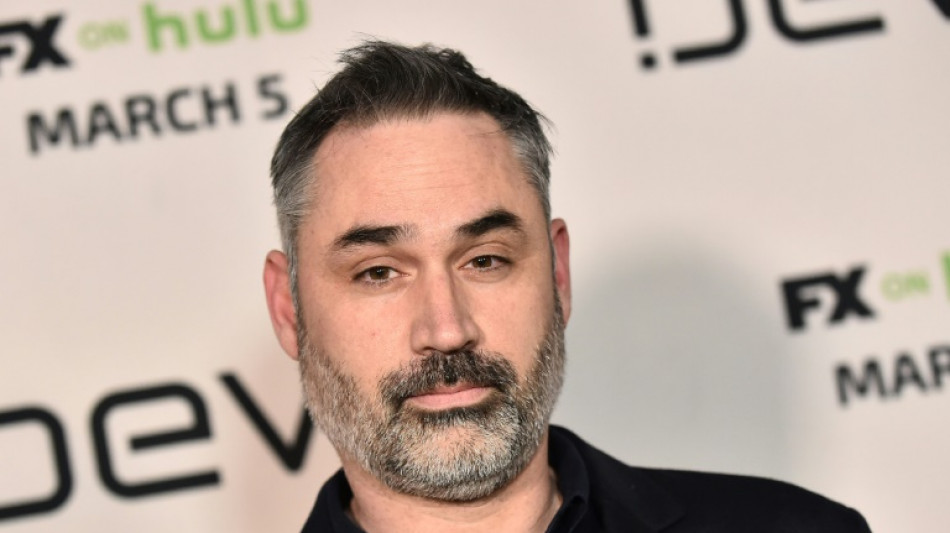
Controversial 'Civil War' movie prompts debate over US schism / Photo: © AFP/File

 Australian lawmaker hurt in car attack underwent surgery overnight: PM
 Japan launches rocket for potential world first Mars moon mission

 Ethiopia PM warns Eritrea of 'severe consequences' if supports enemies

 Boland grabs opportunity for Australia as South Africa struggle in second Test

 Ronaldo handed 30-day suspension: Portuguese federation
 France announces curfews as government grapples with unrest

 Boland sets pace as South Africa struggle
 Ukraine on back foot as Kremlin moots US, China meeting

 'Stay home!': Tourists find themselves in a France convulsed by protests

 Kenyan cult leader guilty on all charges over 191 starvation deaths

 Eagles star Hurts to miss rest of NFL season: reports
 Oil-rich Alberta votes on Canada breakup

 Israel announces arrests after West Bank settler attacks on Westerners
 Guehi insists players have 'trust and belief' in Man City after charges
 UN climate panel head wants swift end to deadlock over key scientific report
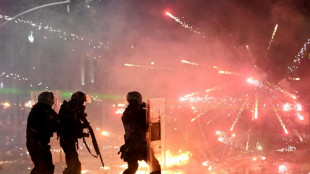
 PM calls for curfews in France as govt grapples with unrest
 Man City's Semenyo out for up to eight weeks

 Australian lawmaker critically hurt in 'violent' vehicle attack

 England women's coach Wiegman signs two-year contract extension

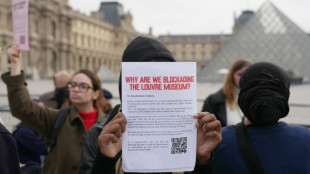
 Louvre blocked as France grapples with unrest
 Bollywood actor Tiger Shroff shot at in Mumbai, three suspects held: police
 UN biodiversity summit opens with nature goals off track
 'Physical hell': Hong Kong hosts gruelling underwater hockey tournament
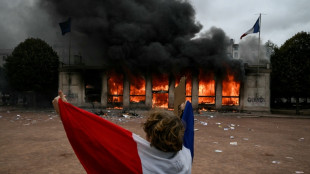 Police 'lost control' during French protests, says interior minister

 Australia's new Ghost Shark submarines grow some 'teeth'

A major film that imagines a second civil war in the near-future United States has highlighted fears about the divided state of the nation ahead of November's presidential election.
"Civil War," which premiered at the SXSW Festival this week and hits theaters April 12, pictures a three-term US president in Washington DC battling secessionist forces from California and Texas.
The movie stars Kirsten Dunst as a journalist travelling through a broken, dystopian nation. The FBI has been disbanded, and military drone strikes launched on US citizens.
In early reviews, The Atlantic noted an "uncomfortable resonance in these politically polarized times." Rolling Stone said "you might accidentally mistake" the film's futuristic premise for the present.
So, just how plausible is the film's scenario?
The presumptive Republican presidential nominee, Donald Trump, was recently criticized for seemingly joking he would be a "dictator" on "day one" if he wins a second term as president. He faces charges of conspiring to overturn the results of the 2020 election, which he lost to Democrat Joe Biden.
Biden has accused his predecessor of embracing "political violence."
A survey by the Brookings Institution and the Public Religion Research Institute (PRRI) last year showed 23 percent of Americans agree "true American patriots may have to resort to violence in order to save our country."
But William Howell, a University of Chicago political science professor, said while there is cause for concern about rising political violence, "talk about 21st-century muskets being fired at one another isn't very helpful."
Political elites and Congress are more divided than ever, but polarization among the public is "overstated," said Howell.
Survey responses to vaguely worded questions do not necessarily speak to on-the-ground realities about how people will actually behave, he added.
"I don't think we're on the brink of a civil war," said Howell.
"It's more diffuse than that... a hollowing out of the state, a sabotage of administrative agencies, the disaffection of the larger public."
"All that can be true, and it also not be the case that we're about to line up as we did in 1861, and en masse begin slaughtering one another."
- 'Horrific' -
On the other hand, author Stephen Marche believes "the United States is a textbook case of a country headed for civil war" -- just not in the way depicted by the movie.
Marche's book, "The Next Civil War: Dispatches from the American Future," uses political science models to suggest five scenarios that could plausibly trigger widespread internecine conflict.
These include anti-government militias clashing with federal forces, or a president being assassinated.
Political violence "becomes acceptable, and in a certain sense, inevitable, because people don't feel that their government is legitimate, and that therefore violence is the only response," said Marche.
"I would say that to a certain extent, that has already happened in America."
Cautioning that he has not yet seen the movie, Marche says a conflict fought along geographical lines like the North-South civil war of the 1860s is unlikely.
More likely than state-on-state violence would be a "massive, splintering chaos," reminiscent of the late 20th-century "Troubles" in Northern Ireland.
In Marche's book, retired US Army colonel Peter Mansoor says a new conflict "would not be like the first civil war, with armies maneuvering on the battlefield."
"I think it would very much be a free-for-all, neighbor-on-neighbor, based on beliefs and skin colors and religion. And it would be horrific."
- 'Fault lines' -
In the film, director Alex Garland deliberately leaves the specific origins and politics of the conflict vague. He has said the movie is intended to be "a conversation" about polarization and populism.
It offers little exposition, and focuses on the horrific daily reality for American citizens and journalists.
"We don't need it explained -- we know exactly why it might happen, we know exactly what the fault lines and the pressures are," Garland told the audience at Thursday's premiere in Texas.
The movie's "three-term president" appears to invoke the fears held by many Americans that Trump -- if re-elected -- could ignore the US Constitution's two-term maximum, and refuse to step down after four years.
"It's hard to think otherwise, if you just take him at his word -- and I think we would be mistaken not to," said Howell.
If that scenario was reached, said Marche, talk of a civil war may already be redundant.
"If there's a three-term president, America has already ended," he said. "There's no United States anymore."
F.Stadler--VB