-
 Ukraine claims US missile holdup ahead of reported talks
-
US bans use of China's DeepSeek by govt agencies

-
 Niners hold off Commanders to stay perfect in NFL
-
Middle East fuel crunch drives solar push in tiny Fiji

-
 Tech firms bear brunt of selling as Asian stocks drop
-
Indian rappers use music to sound climate alarm

-
 Reese scores 30 as Dream stun Valkyries to level WNBA finals
-
Japan probe on its way to Mars moon

-
 Horror and disbelief after lawmaker attacked in rural Australia
-
Lula or Bolsonaro's son? Brazil makes a final choice
-
 Ukraine races to secure energy supplies ahead of winter
-
EU unveils strategy to boost Arctic presence

-
 Vote count begins in Alberta secession referedum, testing Canada unity
-
How recent controversies have rocked the US death penalty debate
-
 Ukraine claims US missile holdup as Trump floats summit without Zelensky
-
Adams facing long injury layoff as Rams' problems deepen
-
 Detained Suu Kyi receives UK royal package: Myanmar govt
-
US judge orders Saudi engineer held in OpenAI case

-
 Japan successfully launches probe in historic Mars moon mission
-
Maddison sparkles as Spurs end Premier League winless run

-
 US to auction deep sea mining leases off American Samoa
-
Maddison sparkles on Spurs return as win drought ends

-
 Australian lawmaker hurt in car attack underwent surgery overnight: PM
-
Trump says ready to meet with Putin and Xi in China
-
 Japan launches rocket for potential world first Mars moon mission
-
The young lawmaker making Brazil's Lula 'king of the selfie'

-
 Ethiopia PM warns Eritrea of 'severe consequences' if supports enemies
-
Christiane Amanpour to leave CNN after 43 years

-
 Boland grabs opportunity for Australia as South Africa struggle in second Test
-
Ronaldo handed 30-day suspension after walking out on Portugal

-
 Ronaldo handed 30-day suspension: Portuguese federation
-
Netanyahu basks in Trump endorsement week before election
-
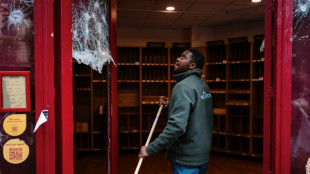 France announces curfews as government grapples with unrest
-
Saudi airport closure disrupts life in kingdom's capital

-
 Boland sets pace as South Africa struggle
-
Ramaphosa tells South Africa to prepare for loss of US-Africa trade deal
-
 Ukraine on back foot as Kremlin moots US, China meeting
-
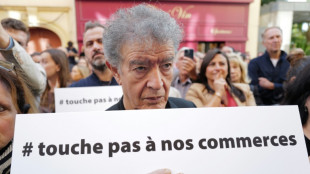
France presses resale platforms to remove 'stolen' goods after unrest
-
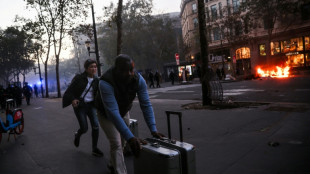 'Stay home!': Tourists find themselves in a France convulsed by protests
-
Yamal v PSG: Ballon d'Or backdrop to Champions League showdown

-
 Kenyan cult leader guilty on all charges over 191 starvation deaths
-
Araujo says too soon to talk about permanent Liverpool move

-
 Eagles star Hurts to miss rest of NFL season: reports
-
US wants to be 'strong partner' for central Asia: Rubio
-
 Oil-rich Alberta votes on Canada breakup
-
'Special' to face friend Perez in Champions League, says Liverpool's Iraola

-
 Israel announces arrests after West Bank settler attacks on Westerners
-
Monitor says Indonesia fires have burned nearly two million hectares
-
 Guehi insists players have 'trust and belief' in Man City after charges
-
French PM says could declare state of emergency over unrest 'if needed'
UK government's new extremism definition sparks backlash
The UK government on Thursday unveiled a new definition of extremism which will determine which organisations get public funds and meetings with officials, prompting criticism from various civic, political and religious groups.
The change comes weeks after Prime Minister Rishi Sunak warned of a "shocking increase in extremist disruption and criminality" that risked the country tipping into "mob rule".
Sunak's comments -- made in a Downing Street address to the nation -- follow months of controversial pro-Palestinian protests in British cities but were criticised by some as exaggerated and politically motivated.
The marches protesting Israel's military response to Hamas's October 7 attacks have attracted hundreds of thousands of people and have seen dozens arrested for anti-Semitic chanting and banners, promoting proscribed organisations and assaulting emergency workers.
The government has insisted the update to its 2011 definition of extremism -- which applies to conduct that falls short of criminality -- is "narrower and more precise".
It was previously defined as "the vocal or active opposition to our fundamental values" such as "mutual respect and tolerance".
The new wording brands extremism "the promotion or advancement of an ideology based on violence, hatred or intolerance" that aims to "negate or destroy the fundamental rights and freedoms of others".
It also intends to "undermine, overturn or replace the UK's system of liberal parliamentary democracy and democratic rights" or apply to those who "intentionally create a permissive environment for others to achieve".
- 'Division' -
Senior minister Michael Gove, responsible for the policy, will announce the change in the House of Commons Thursday morning, amid speculation he will use parliamentary privilege to name some groups that will now be deemed extremist.
The Byline Times media outlet said several prominent Muslim groups as well as far-right organisations were referenced in leaked draft plans it had seen.
The Daily Mail -- typically supportive of Conservative policies -- appeared sceptical about the new definition, cautioning an "authoritarian government of the future" could use it to "curb legitimate debate".
In broadcast interviews, Gove insisted it was "not a restraint on free speech".
"It applies only to engagement with government," he noted, adding "individual extremist organisations have sought to take advantage of government patronage, money and influence".
"We will keep these organisations at arms' length, so they can't benefit from access to government and its funds."
But the change sparked widespread criticism.
Qari Asim, chairman of the Mosques and Imams Advisory Board, warned it it could end up fuelling extremism and that the police may also be imposed inconsistently.
"It will be applied subjectively," he told BBC radio, adding it risked creating "huge division in our society".
"My fear is that potentially, this proposed definition will actually result in more extremism and people going underground and, as a result, being manipulated and exploited by those who are true extremists."
- 'Unnecessary' -
Lawmaker John Mann, the government's independent adviser on anti-Semitism, agreed that ministers should be prioritising "bringing communities together".
"I think that the government needs to listen to people who are advising that the politics of division will not work," he told the BBC.
Church leaders too have aired concerns about its divisive impact.
Archbishop of Canterbury Justin Welby said Wednesday that there was a danger "of hollowing out the centre... and driving people to one extreme or the other", adding that this was "very, very dangerous".
Welby -- who sits in the upper chamber House of Lords -- has also criticised the government over its plan to send asylum seekers from the UK to Rwanda.
Sunak's ruling Conservative party has faced claims of Islamophobia in recent weeks, after a former deputy chairman accused London Mayor Sadiq Khan of links to Islamists.
The prime minister has this week also been forced to apologise for reported racist comments about a prominent black British MP by one of the party's biggest donors.
Yasmine Ahmed, UK Director of Human Rights Watch, seized on the Conservatives' record in her criticism of "this unnecessary and unacceptable new definition".
"There is a fair case to be made that this government could now meet the threshold of an extremist organisation," she added.
T.Egger--VB