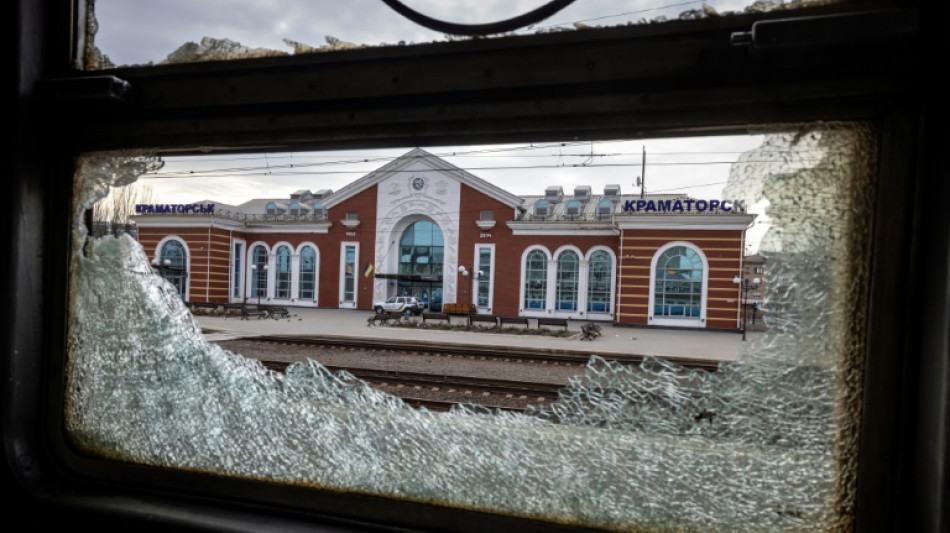
Civilians trickle out of Kramatorsk after station attack / Photo: ©

 New space object 'black hole star' discovered by astronomers

 England captain Root tells players to be 'adults' as he ditches curfew

 US inflation slows slightly in July despite elevated fuel prices

 Total solar eclipse to cast its shadow over Europe

 US consumer inflation slows slightly in July despite elevated fuel prices
 Warholm on track in bid for fourth Euro hurdles gold

 Erdogan eyes expansion of regional defence pact

 Extreme weather, jellyfish knock one-fifth of France's nuclear capacity offline

 Skywatchers gather in Europe to see total solar eclipse

 Zhu Rongji, trailblazing ex-premier who transformed China's economy

 China tech giant Tencent's Q2 profit down as AI push builds

 China's C919 jet makes first international commercial flight
 Mideast war impact on travel bookings fading, TUI says

 Bangladesh get Das fitness boost for daunting Australia task

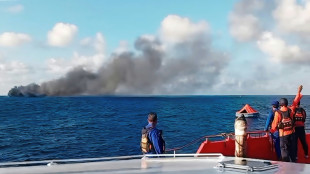 One dead, 172 rescued as second ferry in days catches fire in Indonesia
 Foxconn posts quarterly profit surge on AI server demand
 Hazlewood gets Australia nod ahead of Boland for Bangladesh Test

 Toyota ex-chief Okuda, pioneer of the Prius, dead at 93

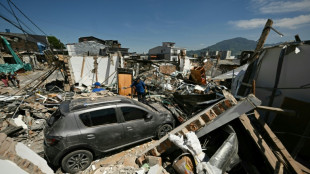
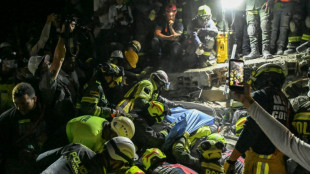 Colombia rescuers find woman alive as quake death toll passes 200

 New Zealand PM survives leadership challenge months from election
 Passengers rescued as second ferry in days catches fire in Indonesia

 Oil prices rise, stocks mixed ahead of crucial US inflation data
 UK 'joke' candidate Binface pushes serious point about politics
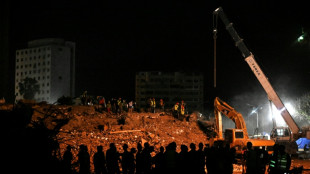
 New Zealand PM Luxon survives leadership challenge months from election
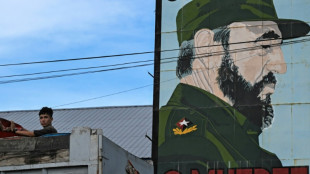 Cuba celebrates Castro's 100th as his revolution faces its toughest test
Mini-vans were headed to a church in Kramatorsk in east Ukraine on Saturday morning to collect evacuees after a deadly rocket attack on a train station in the city.
Almost 80 people, most of them elderly, took shelter overnight in the building, not far from the terminal targeted in the strike on Friday.
"There were around 300 to 400 people who rushed here after the strike," Yevgeny, a member of the protestant church, told AFP.
"They were traumatised. Half of them ran to shelter in the cellar, others wanted to leave as soon as possible. Some were evacuated by bus in the afternoon (on Friday). In the end, almost 80 stayed here and I hosted seven at my house," he said.
Evacuees slept on mattresses on the floor in the church and were offered breakfast by volunteers on Saturday morning as they waited for the bus to take them out of the path of a feared Russian offensive in the region.
Moscow denied responsibility for the rocket attack on Friday morning, which killed 52 and injured a further 109 people, according to the latest official count.
Six weeks into President Vladimir Putin's invasion, Moscow has shifted its focus to eastern and southern Ukraine after stiff resistance ended plans to swiftly capture the capital Kyiv.
The stop in Kramatorsk was being used as the main evacuation hub for refugees from the parts of the eastern Donbas region still under Ukrainian control.
- Station closed -
Twenty-four hours after the strike on Saturday morning, the train station was closed and the area cordoned off by police.
Cars charred by the explosion were still sat on the forecourt, while some of the station's blown-out windows had been boarded up.
A sizeable chunk of the rocket's twisted fuselage was still to be found on the grassy roundabout in front of the station.
In Kramatorsk, the night into Saturday and the morning were quiet. Regular heavy artillery explosions could be heard in the distance -- towards the frontline to the northwest -- but none nearby.
The city is now squeezed between the frontlines, to the south and east by the pro-Russian separatist statelets of Donetsk and Lugansk, and to the north by the advance of the Russian army.
The lines of engagement have been relatively stable but daily exchanges between opposing forces have been heated.
The civil-military authorities in Ukrainian-controlled regions of Donetsk and Lugansk, which make up the Donbas, have repeatedly called for civilians to leave the region for fear of a Russian move.
Trains and buses have been laid on for evacuees to leave the area, supported by the work of volunteers.
While the station in Kramatorsk is out of service, four trains are slated to leave from the nearby city of Slavyansk for the west of the country, according to the Ukrainian rail operator.
Other local trains are also set to run, though departure details have yet to be shared for security reasons.
- Two-way street -
Discreetly, evacuations have also continued in the other direction, by road towards the pro-Russian territories.
Convoys of cars, often old Russian-made Ladas with suitcases strapped to the roof, set off every day for the Russian-controlled zone to the north, with the tacit consent of Ukrainian forces manning checkpoints, an AFP journalist understood.
"We are going there because we have relatives there. There is food, it's calm, there are no issues," a 30-year-old man travelling with his family told AFP.
"There are good and bad people on both sides," he said, exchanging Ukrainian currency for Russian rubles at the side of the road.
Once the industrial heartland of the Soviet Union, the former coal-mining region of Donbas, divided by war since 2014, is traditionally more favourable towards Russia.
Nostalgia for the Soviet era comes through in conversation with residents, who regret the closure of the region's big factories, and often reserve criticism for the government in Kyiv.
What is more, many of them, including women and children, do not intend to flee the arrival of Russian forces.
M.Odermatt--BTB