Last stop in Ukraine: Russian POWs' long wait to get home / Photo: © AFP

 Indonesia central bank chief steps down early: govt
 Gaza teen triumphs despite war, loss and displacement
 Whales at risk, hungry pelicans: Marine heat wave hits California

 With minutes to flee, Spain fire evacuees grab what they can

 Ioane, Holland back for All Blacks' blockbuster South Africa tour
 Beltran, Kent and Jones join Baseball Hall of Fame
 New pro Koivun holds off Scheffler to win PGA 3M Open
 Masood leads Pakistan to 199-3 against West Indies

 UK's Burnham to welcome Zelensky in first foreign leader visit
 Pogacar looking to enjoy 'small things' after 5th Tour de France win
 Ramsay-Peaty hatches 'battle plan' to bounce back from Commonwealth Games tears

 Lucas Museum to display unseen 'Star Wars' pieces, curator says

 Del Toro, Seixas show glimpse into Tour de France future
 Tour stage win 'not from my toes', says Van der Poel
 Honduran ex-president returns home after Trump pardon
 Pogacar wins record-equalling fifth Tour de France
 Verstappen grumbles as he roars to second in 'undriveable' car
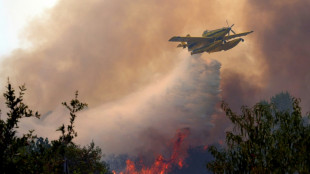
 France, Spain battle 'unpredictable' wildfires as 325,000 evacuated
 Norris heaps praise on McLaren for updated car and victory
 Hearn says Fury-Joshua must take place in UK under current deal

 Scotland's Ward wins Commonwealth gymnastics title, Ramsay-Peaty bounces back in the pool
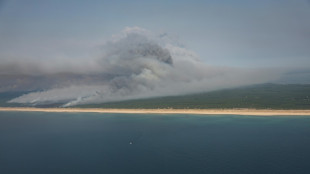 French firefighters face 'pyrocumulonimbus' for first time
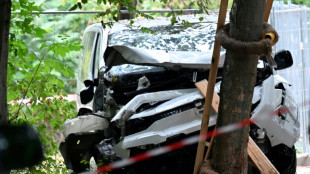 Urgent search for suspect after deadly 'Islamist terror' attack near Berlin Pride
 Spain football coach De la Fuente visits Madrid wildfire evacuees
 Malaysia steps in to host Bahrain F1 GP in October
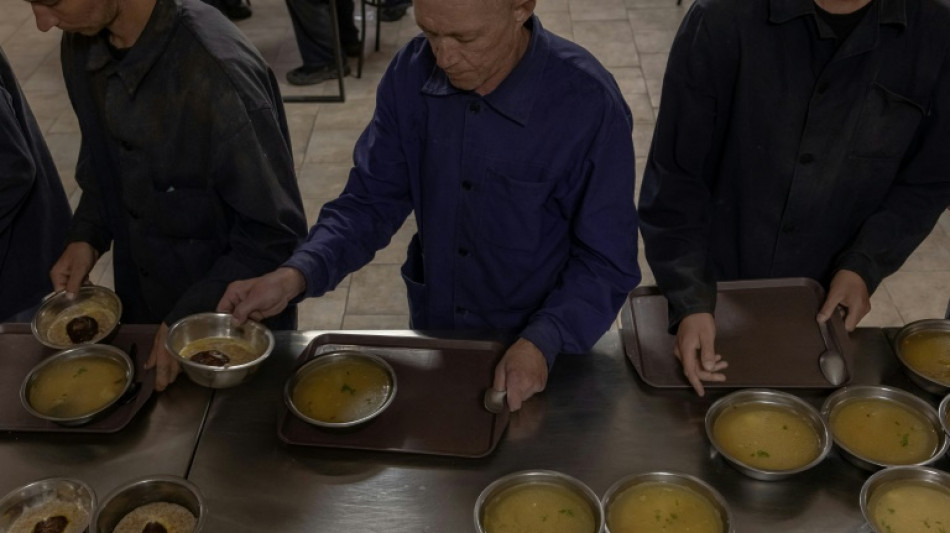
Rising from their tables after the meal, the Russian prisoners of war shouted in Ukrainian "Thank you for lunch!"
The dining room scene played out during a press tour of a facility in western Ukraine which houses captured Russian soldiers.
Kyiv has sought to portray its incarceration of Russian war prisoners both as humane and in stark contrast to that of Moscow.
Ukrainian authorities and Western rights groups have accused Russia of mistreating prisoners of war and limiting access to prisons for international observers.
In March, UN rights commissioners Volker Turk said there was evidence that both sides had abused POWs including, in some cases, summary executions -- provoking anger in Kyiv.
But Volk also said that Ukraine had been far more open with UN investigators, providing "unfettered and confidential access to places of internment".
Russian men in blue jackets and trousers and work boots filed into a dining hall, pulling caps off their heads.
They collected tin bowls of pea soup, buckwheat with liver and beetroot salad and slices of bread.
- 'Much worse in Russia' -
Petro Yatsenko, spokesman for a Ukrainian office responsible for prisoners of war under the interior ministry, said the Russian detainees were well-off by comparison.
"Our soldiers and officers are being held in very bad conditions. They are in much worse conditions in Russia," he told AFP.
Mirroring a policy in Kyiv, Yatsenko declined to give the number of inmates at the facility.
But AFP journalists were shown one dormitory with 96 bedsand a kitchen worker said they served lunch in three sittings in a hall that had 120 seats.
This centre is the last stop for detainees first held in other cities before being exchanged.
Since Russia invaded last year, Ukraine has secured the release of almost 2,600 Ukrainian soldiers after 48 swaps.
But the last exchange in August involved relatively few people. Yatsenko claimed, without elaborating, that Russia had halted talks on swaps.
One man has been at the camp for over a year, he added.
"It's very strange. The Russians are here and they don't want them back."
Several prisoners asked journalists if they had details of upcoming exchanges.
- Dostoevsky and Coca-Cola -
At the men-only facility, every bed was labelled with a photo, name and date of birth.
The oldest detainee was 58-years-old and the youngest 19 -- most were born in the 1980s and had Slavic names.
Yatsenko said 15 detainees were Muslim and that the camp had a prayer room and Orthodox chapel.
In the infirmary, men sat or lay in striped pyjamas. Some had serious injuries including amputated legs.
One man had a disfigured jaw and facial injury from shrapnel that affected his speech.
"I can't eat," he said. Sitting with hunched shoulders, the 46-year-old said he came from the city of Bryansk in western Russia.
While he had served less than two weeks, he had been in the camp for almost four months.
Journalists were shown rooms with televisions and water coolers. Inmates are allowed to make telephone calls, albeit with someone listening in.
There was a shop selling sweets, cigarettes and Coca-Cola, and prisoners had access to Russian-language books from the library, ranging from Dan Brown to Dostoevsky.
Each received toiletries including soap, toothpaste and razors from a monthly budget per prisoner of around $270.
"We don't give them tuxedos," Yatsenko said of the conditions.
Some inmates received psychological help, he said.
There was "no reason to escape" from the camp, he said: prisoners are "scared of what's outside" in Ukraine, and most just want to return to Russia.
- 'They didn't come as tourists' -
Journalists were encouraged to speak with detainees from a selected group that Yatsenko said had all agreed to interviews.
One said he was from the remote region of Chukotka in Russia's far north. He had been a fisherman and reindeer herder and builder before signing a military contract.
After two months fighting in eastern Ukraine, he was captured in July.
"You can say people don't live long on the front line," he added. "You can count this in hours."
The camp's weekday timetable has reveille at 6:00 am, followed by time to wash and make beds and have roll-call, then breakfast at 6.50 am.
Work time is 8:30 am to 4:30 pm. Some make plastic garden furniture, others make paper gift bags or do carpentry.
Lunch is at 12:30 pm, dinner at 7:15 pm, then it's lights out at 10:00 pm.
The camp's exercise area has portraits of Ukrainian stars such as footballer Andriy Shevchenko -- but also Stepan Bandera, the Ukrainian nationalist who fought alongside the Nazis against the Soviet Union in World War II.
The words to the Ukrainian anthem were posted on one display board, which Yatsenko said prisoners heard every morning but were not required to sing.
But they were obliged to down tools and observe a minute's silence each day for Ukrainians killed in the war.
"They came to our land not as tourists. We are not obliged to adjust to them," Yatsenko said.
"They have to know where they are, not forget."
R.Fischer--VB