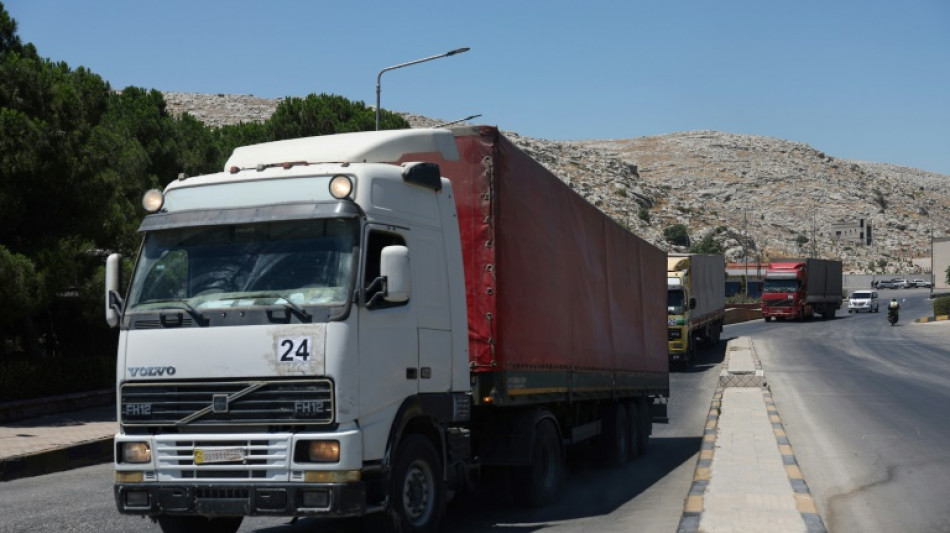
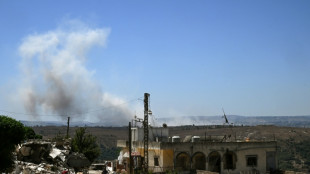
Fears over Syria's proposed control on aid to rebel-held areas / Photo: © AFP/File

 Senate advances sweeping Russia sanctions bill

 Two dead in shopping mall hit by Japan quake

 UN sounds alarm on politicisation of refugees and asylum
 Aussie teen Hewitt wins first ATP match in Washington where dad won title

 New Zealand's Hobbs surges to women's 100m Commonwealth gold

 West Indies beat Pakistan by 90 runs in first Test
 UN sounds warning as refugee convention turns 75

 Keiko Fujimori becomes Peru's ninth president in a decade
 Jalen Carter signs record $152m extension with Eagles

 AI glasses help propel EssilorLuxottica sales growth

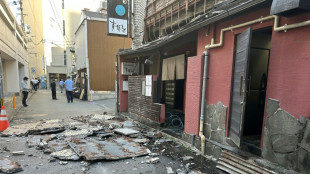 Many feared trapped in quake-hit Japan mall
 Kering sales begin to recover as Gucci improves

 Netanyahu visits White House for first Trump talks during Iran war

 France pressures Suriname as illegal mining plagues border

 Cucurella keeps De la Fuente tattoo pledge after Spain World Cup win
 Netanyahu at White House for first Trump talks during Iran war

 Korda, Ryu eye history at Women's British Open
 UN chief meets rival Cyprus leaders, mulls prospects for talks

 Mancini returns as coach of crisis-hit Italy
 Synsira Launches Kind Local Pro with 100% On-Device AI

 Fan favourite 'Zizou' soaks up acclaim after being named France coach

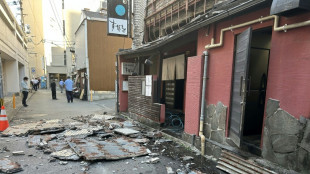 'Many people' feared trapped in mall after big Japan quake

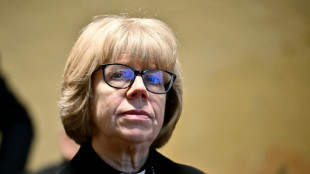 Anglican Church leader visits slave trade project on Africa tour

 Josko Gvardiol signs new five-year deal at Man City

 Pedro bags three, Alonso starts Chelsea reign with 6-4 win over Western Sydney Wanderers

The Syrian government recently announced it would allow aid to cross into rebel-held areas after a United Nations mechanism expired, sparking concerns from humanitarian groups.
They worry over the fate of residents in Syria's last remaining rebel strongholds, in the north and northwest, after the Security Council failed on Wednesday to extend the mechanism.
Under a 2014 deal, aid had largely passed through the Bab al-Hawa crossing with Turkey without the authorisation of Damascus.
But expiry of the UN mechanism, as well as Syria's decision to change course on the delivery of aid to those areas, has sparked fears and questions among the humanitarian community.
- What did Damascus propose? -
Syria said it made a "sovereign decision" to allow aid to flow through the Bab al-Hawa crossing for six months starting last Thursday.
The crossing is the main entry point for aid to rebel-held areas, though it also occasionally trickles in from areas under the control of Damascus.
Following a February 6 earthquake that struck both northwest Syria and southern Turkey, Syrian authorities agreed to temporarily open two other border crossings with Turkey until August.
Russia on Tuesday vetoed a proposal to extend the UN mechanism at Bab al-Hawa for nine months, then failed to muster enough votes for an alternate proposal to extend it for six months.
The UN expressed concerns over two "unacceptable conditions" set by Damascus for allowing aid to flow through the crossing, according to a document reviewed Friday by AFP.
The UN Office for the Coordination of Humanitarian Affairs (OCHA) said it was concerned that Damascus had "stressed that the United Nations should not communicate with entities designated as 'terrorist'".
The second condition it bridled at was that the International Committee of the Red Cross (ICRC) and the Syrian Arab Red Crescent (SARC) should "supervise and facilitate the distribution of humanitarian aid" in northwest Syria.
Roughly half of Idlib province and parts of neighbouring provinces are controlled by Hayat Tahrir al-Sham (HTS), considered a terrorist group by Damascus, as well as by the US and UN.
About three million people, the majority of them displaced, live in areas controlled by HTS, while another 1.1 million are in zones under the control of Turkey-backed groups.
Years of conflict have left much of the rebel-held areas -- which host overcrowded camps for the displaced -- in desperate need of aid as poverty and disease run rife.
- What are the concerns? -
The UN has described Damascus's conditions for reopening the Bab al-Hawa crossing as "unacceptable".
The OCHA document seen by AFP called for the need to "review" and "clarify" parts of Damascus's letter, saying the deliveries "must not infringe on the impartiality... neutrality, and independence of the United Nations' humanitarian operations".
Several international organisations fear that allowing Damascus control over the flow of aid to rebel-held areas could result in limiting access to those most in need.
The International Rescue Committee -- one of the main aid organisations working in Idlib -- said it continues to "emphasise the responsibilities of the Security Council to protect Syrians... and ensure lives are not put at risk".
MedGlobal, which operates clinics and vaccination drives in Idlib, warned that transfer of control of Bab-Al-Hawa "from a neutral party (the UN) to a regime that slaughtered its people and displaced half of its population will lead to more death and suffering among innocent civilians and will trigger another refugee crisis".
About half the residents of rebel-held areas are people displaced by Syria's 12 years of conflict that have killed more than half a million people.
Syrian President Bashar al-Assad has repeatedly said he is determined to regain control over those areas.
Nick Heras, a researcher at the New Lines Institute for Strategy and Policy, told AFP that Damascus "is showing increased confidence in its ability to contain and, over time, shrink the rebel-ruled areas in northwest Syria".
Syria, which in May regained its seat in the Arab League, wishes to "monitor the crossings" to rebel-held areas, Heras said, warning that soon "Assad and his allies will militarily force the issue".
- Are there any alternatives? -
Security Council members and other organisations are betting on a return to negotiations.
The Swiss ambassador to the world body said diplomats would "get back to work immediately to find a solution".
Human Rights Watch's senior researcher on Syria, Hiba Zayadin, urged Security Council members to "return to the negotiating table and reach a consensus that puts Syrians' rights first".
"Allowing Syria to dictate the flow of aid to areas beyond government control puts the lives, rights, and dignity of millions of Syrians at grave risk," she said.
In Idlib, 46-year-old activist Abdel Wahab Elewi expressed his rejection of Damascus's control over the crossing, "even if they cut off aid to us".
"Handing this issue over to Assad spells the beginning of the end and moving towards recognising his regime," he said.
J.Bergmann--BTB