Fury among aid groups as US approves cluster bombs for Ukraine / Photo: © AFP

 Bangladesh ex-premier Hasina vows to return despite fearing for life

 Senate confirms Clayton as Trump intelligence chief

 South Korean stocks collapse amid Asian tech rout
 Search for survivors after powerful Japan quake kills 13

 Shelton fends off Damm at Washington as veteran Venus ousted

 Indian hockey back on 'road to gold' after years in the wilderness

 Rescuers search for survivors after powerful Japan quake kills 13

 Five dead after powerful Japan quake, others missing

 Senate advances sweeping Russia sanctions bill

 Two dead in shopping mall hit by Japan quake

 UN sounds alarm on politicisation of refugees and asylum

 Aussie teen Hewitt wins first ATP match in Washington where dad won title

 New Zealand's Hobbs surges to women's 100m Commonwealth gold

 West Indies beat Pakistan by 90 runs in first Test

 UN sounds warning as refugee convention turns 75
 Keiko Fujimori becomes Peru's ninth president in a decade
 Jalen Carter signs record $152m extension with Eagles

 AI glasses help propel EssilorLuxottica sales growth

 Many feared trapped in quake-hit Japan mall
 Kering sales begin to recover as Gucci improves

 Netanyahu visits White House for first Trump talks during Iran war

 France pressures Suriname as illegal mining plagues border
 Cucurella keeps De la Fuente tattoo pledge after Spain World Cup win

 Netanyahu at White House for first Trump talks during Iran war

 Korda, Ryu eye history at Women's British Open

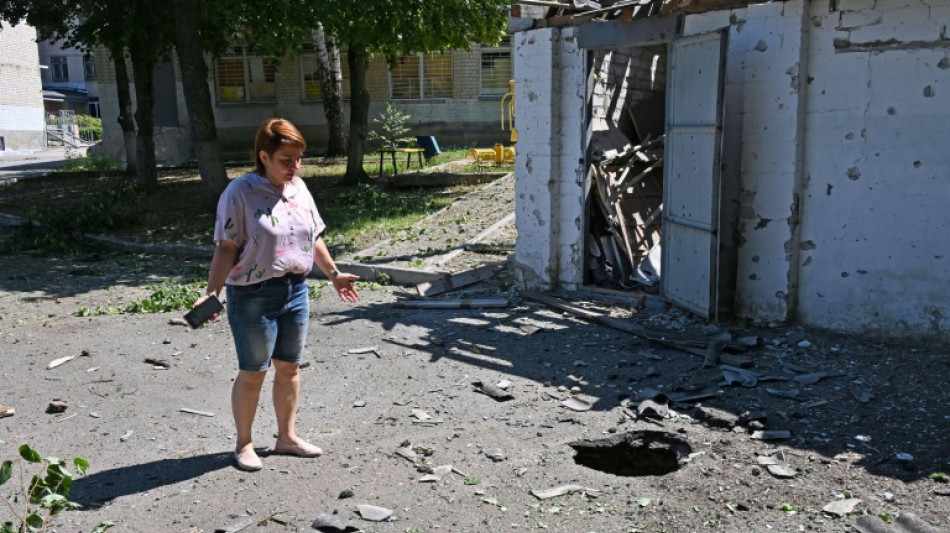
Humanitarian organisations on Friday condemned plans by the United States to supply controversial cluster munitions to Ukraine, citing the long-lasting danger posed by the weapons which leave behind unexploded bomblets.
"This is a death sentence to civilians over the long term. There are people who have not yet been born who will fall victim" to cluster bombs, said Baptiste Chapuis of Handicap International -- Humanity and Inclusion (HI).
Days ahead of a NATO summit in Lithuanian capital Vilnius next week, the American move comes as allies cast around for further assistance to offer Kyiv as its counter-offensive against Russian invaders has been slow to make major advances.
When they detonate, cluster bombs spread dozens of tiny bomblets over an area the size of several football pitches, with a large number burying themselves in the ground rather than exploding.
The weapons therefore effectively leave a large field of antipersonnel mines in their wake -- prompting a wave of condemnations even before the American delivery was confirmed.
"The USA's plan to transfer cluster munitions to Ukraine is a retrograde step, which undermines the considerable advances made by the international community in its attempts to protect civilians from such dangers," Amnesty International researcher Patrick Wilcken said in a statement, saying the aid group "urges the USA to reconsider".
In military terms, cluster bombs allow a belligerent to strike a large enemy formation at a single blow, to deny the use of an airfield's runway or halt an enemy's advance with widespread mines.
But they make no distinction between civilians and military personnel, with experts suggesting between five and 40 percent of bomblets do not explode on impact, remaining present on the battlefield for decades.
Beyond the immediate physical danger posed to civilians, "there is also the question of physical access to affected areas for humanitarian organisations," HI's Chapuis told AFP.
The bombs' use can "prevent a lifeline reaching affected populations," he said.
- 'Escalatory, counter-productive' -
In total, 123 countries have signed the 2008 Oslo Convention banning production, storage, sale and use of cluster munitions.
Major non-signatories include China, Iran, Israel, Russia, Syria, and the United States.
Since their development during World War II, cluster bombs have been used by the US in Iraq and Afghanistan, and by Israel in Lebanon during fighting against Hezbollah in 2006.
"People are still clearing American cluster munitions in Laos" almost 50 years after the war in neighbouring Vietnam ended, Chapuis said.
The text of the 2008 Convention says cluster bombs "kill or maim civilians, including women and children, obstruct economic and social development... impede post-conflict rehabilitation and reconstruction (and) delay or prevent the return of refugees and internally displaced persons... for many years after use".
Shipping the weapons to Kyiv would be "escalatory, counterproductive, and only further increase the dangers to civilians caught in combat zones", said Daryl Kimball, director of the US-based Arms Control Association.
"Cluster munitions will not differentiate a Ukrainian soldier from a Russian one," he added. "The effectiveness of cluster munitions is significantly oversold and the impact on non-combatants is widely acknowledged, but too often overlooked".
Civilians make up 97 percent of people killed or wounded by cluster bombs, with two-thirds of those victims being children where age data is available.
Around the world, 29 countries or territories are known or believed to remain mined with undetonated bomblets, including 10 signatories to the Oslo Convention which are required by the text to de-mine affected areas.
J.Horn--BTB