Iraq's prized modern art plagued by forgery, trafficking / Photo: © AFP

 More than half of England 'officially in drought': UK govt

 MEXC Integrates World-Check to Fortify Institutional Grade Compliance Architecture
 Tech stocks plunge further but London market hits record high
 Spain's three worst wildfires since 1961 happened in last two years
 FIFA proposal 'an outright attack on football', says DFB vice-president

 Principal reaction to FIFA's private investor plan
 Ireland's Harrington named as vice-captain for 2027 Ryder Cup
 Spain returns wildfire evacuees as France braces for worsening weather
 Neuer 'very likely' to retire at end of season

 BMW aims to cut 8,000 jobs by end 2027: company source

 Chawinga sisters sparkle as Malawi stun WAFCON holders Nigeria
 India's youth protests puncture Modi's aura of invincibility
 UBS says second-quarter net profit up 17% to $2.8 billion
 Hong Kong independent bookstores to close after police raid

 US, Saudi forces strike Iran-backed groups in Iraq
 Crude jumps on fresh Mideast flare-up, tech rout deepens
 Japan coral protectors race to save reefs from heat 'bomb'

 US Fed expected to hold rates steady as inflation hawks circle
 SK hynix posts 1,200% net profit boost on AI chip boom
 'Very hungry' Joao Pedro impresses new Chelsea manager Alonso
 US government bans humanoid robots manufactured abroad
 Eseme, Hobbs shine in Glasgow rain to win 100m Commonwealth gold
 Netanyahu holds first White House talks with Trump since Iran war began
 Warriors re-sign Green after LeBron James shun
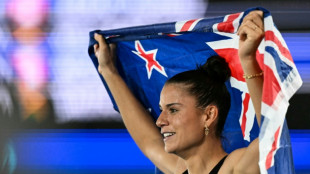
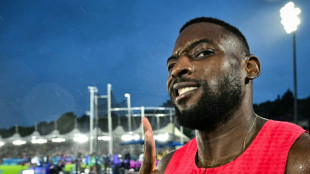 Cameroon's Eseme storms to 100m Commonwealth gold
Many masterpieces of Iraqi painting were looted or destroyed during the years of war, but now the country's artistic heritage faces another threat: rampant counterfeiting and illicit trafficking.
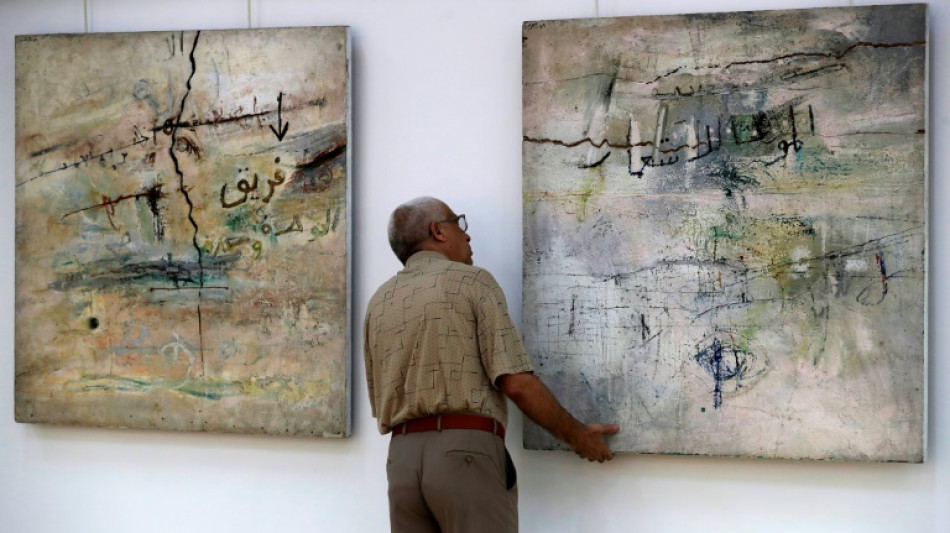
Adorning a wall of Baghdad's modern art museum, the painting "Death to Colonialism", with its sombre blues and greys, by pioneering Iraqi artist Shakir Hassan al-Said is one of the rare pieces from its era still on public display.
Painted in the 1970s, toward the end of the heyday of Iraq's modern art movement, it survived the chaos that followed the 2003 US-led invasion when the museum's 8,000-strong collection was decimated by looters.
"The works of Shakir Hassan al-Said are extremely valuable as far as Iraqi modern art goes as well as art from the Middle East," said Tamara Chalabi, co-founder and head of the Ruya Foundation for Contemporary Art.
Paintings by Said, who established the influential Baghdad Modern Art Group alongside painter and sculptor Jewad Salim, can fetch up to $100,000 at auction.
The late artist's family says it has successfully prevented the sale of numerous counterfeits of his works, and is in regular contact with international auction houses and galleries about his oeuvre.
"Recently, we spotted a fake in Baghdad," said the artist's 50-year-old son, Mohammed Shakir Hassan al-Said.
He contacted the gallery through social media to demand the painting be taken down -– but said the management refused, claiming it was authentic.
Said's family, in an effort to safeguard his legacy after his death in 2004, has meticulously documented his comprehensive works, comprising around 3,000 pieces.
Today, they are working on the publication of a catalogue to provide "immunity" against the fakes that have proliferated after 2003, his son told AFP.
- 'Better and better forgeries' -
The primary targets of forgers and traffickers within and outside Iraq are the works of its modern pioneers from the 1940s, 1950s and 1960s.
Many of them were among the thousands of pieces looted from the country's museums and homes during the security vacuum after dictator Saddam Hussein fell.
"Iraqi art is today one of the most important sources of artistic production in the Arab world," said Sultan Sooud al-Qassemi, the founder of the Barjeel Art Foundation, a museum in Sharjah in the United Arab Emirates.
Kadhim Hayder and Dia Azzawi are among some of the most sought-after artists.
"Nowadays some Iraqi artworks are sold for hundreds of thousands of dollars," the Emirati art collector told AFP. "Forgers are noticing the auction results... It's enticing them to create better and better forgeries."
The authentication problem arises across the region -- notably in Egypt, Lebanon and Syria -- but "with Iraq it is especially acute because of the multiple layers of challenges: the exile of artists, the successive wars," said Qassemi.
For Chalabi, "forgery is part of the overall problem of corruption in Iraq which has become embedded in the system and is accepted by people".
- Damaged reputation -
One of the largest collections lost was at the National Museum of Modern Art in Baghdad, which housed some of the country's most treasured artworks from the 21st century.
"Before 2003, we had 8,000 works," said Ali al-Doulaimi, the museum's former director. "Today, there are around 2,000."
In the years after the invasion, "we acquired new works, and lost pieces were returned", said Doulaimi.
The museum and Ministry of Culture are fighting to return some of Iraq's stolen art. They have provided Interpol with information about 100 missing pieces, said Doulaimi, who recently retired.
However, it is difficult to determine the true extent of what is missing -- with the unreliable inventory hand-written by the previous administration.
In 2017, British auction house Christie's announced it was withdrawing a painting by Iraqi artist Faeq Hassan after a "disagreement over ownership".
An Iraqi official explained at the time that the painting was likely smuggled out of the country after being on display at an officer's club affiliated with the Ministry of Defence.
The painting was never returned to Iraq.
At the Akkad gallery in Baghdad, owner Hayder Hachem Naji said the increase in counterfeits "damages the reputation of Iraqi art".
"Sometimes forgers will use an old painting to repaint on -- the frame and the canvas will be old", said the 54-year-old gallery owner.
Recently, he was asked to exhibit a painting attributed to well-known Cubist-influenced painter Hafidh al-Droubi.
Its owner hoped to sell it for $40,000 -- but Naji politely declined.
"Honestly, it was a very high-quality counterfeit," he said.
L.Janezki--BTB