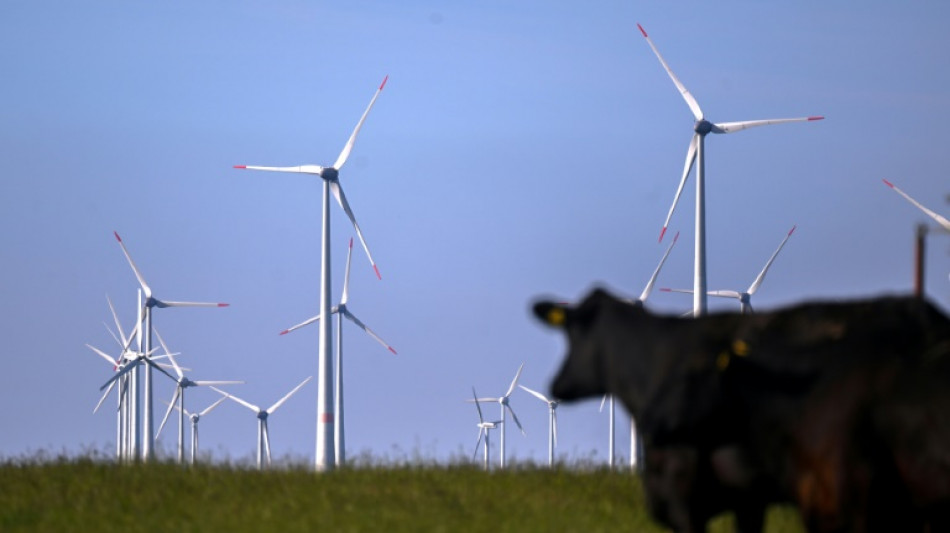
German economy bids goodbye to years of plenty / Photo: © AFP/File

 Judge orders Amy Winehouse's father to pay nearly £1mn to her friends
 Crisis-hit Cuba opens pharmacies, gas stations to private firms
 Pro-Kremlin TV commentator ordered to leave France, under house arrest

 'I started crying': Battle to tame fresh blaze near French seaside

 Former top US Covid expert Fauci declines to answer hostile Senate questioning
 Neymar says his time playing for Brazil 'is over'
 F1 boss says season to finish in Europe if Gulf races cancelled
 Spanish wildfire evacuees go home as France hit by new heat alert

 French DJ Kavinsky, famed for 'Nightcall', found dead in Paris
 How an AFP beach snap became emblem of Europe's wildfire summer
 More than half of England 'officially in drought': UK govt

 MEXC Integrates World-Check to Fortify Institutional Grade Compliance Architecture

 Tech stocks plunge further but London market hits record high
 Spain's three worst wildfires since 1961 happened in last two years
 FIFA proposal 'an outright attack on football', says DFB vice-president
 Principal reaction to FIFA's private investor plan
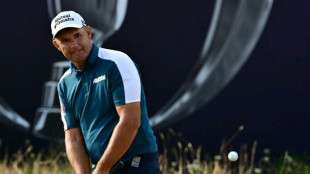 Ireland's Harrington named as vice-captain for 2027 Ryder Cup

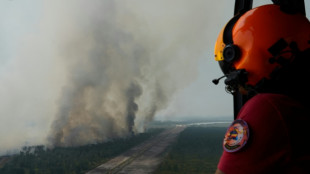 Spain returns wildfire evacuees as France braces for worsening weather
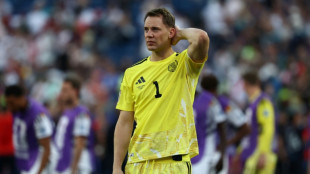 Neuer 'very likely' to retire at end of season
 BMW aims to cut 8,000 jobs by end 2027: company source
 Chawinga sisters sparkle as Malawi stun WAFCON holders Nigeria
 India's youth protests puncture Modi's aura of invincibility
 UBS says second-quarter net profit up 17% to $2.8 billion
 Hong Kong independent bookstores to close after police raid
 US, Saudi forces strike Iran-backed groups in Iraq
On his many visits to semiconductor factories and electric car plants, Germany's Chancellor Olaf Scholz bangs the drum for an economy at the forefront of an industrial transformation.
But the picture painted by business leaders and experts is less rosy, predicting hard times to come for Europe's largest economy.
Having dipped into recession at the beginning of the year, Germany looks set to finish the year in the red -- and at the back of the pack among its eurozone competitors.
The government is the only one left still predicting GDP will grow this year, while the main economic institutes and the IMF are looking at a drop of 0.2 to 0.4 percent.
Soaring inflation, painful interest rate rises, a sluggish recovery in its key export market China, and high energy costs are all weighing on activity.
The malaise might be more than temporary, some analysts warn.
"We currently see the country faced by a growing mountain of challenges," said Siegfried Russwurm, head of the influential BDI industry lobby.
A growing number of businesses, including small and midsize companies, are working on "moving part of their activities out of Germany", Russwurm said at the BDI's annual conference.
In the newspapers, the spectre of Germany as the "sick man of Europe" is back, harking back to the period before 2000 when the country struggled to compete on international markets and faced high levels of unemployment.
- New era -
Scholz, who became chancellor in late 2021, prefers to point to a different economic era.
In an interview with German media in March, he said the push to achieve climate neutrality by 2045 would bring back "levels of growth like in the 1950s and 1960s", the age of West Germany's postwar "economic miracle".
For the Social Democrat chancellor, the massive spending needed to install new wind turbines, build electric vehicles, make steel production less polluting or produce heat pumps will create a virtuous economic circle.
But the vision of a new economic golden age thanks to the transition to green energy leaves some experts sceptical.
The switchover will first of all see billions of euros sunk into "replacing the existing stock" of fossil-fuel technologies with renewable ones "with significantly elevated costs", Russwurm said.
"That will not lead to extra economic growth in the short term."
"We will only reap the reward of this investment in the distant future, when we have effectively managed to reduce greenhouse gas emissions," Timo Wollmershaeuser of the economic think-tank the Ifo institute told German media this week.
Relatively sluggish growth of less than one percent awaits Germany over the next few years, the country's main economic institutes predict.
"Growth could be significantly weaker over this decade than in the 2010s, years of supposed prosperity," said Marcel Fratzscher, head of the DIW think-tank.
- No longer attractive? -
The country is likewise held back by structural weaknesses that are stymying economic performance: slow bureaucracy, low levels of digitalisation and an ageing population that could lead to labour shortages.
"If the population sinks, GDP will not grow either," Wollmershaeuser said.
With the economy heavily reliant on manufacturing, Germany looks to suffer from energy costs that have risen in the wake of the war in Ukraine, even though they have fallen from their early peaks.
Russia was long the main source of gas for Germany, supplying huge volumes at relatively low prices to the country's biggest industrial groups.
"Energy costs, labour shortages, bureaucracy -- for us, producing in Germany is no longer attractive," Ingeborg Neumann, head of the German textile industry association, said at the BDI event.
L.Dubois--BTB