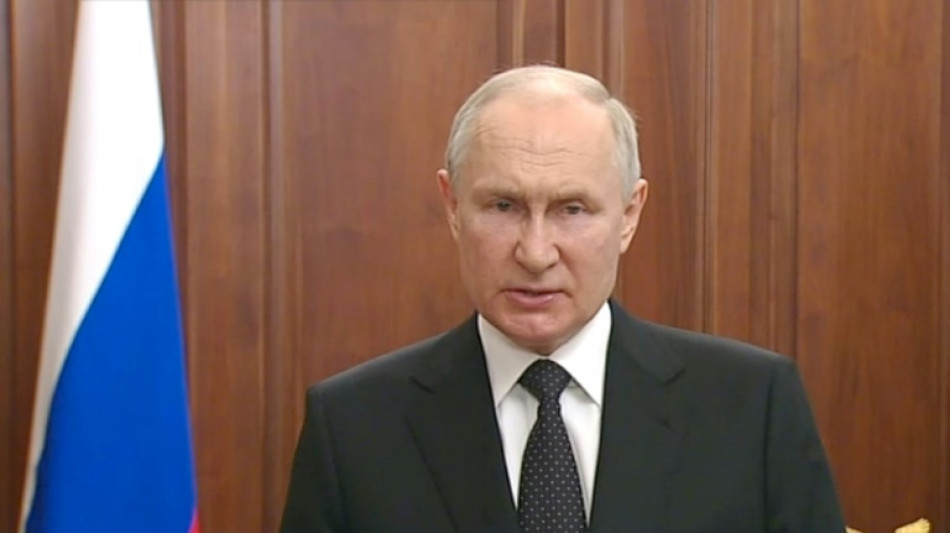
Putin's 'monster' turns against former master / Photo: © RUSSIAN PRESIDENTIAL PRESS OFFICE/AFP

 Judge orders Amy Winehouse's father to pay nearly £1mn to her friends
 Crisis-hit Cuba opens pharmacies, gas stations to private firms

 Pro-Kremlin TV commentator ordered to leave France, under house arrest

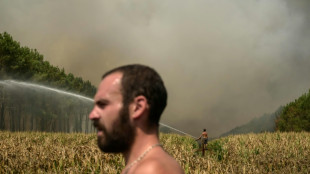 'I started crying': Battle to tame fresh blaze near French seaside

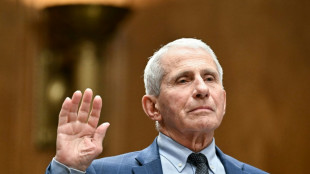 Former top US Covid expert Fauci declines to answer hostile Senate questioning

 Neymar says his time playing for Brazil 'is over'
 F1 boss says season to finish in Europe if Gulf races cancelled
 Spanish wildfire evacuees go home as France hit by new heat alert
 French DJ Kavinsky, famed for 'Nightcall', found dead in Paris

 How an AFP beach snap became emblem of Europe's wildfire summer

 More than half of England 'officially in drought': UK govt

 MEXC Integrates World-Check to Fortify Institutional Grade Compliance Architecture
 Tech stocks plunge further but London market hits record high

 Spain's three worst wildfires since 1961 happened in last two years
 FIFA proposal 'an outright attack on football', says DFB vice-president

 Principal reaction to FIFA's private investor plan
 Ireland's Harrington named as vice-captain for 2027 Ryder Cup
 Spain returns wildfire evacuees as France braces for worsening weather
 Neuer 'very likely' to retire at end of season

 BMW aims to cut 8,000 jobs by end 2027: company source

 Chawinga sisters sparkle as Malawi stun WAFCON holders Nigeria
 India's youth protests puncture Modi's aura of invincibility
 UBS says second-quarter net profit up 17% to $2.8 billion

 Hong Kong independent bookstores to close after police raid

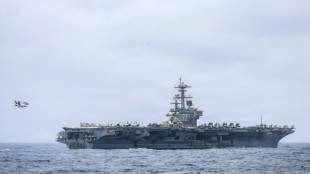 US, Saudi forces strike Iran-backed groups in Iraq
President Vladimir Putin has long profited from the actions of the Wagner mercenary group, but the mutiny led by its chief Yevgeny Prigozhin presents the Russian strongman with a challenge that could irreparably damage his authority, analysts say.
During its decade-long existence, Wagner's operations in Africa, Syria and eastern Ukraine have served Putin's political interests, with the president appearing to relish, rather than fear, the internal rivalries created by its success.
But now the organisation, whose development was encouraged by Putin, has turned against him.
Wagner chief Yevgeny Prigozhin -- once seen as a close ally and known as "Putin's chef" due to past Kremlin catering contracts rather than culinary prowess -- has moved into open revolt.
The speed and severity of Putin's address to the nation after Prigozhin said his troops had taken control of the military command centre and bases in the southern city of Rostov-on-Don, shows how seriously he regards the threat.
While the Russian state maintains the military might be able to put down the rebellion and even crush Wagner, the crisis risks inflicting permanent damage to Putin, who for two-and-a-half decades has prided himself on standing on top of an unchallenged vertical power structure.
"Putin's unambiguous position is to put down the rebellion. And hard," Tatiana Stanovaya, head of the R. Politik political analysis firm, said on her Telegram channel, arguing that Prigozhin was "doomed," even it it could take "a long time" to bring him down.
But she added: "Many inside the elite will personally blame Putin for the fact that everything went so far and that there was no proper reaction from the president in good time. Therefore, this whole story is also a blow to Putin's positions."
The UK ministry of defence said in its daily intelligence update that the "loyalty of Russia's security forces... will be key to how the crisis plays out."
- 'Usefulness to Putin' -
The Wagner outfit had taken a prime role in Putin's invasion of Ukraine, taking on the most dangerous frontline work, as the regular army appeared to falter, while sustaining what Western sources have described as colossal losses.
"For a long time, Prigozhin was allowed to attack the elite due to his usefulness at the front, as well as for some usefulness to Putin himself," said Alexander Baunov, senior fellow at the Carnegie Russia Eurasia Center.
But the war also emboldened Prigozhin, who for the first time openly admitted he had founded the group after years of denial, and openly recruited new members in Russian prison camps.
He also took to launching brazen verbal attacks against the Russian defence ministry.
His posturing was seen initially as a boost to the Kremlin's war effort but then as a rare and open challenge to Putin, who appeared to keep the group at arm's length and never held a public meeting with Prigozhin during the conflict.
Prigozhin waged what grew into a personal vendetta against Defence Minister Sergei Shoigu, widely seen as one of Putin's few personal friends within the Russian elite, who has hosted the president for holidays in his home southern Siberian region.
Baunov argued that the moment Prigozhin resolved to "cross the line" came on June 13 when Putin announced that mercenary groups like Wagner would have to be subject to control of the defence ministry, something the mercenary boss had long opposed.
In Putin's icy address on Saturday he pointedly did not refer to Prigozhin by name, a tactic he also uses concerning the jailed opposition figure Alexei Navalny.
- 'Frankenstein's monster' -
James Nixey, director of the Russia-Eurasia Programme, at UK thinktank Chatham House, described Prigozhin "as something of a Frankenstein's monster" who may have had "a licence at some point… to shock the Russian army into more effective warfighting."
"However, that has gone way beyond anything that Putin would ever have envisaged now," he told AFP.
While Prigozhin does not have the "manpower, troops or support" to take Moscow, let alone the entire country, it still "is the first direct serious challenge to Putin's authority in 24 years" of rule.
Prigozhin's conduct contrasts with that of the strongman of the southern Russian region of Chechnya, Ramzan Kadyrov, who also built up his own private militia force but has remained staunchly loyal to the Kremlin.
He has already vowed to send Chechen units to put down the revolt saying that if "harsh measures are necessary, we are ready."
"Moscow has every chance of regaining control," said the prominent French political scientist Anna Colin Lebedev.
"But this unprecedented situation confirms to the elites that the time for stability is over, and that the state that we thought was all-powerful has flaws. The seat of power today is a slightly more shaky chair than it was yesterday," she said.
D.Schneider--BTB