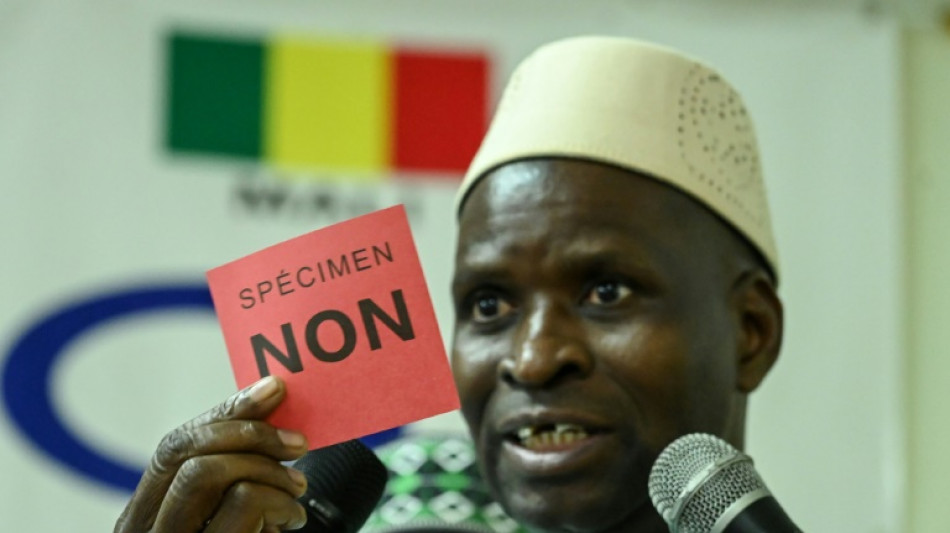
Mali junta holds vote on new constitution / Photo: © AFP

 Nigeria dismantles meth lab, but fears of Mexican cartel links linger

 FIFA proposal 'an opportunity but not an obligation', says Infantino

 Campari - king of the spritz - hopes to conquer American heartland
 Mancini wants Italy back to trophy-winning ways
 Torrey Pines added to new PGA Tour top-level series from 2028

 Air France-KLM and Lufthansa bid for Portugal's TAP airline

 Korda seeks 'control' as she chases history at women's British Open

 Profits soar at Airbus as it delivers more planes
 US-Saudi strikes in Iraq kill 20, including Iranians
 Brazil court scrutinizes Jair Bolsonaro deepfake endorsing son

 OpenAI says rogue AI agent attack hit other companies
 Irish singer, musician Glen Hansard killed in motorbike crash at 56
 Ukraine appeals against Russian return to Olympics

 Rheinmetall shares surge after armsmaker reports record profit

 Israel army hit Gaza mosque, says used for Hamas 'weapons storage'
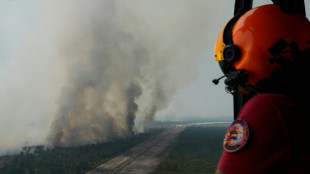
 Trump says US to hit Iran hard

 UBS second-quarter net profit up 17% to $2.8 billion

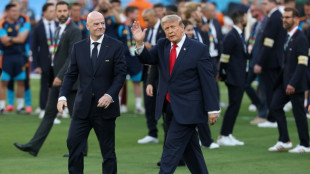 FIFA hit by furious backlash over plans to sell stake in competitions
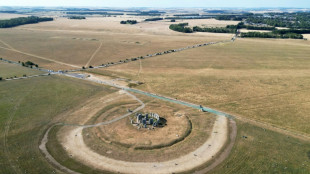
 TRX Spot and Perpetuals Listing Launches on Backpack, Expanding Access to the TRON Ecosystem

 Tel on target as Tottenham held to 1-1 draw by Sydney FC

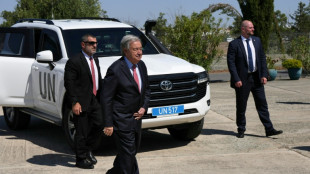 UN chief to convene new talks on divided Cyprus
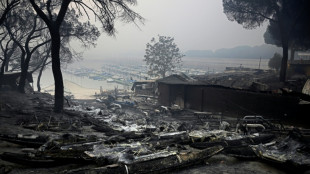
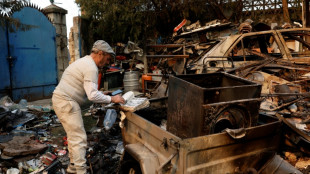 'No home': Spanish pensioner returns to charred ruins after wildfire

 Nepal's tiger numbers climb 20 percent to estimated 429: survey

 Germany's Merz under fire over chaotic reshuffle

 US, Saudi strike Iraq alliance in expanding war
Malians go to the polls on Sunday to pass judgment on the governing junta's constitution, which has fuelled speculation that the country's strongman ruler will seek election.
The west African nation has been under military rule since an August 2020 coup, which came after a decade of instability marked by jihadist insurgencies and political and economic crisis.
Some 8.4 million citizens are eligible to vote "yes" or "no" on the draft constitution in the first electoral test for leader Colonel Assimi Goita, 40, who has vowed to lead the country back to civilian rule in 2024 elections.
Voting begins at 0800 GMT and results are expected within 72 hours.
But election turnout is typically low in the country of 21 million, where many have grown weary of chronic instability, while others face the direct danger of jihadist attacks in central and northern regions.
Security is an ever-present concern -- there is always the risk of an attack. For this reason the vote will not be held in some parts of the country, including in Kidal, the ex-rebels' stronghold in the north.
The junta will be judged on turnout as a measure of its ability to restore stability, as well as an indicator of people's enthusiasm for the junta's agenda.
- Chronic instability -
The junta has advertised the new constitution as the answer to Mali's inability to tackle its multiple crises.
Mali's recent woes began in 2012, when separatist insurgents in the north -- long seen as marginalised by the southern government -- aligned with Al-Qaeda-linked Islamists to seize vast swathes of territory.
Former colonial power France stepped in and helped push back the Islamists, but attacks have continued, and Bamako has since broken its alliance with Paris in favour of Russia and its Wagner mercenaries.
Disputed parliamentary elections in March 2020, and mass protests against a government unable to reign in the insurgency, corruption and economic crisis, ended in a coup.
Goita initially appointed an interim president, but kicked him out in a second coup in 2021 and stepped into the top job himself.
Now doubts are swirling over his commitment to step down next year.
Mali's ruling junta called on Friday for the immediate departure of the country's UN peacekeeping mission, a central and controversial actor in a security crisis that has claimed the lives of nearly 200 peacekeepers in the last decade.
The African nation's military rulers had increasingly imposed operational restrictions on the peacekeepers, ultimately accusing the mission on Friday of not only being a "failure", but even becoming "part of the problem".
- A stronger presidency -
The new constitution will strengthen the role of the president, who will have the right to hire and fire the prime minister and cabinet members.
The government will answer to the president, and not parliament as the current 1992 document states.
It will also give amnesty to those behind prior coups, reform the regulation of public finances, and force MPs and senators to declare their wealth in a bid to clamp down on corruption.
"Those who contest these provisions think that Goita will be a candidate in the elections" in 2024, said Bamako University sociologist Brema Ely Dicko.
A politician, speaking on condition of anonymity, said some in the military were hoping a new constitution would "reset the clock" -- erasing a previous commitment that Goita would not take part in the election.
- 'Very popular' -
Goita, a former special forces commander who saw action during the 2012 rebellion, stays out of the limelight, and is known to be publicity shy.
"Opinion in Bamako is favourable to the president," said Dicko.
"Through his political and verbal silence he has become a sort of icon, and is very popular," said political scientist Abdoul Sogodogo.
Observers say a vote for "yes" is almost certain.
"Malians say that presidents from democratic regimes did not necessarily shine. Corruption has reached a certain level. People want to see something else," Dicko explained.
However, the reform has drawn vocal opposition, from former rebels and imams as well as political opponents.
Influential religious organisations oppose the continuation of secularism enshrined in the current constitution.
In the north, former rebels who, unlike the jihadists, signed a major peace deal with the state, also reject it.
"Mali needs a system built around institutions and not a system built around a man," said Makan Mary, a member of the Yelema party.
One researcher, who like many others spoke on condition of anonymity, argued the old constitution was satisfactory.
"The problem with the 1992 constitution is that it was never really applied... it cannot be the cause of the crisis," the researcher said.
Turnout is widely expected to be low.
"Generally, Malians do not vote. Since 1992, turnout has rarely exceeded 30 percent," said Sogodogo, the political scientist.
C.Kovalenko--BTB