-
 Japan quake toll hits 28 as survivors struggle in heat
-
Russian strikes kill at least 8, wound more across Ukraine
-
 AI data centre supplier Zhongji InnoLight tumbles on Hong Kong debut
-
Samsung quarterly operating profit up 1,800% on AI boom

-
 Drones and blackouts inflict a tense summer on Russia-annexed Crimea
-
Son at the double as MLS All-Stars beat Liga MX 4-3

-
 Australia ask for more information on FIFA sell-off plan
-
Meet the astronomer digging into the Milky Way's 'fossils'

-
 South Korean stocks bounce after rout, oil holds gains on Mideast woes
-
French teen fined in Singapore 'straw licking' case

-
 Stokes should return for 'one more Ashes': Australia coach McDonald
-
AI data centre supplier Zhongji InnoLight falls on Hong Kong debut

-
 Ngumoha scores as Liverpool beat Wrexham 1-0 in New York friendly
-
South Korea's women web sleuths fight AI deepfake porn

-
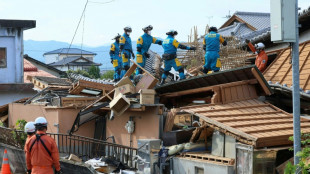 Up to 23 feared dead in Japan quake
-
Rushdie assailant convicted of terrorism charges

-
 Samsung operating profit up 1,800% in second quarter on AI boom
-
Australian regulator says Telegram breached online safety law

-
 De Zerbi wants Bergvall at Spurs, but can't promise starting role
-
New Zealand foreign minister in racism row with Chinese ambassador
-
 De Minaur tops Tsitsipas to set up Hewitt clash in Washington
-
Messi returns to Miami training after World Cup break

-
 Japanese population below 120 million for first time in decades
-
Idi Amin's grandson disqualified from Commonwealth boxing bout

-
 Meta misses profit expectations, sticks to massive AI spending
-
O'Connor wins Commonwealth heptathlon as Australia set new record for swimming golds

-
 Inequality best predicts how nations handle pandemics: study
-
De Minaur beats Tsitsipas to set up Hewitt clash in Washington

-
 Brazil's Jair Bolsonaro denies authorizing deepfake for election message
-
Nigeria dismantles meth lab, but fears of Mexican cartel links linger
-
 Boaduwaa strikes as Ghana beat WAFCON debutants Cape Verde
-
FIFA proposal 'an opportunity but not an obligation', says Infantino

-
 US actor Jared Leto denies latest accusations of sexual assault
-
Campari - king of the spritz - hopes to conquer American heartland

-
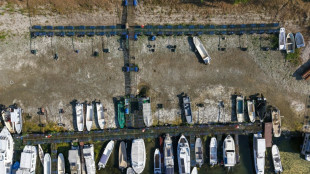 Danube drops to 'historic lows' as fresh heatwave hits
-
Mancini wants Italy back to trophy-winning ways

-
 US Federal Reserve holds rates steady as inflation hawks call for hike
-
Torrey Pines added to new PGA Tour top-level series from 2028

-
 Eala beats defending champ Fernandez in Washington
-
Air France-KLM and Lufthansa bid for Portugal's TAP airline

-
 US man accused of destroying evidence by wiping phone at airport
-
Korda seeks 'control' as she chases history at women's British Open

-
 BTS pulls out of Grammys after Asian pop category introduction
-
Profits soar at Airbus as it delivers more planes

-
 Judge orders Amy Winehouse's father to pay nearly £1mn to her friends
-
US-Saudi strikes in Iraq kill 20, including Iranians
-
 Crisis-hit Cuba opens pharmacies, gas stations to private firms
-
Brazil court scrutinizes Jair Bolsonaro deepfake endorsing son

-
 Pro-Kremlin TV commentator ordered to leave France, under house arrest
-
OpenAI says rogue AI agent attack hit other companies

Destruction of frontline dam forces Ukraine evacuations
An attack on a major Russian-held dam in southern Ukraine Tuesday unleashed a torrent of water that flooded a small city, two dozen villages and sent hundreds fleeing.
Moscow and Kyiv traded blame for ripping a gaping hole in the Kakhovka dam in what Kyiv said was an attempt by Russia to hamper Ukraine's long-awaited offensive.
People in the city of Kherson, the largest population centre in the area, headed for higher ground as water, which had been held back by the dam and a hydroelectric plant, rose in the Dnipro River.
"There is shooting, now there is flooding," said Lyudmyla, who had loaded a washing machine onto a cart that was attached to an old Soviet car.
Ukraine's interior ministry said 650 people had been evacuated as of 1000 GMT and 420 more had left the area, with a total of 24 villages flooded.
Ukrainian officials said there were a total of 16,000 people living in the "critical zone" for potential flooding.
On the Russian-controlled riverbank, Vladimir Leontyev, the Moscow-installed mayor of Nova Kakhovka where the dam is located, said the city was underwater and 900 people had been evacuated.
He said 53 evacuation buses were being sent by the authorities to take people from Nova Kakhovka and two other settlements nearby to safety.
"We are organising temporary accommodation centres with hot meals," he said.
The Kakhovka dam and its power plant were seized by Russia in the first hours of the war.
- 'War crime' -
Ukrainian President Volodymyr Zelensky accused Russia of blowing up the dam and said that the "world must react."
He said Russia had carried out "an internal explosion of the structures" of the plant at 2:50 am local time (2350 GMT).
Ukraine also called for a meeting of the UN Security Council and warned of a potential "ecocide" after 150 tonnes of engine oil spilled into the river as a result of the attack.
Western powers also blamed Russia for the damage to the Kakhovka dam, with EU chief Charles Michel calling it a "war crime."
NATO chief Jens Stoltenberg said the dam breach was "outrageous" and "puts thousands of civilians at risk and causes severe environmental damage."
Russia however said the dam was partially destroyed by "multiple strikes" coming from Ukrainian forces.
Kremlin spokesman Dmitry Peskov said the destruction was the result of "deliberate sabotage by the Ukrainian side."
The Soviet-era dam sits on the Dnipro River, which provides cooling water for the Russian-occupied Zaporizhzhia nuclear power plant, the largest in Europe.
The flooding fuelled already existing fears for the safety of the Zaporizhzhia plant, under Russian control.
The plant is some 150 kilometres (about 90 miles) away from the damaged dam.
Moscow and Kyiv offered conflicting versions on the safety of the facility.
The UN's International Atomic Energy Agency (IAEA) said its experts "are closely monitoring the situation" but that there was "no immediate nuclear safety risk at plant."
The Russian-installed director of the plant, Yuri Chernichuk, echoed the UN agency and said that "at the moment, there is no security threat to the Zaporizhzhia nuclear power plant."
"The water level in the cooling pond has not changed," he said, adding that the "situation was controlled by personnel."
Chernichuk said the water cooling system was not in direct contact with the outside environment and could be refilled from several alternative sources.
- 'Slow down' Ukraine-
But Ukraine -- which in 1986 suffered the devastating Chernobyl nuclear disaster -- sounded the alarm.
"The world once again finds itself on the brink of a nuclear disaster, because the Zaporizhzhia nuclear power plant lost its source of cooling. And this danger is now growing rapidly," Ukrainian presidential aide Mykhaylo Podolyak said.
The Ukrainian nuclear operator, Energoatom, said the water level of the Kakhovka reservoir was "rapidly decreasing, which is an additional threat to the temporarily occupied Zaporizhzhia nuclear power plant."
It said it was "monitoring the situation" and that currently the cooling plant's pond water level is "sufficient for the power plant's needs."
News of the damage came after Russia claimed Ukraine had begun a long-expected counter-offensive.
Ukraine has called for silence about its military movements and said there would be no formal announcement of the start of the operation.
On Monday, Zelensky praised his troops for advances claimed near the devastated city of Bakhmut, while Russia said it had repelled a large-scale attack.
Ukraine said that Russia's goal was to "create obstacles" for Kyiv's offensive to retake territory from Moscow's forces.
Kyiv already accused Moscow of mining the dam as combat raged nearby in October, during the last major offensive by Ukrainian forces seeking to regain lost territory. Russia denies the claim.
Built in the 1950s, the Kakhovka dam has strategic value as it pumps water into the North Crimean Canal, which starts in southern Ukraine and crosses the entire Crimean peninsula.
This means that any problem with the dam could cause water supply problems for Crimea, which has been under Russian control since 2014.
M.Odermatt--BTB