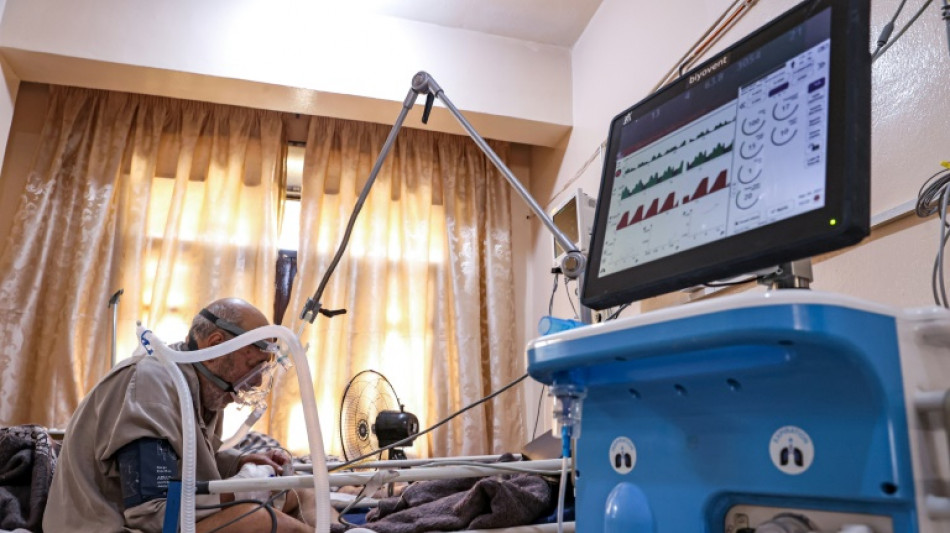
Critics say pandemic treaty text is 'step backwards' / Photo: © AFP/File

 Howe set to leave Newcastle, with Al-Ahli's Jaissle to take over: reports

 Ugandan opposition leader in intensive care: wife

 France firefighters hopeful, as Spain ends national emergency

 Stocks diverge on earnings, as oil steadies

 AI data centre supplier Zhongji InnoLight slips on Hong Kong debut

 Eurozone economy grows despite Middle East war

 Singapore group will develop 'most promising' Ebola vaccine
 BMW profit down a third as carmaker plans job cuts

 Newcastle boss Eddie Howe leaves club: reports
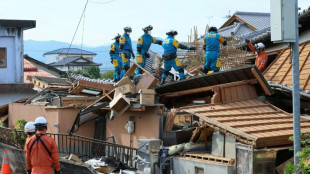 Japan quake toll hits 34 as survivors struggle in heat
 Seoul extends losses as most Asian markets drop, oil rises again
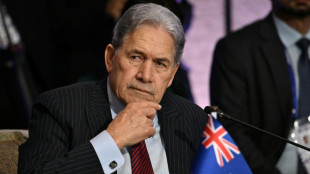 New Zealand top diplomat draws Chinese embassy complaint in racism row

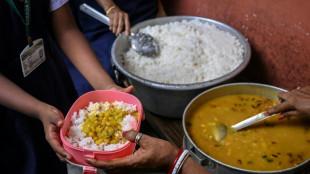 Eggs back in India school meals after outcry

 Gambling.com Group Is Now Grandstand

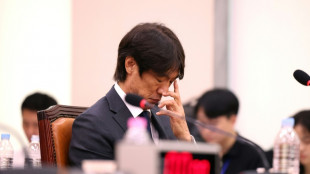 South Korea coach Hong grilled by MPs over World Cup flop
 Nolan's 'Odyssey' boosts sales of mythology tales in UK
 'It's exhausting': southwest Japan deals with second big quake in 10 years
 Russian strikes kill at least 8, wound more across Ukraine
 Samsung quarterly operating profit up 1,800% on AI boom

 Son at the double as MLS All-Stars beat Liga MX 4-3
 Meet the astronomer digging into the Milky Way's 'fossils'
 French teen fined in Singapore 'straw licking' case

 AI data centre supplier Zhongji InnoLight falls on Hong Kong debut

 South Korea's women web sleuths fight AI deepfake porn
 Rushdie assailant convicted of terrorism charges
As negotiations towards a new pandemic treaty pick up pace, observers warn of watered-down efforts to ensure equitable access to the medical products needed to battle future Covid-like threats.
Shaken by the pandemic, the World Health Organization's 194 member states are negotiating an international accord aimed at ensuring countries are better equipped to deal with the next catastrophe, or even prevent it altogether.
The process is still in the early stages, with the aim of reaching an agreement by May 2024.
But critics warn that revisions being made to the preliminary negotiating text are weakening the language -- notably in a key area aimed at preventing the rampant inequity seen in access to vaccines and other medical products during the Covid pandemic.
"I think it is a real step backwards," Suerie Moon, co-director of the Global Health Centre at the Geneva Graduate Institute, told AFP.
If poorer nations do not see solid language ensuring they will be better protected when the next pandemic hits, "there is a real risk that countries will walk away" from the talks, she warned.
- 'Not good enough' -
Observers said the new draft, which will be considered during the next round of negotiations led by the Intergovernmental Negotiating Body (INB) in mid-June, was "cleaner" -- but also weaker on some major points.
In particular, public interest groups said the removal of a call for public funds given to private sector R&D to be conditional on more transparent pricing of their products was an issue.
Instead, the updated draft urges countries to strive to promote knowledge-sharing and transparency "in accordance with national laws and as appropriate".
Countries should also "incentivise manufacturers of pandemic-related products to transfer relevant technology and know-how" to lower-income countries, one option says.
"Voluntary measures are not good enough," Luis Villarroel, head of the Innovarte NGO, which is focused on ensuring a balanced intellectual property system.
The text is "very weak", he told reporters.
- Urgency -
There are also elements in the text that will likely not sit well with the pharmaceutical industry. They include the option to link the sharing of pathogen samples with a requirement to share the benefits from the resulting products.
While agreeing it is important for all countries to swiftly share samples of viruses and bacteria that could cause dangerous outbreaks, poorer countries want access to the benefits, including the vaccines produced, technology transfers, royalties or capacity building programmes.
The International Federation of Pharmaceutical Manufacturers and Associations has warned that linking access to pathogen samples with such benefit sharing could dangerously slow down the sharing of vital data.
"We remain concerned that decisions could be taken that we come to regret in a future pandemic," IFPMA chief Thomas Cueni said in a statement to AFP.
"The innovation system and rapid access to pathogens were both crucial in enabling the pharmaceutical industry to develop new vaccines, treatments and diagnostics in response to Covid-19."
One thing everyone seems to agree on is that new pandemic threats are looming, and there is urgency in aligning positions to meet the May 2024 deadline.
"I think we'll get an accord in place if everyone realises that our window before this next pandemic, this next health threat, is probably not far away," US Health and Human Services Secretary Xavier Becerra told journalists in Geneva last week.
M.Odermatt--BTB