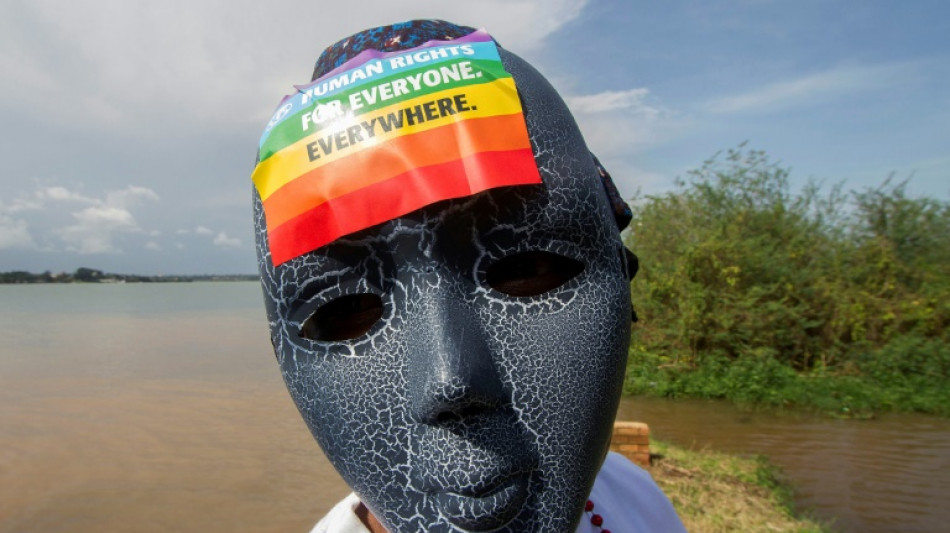
Uganda's president signs anti-gay bill into law / Photo: © AFP

 Howe set to leave Newcastle, with Al-Ahli's Jaissle to take over: reports

 Ugandan opposition leader in intensive care: wife
 France firefighters hopeful, as Spain ends national emergency
 Stocks diverge on earnings, as oil steadies

 AI data centre supplier Zhongji InnoLight slips on Hong Kong debut
 Eurozone economy grows despite Middle East war
 Singapore group will develop 'most promising' Ebola vaccine
 BMW profit down a third as carmaker plans job cuts

 Newcastle boss Eddie Howe leaves club: reports
 Japan quake toll hits 34 as survivors struggle in heat
 Seoul extends losses as most Asian markets drop, oil rises again
 New Zealand top diplomat draws Chinese embassy complaint in racism row

 Eggs back in India school meals after outcry
 Gambling.com Group Is Now Grandstand

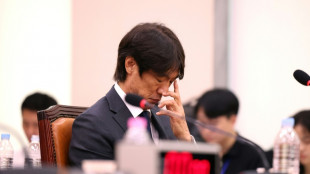
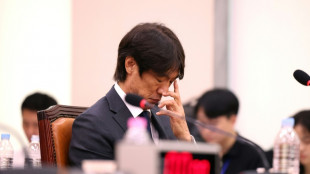 South Korea coach Hong grilled by MPs over World Cup flop
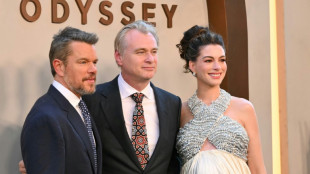 Nolan's 'Odyssey' boosts sales of mythology tales in UK
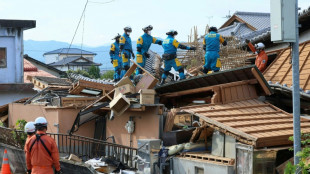
 'It's exhausting': southwest Japan deals with second big quake in 10 years
 Russian strikes kill at least 8, wound more across Ukraine

 Samsung quarterly operating profit up 1,800% on AI boom
 Son at the double as MLS All-Stars beat Liga MX 4-3
 Meet the astronomer digging into the Milky Way's 'fossils'
 French teen fined in Singapore 'straw licking' case
 AI data centre supplier Zhongji InnoLight falls on Hong Kong debut

 South Korea's women web sleuths fight AI deepfake porn
 Rushdie assailant convicted of terrorism charges

Ugandan President Yoweri Museveni on Monday signed into law a controversial anti-gay bill, his office and the country's parliament said, introducing draconian measures against homosexuality that have been described as among the world's harshest.
Museveni "has assented to the Anti-Homosexuality Bill 2023. It now becomes the Anti-Homosexuality Act 2023," a statement posted on the presidency's official Twitter account said.
Uganda's parliament on Twitter said Museveni had approved a new draft of the legislation that had been passed overwhelmingly this month by lawmakers, who defended the measures as a protection of national culture and values.
The president had called on MPs to rework the bill, although most of the hardline provisions that caused an outcry in the West and warnings of diplomatic repercussions were retained.
The amended version said that identifying as gay would not be criminalised but "engaging in acts of homosexuality" would be an offence punishable with life imprisonment.
Although Museveni had advised lawmakers to delete a provision making "aggravated homosexuality" a capital offence, lawmakers rejected that move, meaning that repeat offenders could be sentenced to death.
Uganda has not resorted to capital punishment for many years.
The United States, European Union and international human rights groups have all condemned the bill, and UN High Commissioner for Human Rights Volker Turk has described it as "probably among the worst of its kind in the world."
But it enjoys broad public support in Uganda, a devout majority-Christian nation, where homosexuals have faced persistent discrimination in recent years, and same-sex relationships have been attacked as an import from the West.
Discussion of the bill in parliament was laced with homophobic slurs, and Museveni himself referred to gay people as "deviants."
- 'Defending culture' -
"As Parliament of Uganda, we have heeded the concerns our people and legislated to protect the sanctity of family," said one of the bill's strongest proponents and Uganda's speaker of parliament, Anita Among, in a statement.
"We have stood strong to defend the Culture, Values and aspirations of our people."
The revamped bill says that "a person who is believed or alleged or suspected of being a homosexual, who has not committed a sexual act with another person of the same sex, does not commit the offence of homosexuality".
The earlier version also required Ugandans to report suspected homosexual activity to the police or face six months' imprisonment.
Lawmakers agreed to amend that provision after Museveni said it risked creating "conflicts in society."
Instead, the reporting requirement pertained only to suspected sexual offences against children and vulnerable people, with the penalty raised to five years in jail.
According to the new draft, anyone who "knowingly promotes homosexuality" faces up to 20 years in jail -- a provision left unchanged from the original bill.
Organisations found guilty of encouraging same-sex activity could face a 10-year ban.
Reaction from civil society in Uganda has been muted following years of erosion of civic space under Museveni's increasingly authoritarian rule.
But internationally, the law provoked outrage.
The European Parliament voted in April to condemn the bill and asked EU states to pressure Museveni into not implementing it, warning that relations with Kampala were at stake.
The White House has also warned the Ugandan government of possible economic repercussions if the legislation takes effect.
Homosexuality was criminalised in Uganda under colonial laws, but there has never been a conviction for consensual same-sex activity since independence from Britain in 1962.
F.Pavlenko--BTB