US says disabled Russian spyware used for two decades / Photo: © AFP

 Ferrand-Prevot bids to defend Tour de France Femmes title

 China factory activity slides as leaders seek spending boost

 Far right and far left battle for power in polarised Berlin

 Hamas agrees to deal for disarmament, Israel's withdrawal from Gaza

 Cables and cooling bring AI windfall to Indian suppliers

 Oil industry sees war windfall but girds for political blowback

 Spain safari park animals grazed calmly amid 'terror' of fire

 Casemiro keen to team with Messi at Miami
 Trump announces areement for disarmament of Hamas

 Apple tops estimates in CEO Cook's final quarter, but shares fall

 Turkey battles wind-fuelled wildfires on tourist coasts

 Venezuela begins demolishing buildings in quake zone

 Grynspan ahead in process to pick next UN chief: diplomats

 Thitikul leads from history-chasing Ryu at women's British Open

 Hundreds of migrants flood into Spain's Ceuta exclave from Morocco

 French minister defends expulsion order against Russian commentator

 Milei demands expulsion of foreigners expressing 'hate' against Argentina

 UK's highest court to hear Palestine Action's appeal against ban

 Hundreds of migrants swim to Spain's Ceuta territory from Morocco

 'Beginning of the end': Relief but no party as French wildfire winds down
 UEFA says will boycott World Cup over FIFA proposals

 Rashford says final goodbye to Barcelona ahead of Man Utd return

 History-chasing Ryu sets pace at women's British Open

 Italy's Po River valley on drought alert

 France, Spain eye wildfire reprieve as other blazes start up in Europe

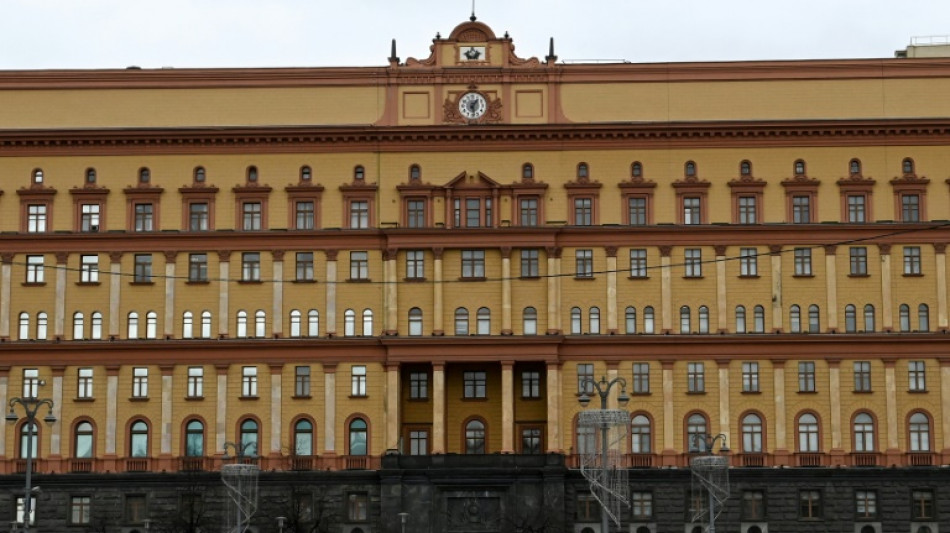
The US Justice Department said Tuesday that it had disabled a "sophisticated" malware network used by Russia's FSB intelligence agency for two decades to spy in 50 countries including a NATO ally.
The FSB had successfully inserted the "Snake" or "Uroburos" malware on computer systems around the world, focused on government networks, research facilities, journalists and other targets, according to US officials.
Computers in the system also served as relay nodes to disguise traffic to and from Snake malware inserted on target computer systems, they said.
In a years-long operation, the FBI was able to defeat Snake by inserting its own bit of computer code into it, which issued commands causing the malware to overwrite itself, the Justice Department said.
"Through a high-tech operation that turned Russian malware against itself, US law enforcement has neutralized one of Russia's most sophisticated cyber-espionage tools, used for two decades to advance Russia's authoritarian objectives," said Deputy Attorney General Lisa Monaco.
The malware has been known by computer security experts for at least a decade, and CISA, the US cyber defense agency, said the FSB began developing it in 2003.
CISA called Snake "the most sophisticated cyber espionage tool in the FSB's arsenal," noting that it was particularly stealthy, extremely hard to detect in computer systems and network traffic.
In addition, it was designed for easy updating and modification, and yet had "surprisingly few bugs given its complexity," CISA said.
Those aspects allowed the FSB to work undetected for years through sprawling host networks to get into computers with sensitive documents.
At least in one case Snake was placed on the systems of an unnamed NATO country, allowing Russian intelligence to access and exfiltrate sensitive international relations documents and diplomatic communications, CISA said.
"The effectiveness of this type of cyber espionage implant depends entirely on its long-term stealth," the agency said.
- FBI hacks back -
Previous official and news reports have indicated that Snake and related software has been found on government systems in Germany, Belgium, Ukraine and Switzerland.
CISA said US investigators had traced the malware's development to an FSB unit known as Center 16 operating out of Ryazan, Russia, and its operation from an office the unit has in Moscow.
CISA said it and cyber experts in allies have been investigating the unit and its hacking tools -- more broadly known as the Turla toolset -- for almost 20 years.
The FSB has adapted it for use in Windows, MacOS, and Linux operating systems, and even when it was exposed as a threat by computer security firms, the Russians were able to modify it to keep it hidden and functional.
But Snake's sophistication led to errors in using it by less skillful FSB operators, which allowed Western investigators to permeate its inner workings and track the malware, CISA said.
The Justice Department said the FBI developed a tool dubbed Perseus, that rendered the Russian malware ineffective.
Perseus "establishes communication sessions with the Snake malware implant on a particular computer, and issues commands that causes the Snake implant to disable itself without affecting the host computer or legitimate applications on the computer," the department said.
Despite the success the Perseus implant, Snake malware is still a threat, according to a joint advisory issued Tuesday from cyber authorities in the United States, Canada, Britain, Australia and New Zealand.
J.Bergmann--BTB