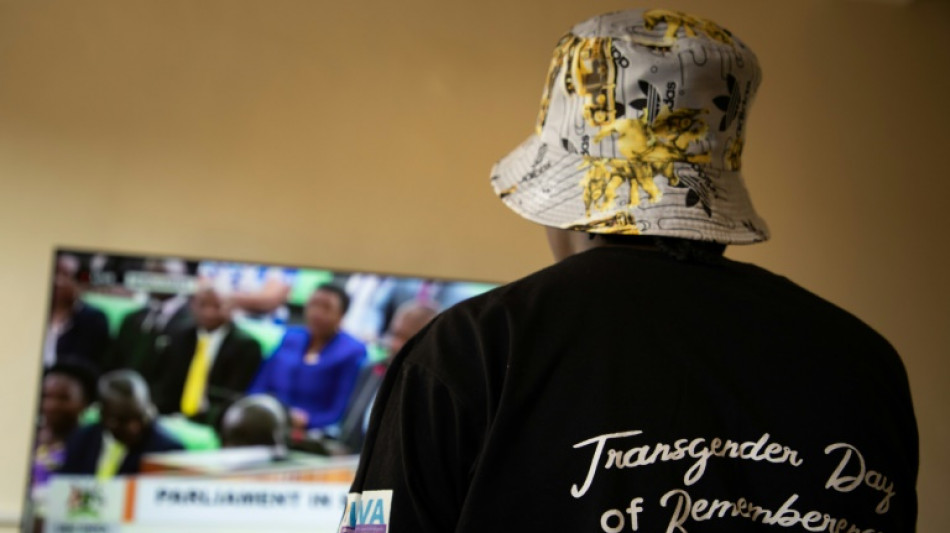
Uganda lawmakers pass new draft of harsh anti-gay bill / Photo: © AFP/File

 South African election results renew debate over identity-based voting

 South African voters report smoother local election but declining IEC trust

 Dolly Parton museum and Nashville hotel open after singer’s death

 George and Amal Clooney attend New York political-comedy reading

 British buyers pay substantial premiums for period-home appearance

 Thomas Markle released to house arrest after child-abuse-image charge

 Dawn of War 4 developers chose Adeptus Mechanicus for tactical variety

 Italy face unbeaten South Africa in Turin Nations Championship match

 ChatGPT interactive interface feature tested across six custom tools

 Freshways milk-price cut deepens pressure on UK dairy farms

 Labour and National remain virtually tied as New Zealand vote count advances

 The Good Daughter adapts Karin Slaughter thriller with Rose Byrne and Meghann Fahy

 Heavy-lift drone evacuates wounded Ukrainian soldier from frontline kill zone

 Morrison says West Brom recovered after pressure from successive derby losses

 Britain considers 2027 state visit for Ukraine’s Zelensky

 Arizona Democrats Secure Historic Trifecta with New Legislative Leadership

 Carney Welcomes U.S. Trade Reversal After Democratic Midterm Victory
Uganda's parliament on Tuesday passed a new draft of anti-gay legislation, retaining many draconian provisions despite President Yoweri Museveni's call to rework an earlier version of the bill following an outcry by Western governments.
"The bill passed," parliamentary speaker Annet Anita Among said after the final vote saw the legislation win approval from all but one lawmaker.
"We have a culture to protect. The Western world will not come to rule Uganda," she said.
Legislators amended portions of the draft law to clarify that identifying as gay would not be criminalised, but "engaging in acts of homosexuality" would be an offence punishable with life imprisonment.
Although Museveni had advised lawmakers to delete a provision making "aggravated homosexuality" a capital offence, lawmakers rejected that move, meaning that repeat offenders could be sentenced to death.
Uganda has not resorted to capital punishment for many years.
- 'Conflicts in society' -
The revamped bill says that "a person who is believed or alleged or suspected of being a homosexual, who has not committed a sexual act with another person of the same sex, does not commit the offence of homosexuality".
The earlier version also required Ugandans to report suspected homosexual activity to the police or face six months imprisonment.
Lawmakers agreed to amend that provision on Tuesday after Museveni last month said it risked creating "conflicts in society."
Instead, the reporting requirement now pertains only to suspected sexual offences against children and vulnerable people, with the penalty raised to five years in jail.
The bill will now be sent to Museveni, who can again choose to use his veto or sign it into law.
If he were to return the bill to parliament a third time, a two-thirds super-majority of lawmakers could override his veto, forcing the bill through.
The legislation enjoys broad public support in Uganda and reaction from civil society has been muted following years of erosion of civic space under Museveni's increasingly authoritarian rule.
The European Parliament last month voted to condemn the bill and asked EU states to pressure Museveni into not implementing it, warning that relations with Kampala were at stake.
The White House has also warned the Ugandan government of possible economic repercussions if the legislation takes effect.
Last week the US embassy wrote to delegates working on funding proposals to tackle the AIDS epidemic informing them of delays "in light of the recent developments with the potential signing of the Anti-Homosexuality Act and how it could impact our ability to provide services and assistance".
Homosexuality was criminalised in Uganda under colonial laws, but there has never been a conviction for consensual same-sex activity since independence from Britain in 1962.
J.Horn--BTB