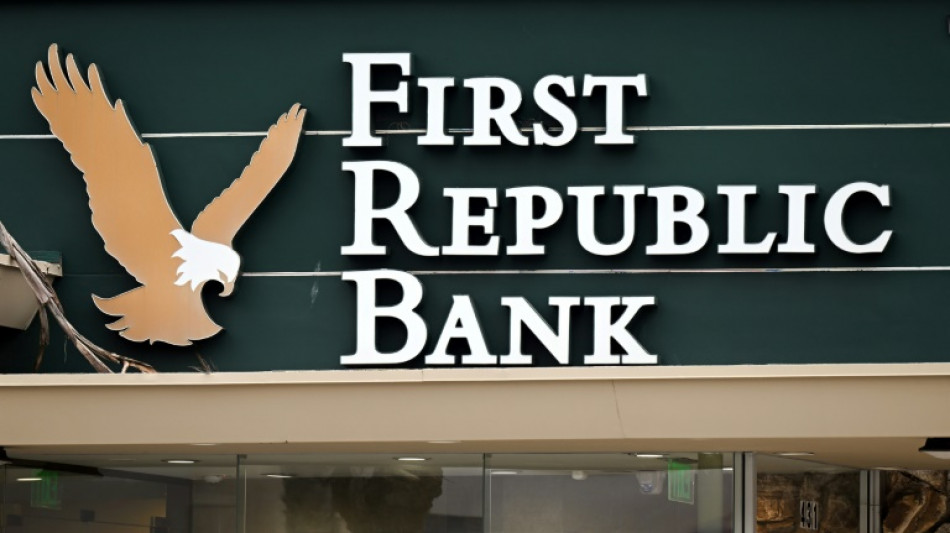
JPMorgan buys First Republic after regulators seize control / Photo: © AFP/File

 Fornaro Legal Releases Guidance to Help Businesses Maintain Clear Ownership Records During Growth

 Hamas agrees to disarm: what are the challenges ahead?
 Turkey fights to last major blaze inland from Bodrum
 Japan probe made closest-ever asteroid flyby: space agency

 Wildberries: 'Russia's Amazon' targeted by Ukraine

 FIFA plan hit by senior advisor resigning, AFC opposition

 Kosovo war crimes trial opens against fugitive Serbs

 Bodies of four climbers recovered near northern Pakistan avalanche site, police say
 Thousands cross into Spain's north Africa enclave in new migrant crisis

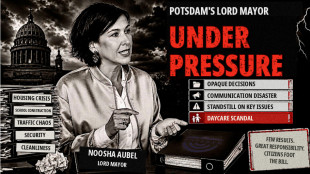 Noosha Aubel under pressure: Potsdam City Hall caught between going it alone and the nursery scandal

 UK singer Boy George pulls out of musical after pro-Israel song backlash

 Chipmaker Kioxia reports AI-driven 45-fold surge in quarterly net profit
 Wildfire rages on Crete as strong winds hamper firefighting

 Hamas agrees to disarm under Trump plan, but no word from Israel

 Alonso says new Chelsea signing Lacroix has 'winner's mentality'

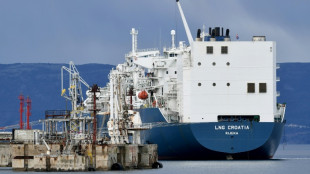 US eyes European gas dominance through Balkans

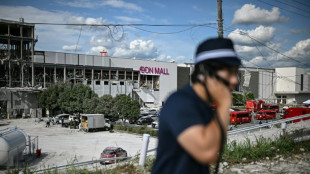 Sniffer dogs search mall wrecked after Japan quake

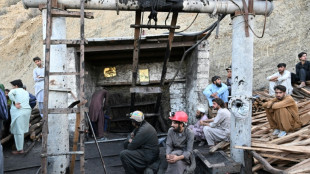 Explosion at coal mine kills 34 in southern Pakistan

 Renowned Nepali climber among 10 missing after Pakistan avalanche
 Ukrainian drones send Crimea's tourism industry into freefall

 Tech rebound fuels record-breaking rally in South Korean stocks

 The last trio: S.Africa's zoo elephants await their fate
 Venezuela transition talks set to kick off without Machado
 Anthropic's models gained unauthorized 'real-world' access during testing
 15 years in prison for father of US teenage school shooter
US financial authorities seized California's troubled First Republic Bank on Monday and sold it to JPMorgan Chase, hoping to bring to a close a two-month banking crisis that has spooked the financial system.
First Republic became the second-largest bank by assets to collapse in US history after it disclosed last week a loss of more than $100 billion in deposits in the first quarter.
After the bank failed to produce a satisfactory rescue plan and with its stock continuing to nosedive, the authorities stepped in, soliciting bids last week from potential buyers, and then taking possession of it.
As part of the deal struck early Monday, the California regulator appointed the Federal Deposit Insurance Corporation (FDIC), an agency in charge of guaranteeing bank deposits, as the receiver of First Republic, to be immediately sold to JPMorgan Chase.
The agreement means JPMorgan, the largest bank the United States, will recover all of the First Republic's deposits, as well as "almost" all of its assets, according to an FDIC statement.
The federal agency estimates it will have to pay about $13 billion to cover First Republic's losses, but the bank's 84 branches will be able to reopen Monday as usual.
"Our government invited us and others to step up, and we did," Jamie Dimon, JPMorgan's CEO, said in a statement after the deal was announced.
The transaction "modestly benefits our company overall," JPMorgan said in a news release.
Shares of JPMorgan jumped 4.3 percent in pre-market trading, while US stock futures were little changed.
"Hopefully this will help stabilize everything," Dimon said on a conference call with reporters before the US stock market opened.
- Snowball effect -
The government's takeover and sale of First Republic comes two months after the liquidation of Silvergate Bank -- a favorite among the cryptocurrency crowd -- and the swift demise of Silicon Valley Bank (SVB), after it took on excessive interest-rate risk.
New York-based Signature Bank also closed a few days after SVB.
The collapses led to a snowball effect as concerned investors looked for signs of weakness in the broader banking sector in the United States and Europe.
Swiss banking giant Credit Suisse became the highest-profile casualty when it was pushed by regulators to merge with its rival, UBS.
To avert yet another banking collapse, authorities reached a deal with 11 major banks in March to extend a $30 billion lifeline to First Republic.
But this was not enough to reassure investors.
By Friday's close, First Republic was worth only $654 million, down from more than $20 billion at the start of the year, and $40 billion at its peak in November 2021.
At first glance, First Republic appeared to be well-positioned: it was known to have a wealthy clientele who deposited large sums.
But the string of banking defaults rattled customers, and a majority of First Republic's loans were fixed-rate mortgages, which have lost value due to soaring interest rates.
Observers are closely watching for any broader implications of the latest financial institution's collapse.
With its assets standing at $233 billion at the end of March, First Republic is the second-largest bank to fall in US history -- excluding investment banks, such as Lehman Brothers -- after Washington Mutual's bankruptcy during the financial crisis of 2008.
That lender too was acquired by JPMorgan, the largest bank in the United States.
"First Republic was identified as a problem bank as early as mid-March and the announcement of its closure is not a new reason to worry," Nicolas Veron, an economist at the Peterson Institute for International Economics said ahead of the takeover announcement.
"If another bank proved to be fragile, that would be another problem," he added.
Soon after First Republic's seizure was announced, the US Treasury moved to try to allay concerns.
"The banking system remains sound and resilient, and Americans should feel confident in the safety of their deposits and the ability of the banking system to fulfill its essential function of providing credit to businesses and families," a Treasury spokesperson said.
The upheaval in the banking sector comes on the heels of a shift by the Federal Reserve to counter inflation with aggressive interest rate hikes, a pivot that has significantly revalued assets.
The Fed is expected to again lift interest rates later this week.
O.Lorenz--BTB