Winners and losers of Erdogan's polarising rule / Photo: © AFP

 Fornaro Legal Releases Guidance to Help Businesses Maintain Clear Ownership Records During Growth
 Hamas agrees to disarm: what are the challenges ahead?
 Turkey fights to last major blaze inland from Bodrum
 Japan probe made closest-ever asteroid flyby: space agency
 Wildberries: 'Russia's Amazon' targeted by Ukraine
 FIFA plan hit by senior advisor resigning, AFC opposition
 Kosovo war crimes trial opens against fugitive Serbs
 Bodies of four climbers recovered near northern Pakistan avalanche site, police say
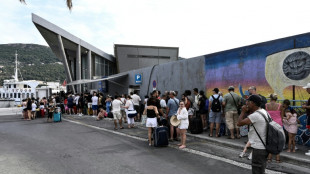
 Thousands cross into Spain's north Africa enclave in new migrant crisis
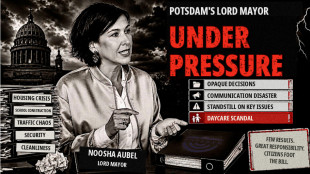 Noosha Aubel under pressure: Potsdam City Hall caught between going it alone and the nursery scandal
 UK singer Boy George pulls out of musical after pro-Israel song backlash
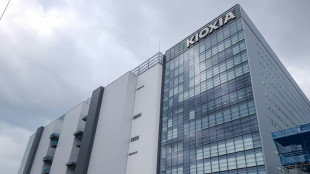 Chipmaker Kioxia reports AI-driven 45-fold surge in quarterly net profit
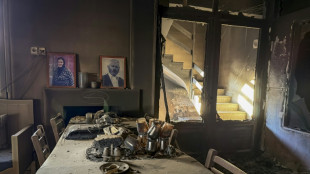 Wildfire rages on Crete as strong winds hamper firefighting
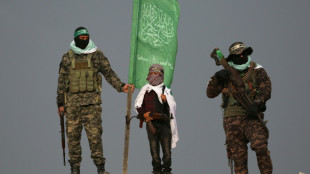 Hamas agrees to disarm under Trump plan, but no word from Israel
 Alonso says new Chelsea signing Lacroix has 'winner's mentality'
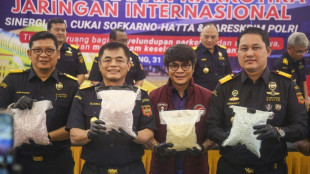
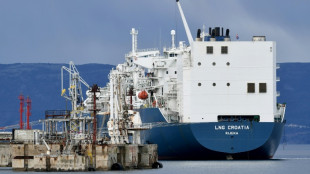 US eyes European gas dominance through Balkans
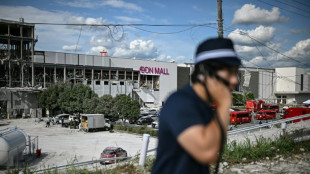 Sniffer dogs search mall wrecked after Japan quake
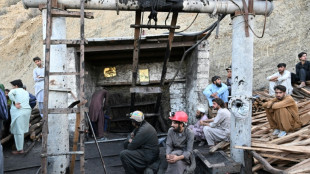 Explosion at coal mine kills 34 in southern Pakistan
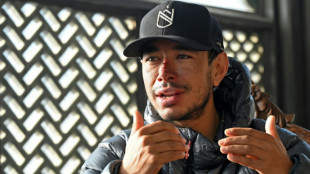 Renowned Nepali climber among 10 missing after Pakistan avalanche
 Ukrainian drones send Crimea's tourism industry into freefall
 Tech rebound fuels record-breaking rally in South Korean stocks
 The last trio: S.Africa's zoo elephants await their fate
 Venezuela transition talks set to kick off without Machado
 Anthropic's models gained unauthorized 'real-world' access during testing
 15 years in prison for father of US teenage school shooter

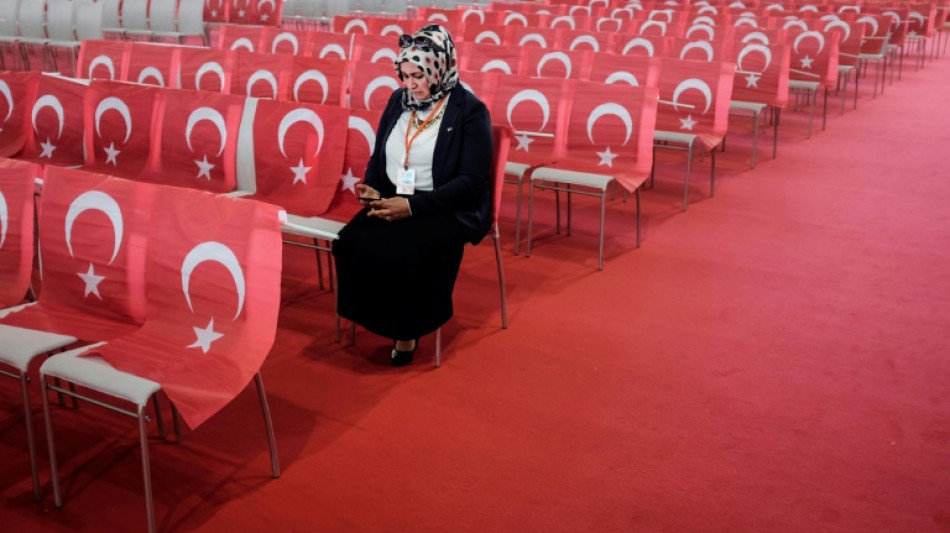
President Recep Tayyip Erdogan's two-decade domination of Turkey has seen some groups prosper and others suffer in the highly polarised country.
AFP looks at some of the winners and losers ahead of the May 14 parliamentary and presidential vote.
- Winners -
RELIGIOUS GROUPS:
The religious affairs directorate, or Diyanet, became a powerful force under Erdogan, a pious Muslim whose Islamic-rooted party has tested the secular foundations of post-Ottoman Turkey.
Diyanet has its own TV channel that it uses to weigh in on political debates, and enjoys a budget comparable to that of an average ministry.
Its expanded reach has turned it into a target of Erdogan's secular opponents, who complain about the growing number of mosques, Koran courses and the influence of religious sects.
Diyanet's former head, Mehmet Gormez, secured Erdogan's strong backing after becoming embroiled in controversy over his lavish lifestyle, which included the use of a flashy German car.
CONSTRUCTION SECTOR:
Erdogan has spearheaded a building spree that has spurred growth but created controversial ties between government insiders and the winners of plump state contracts.
The development boom reshaped Turkey, offering modern homes to millions while filling ancient cities with high-rises.
The construction craze was accompanied by Erdogan's penchant for what he dubbed his "crazy projects".
These ambitious, mega-investments spanned Turkey with bridges, airports and high-speed rail. He even laid plans for a new canal to rival the Bosphorus Strait.
His detractors called them an environmental disaster that enriched government allies.
More than 200 contractors were arrested as part of a probe into safety violations that contributed to the death of more than 50,000 people in February's earthquake in Turkey's southeast.
CONSERVATIVE WOMEN:
Erdogan's government has championed the rights of conservative Muslims after decades of staunchly secular rule.
Some of the biggest gains were made by pious women, who were gradually allowed to start wearing headscarves at universities, in the civil service, parliament and the police.
The issue is personal for Erdogan, who has lamented how secular governments "did not allow my headscarf-wearing daughters" to go to university.
Erdogan's two daughters, Sumeyye and Esra, eventually studied abroad.
- Losers -
MEDIA:
Turkey's once-vibrant independent media scene -- admired by diplomats as a sign of pluralism -- has gradually withered under Erdogan.
Analysts estimate that 90 percent of Turkey's media are allied with the government.
Erdogan's government heavily taxed critical media and used cheap loans to encourage select businessmen to run newspapers and television channels.
This has been accompanied by a crackdown on opposition reporters, especially those in Kurdish media outlets, which gathered force after a failed 2016 coup.
According to the Committee to Protect Journalists, Turkey is one of the world's most prolific jailers of journalists.
Turkey's P24 independent journalism platform says 64 reporters are currently in jail.
INFLUENCE OF THE MILITARY:
Turkey's army, a secular force with a history of staging coups, gradually lost its influence in politics.
The process accelerated after a renegade military faction staged a failed coup attempt in 2016, which Erdogan blamed on a Muslim preacher exiled in the United States.
Erdogan retaliated with purges that saw thousands of soldiers jailed -- hundreds of them for life.
The army's top brass was slashed back, hurting one of the most strategically located defence forces of the NATO alliance. The air force in particular lost some of its mostly highly trained pilots and officers.
- Mixed fortunes -
KURDS:
Repressed by past secular governments, Kurds helped Erdogan get elected and supported him early in his rule.
Erdogan tried to improve their cultural and linguistic rights, launching talks aimed at ending a Kurdish armed struggled for broader autonomy in Turkey's southeast.
But the community, estimated to be 15 to 20 million strong, came under pressure when those talks collapsed and violence resumed in 2015.
Dozens of Kurdish mayors were stripped of their elected office in 2019 and replaced by state trustees. The main pro-Kurdish party is in danger of being shut down over alleged terror ties.
MIDDLE CLASS:
Turkey enjoyed an economic boom during Erdogan's first decade in power that created a thriving new middle class.
But the economy has been lurching from one crisis to another since 2013.
Turkey's current gross domestic product -- a measure of a country's wealth -- has shrunk back down to levels at which it stood in the first five years of Erdogan's rule, according to the World Bank.
Unchecked inflation has erased the savings of millions, leaving many in deep debt.
I.Meyer--BTB