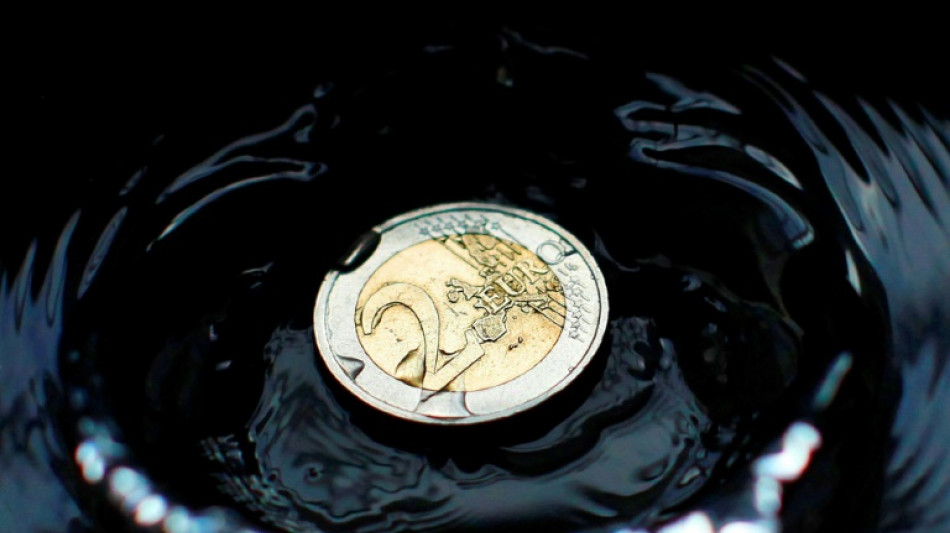
EU proposes revamped spending rules to boost growth / Photo: © AFP/File

 Tech-fuelled rally fizzles as oil prices rise

 Chelsea's Mudryk cleared to play after doping ban appeal

 A side of oysters for France's flat-out firefighters

 England cricket chief Key refuses to rule out Stokes return

 New blazes in Greece as strong winds hamper firefighting

 Springboks star Feinberg-Mngomezulu back for Argentina Test

 Shops closed, businesses quiet as Spain's Ceuta faces migrant surge

 Chelsea fined £10mn, handed suspended transfer ban for breaching agent rules

 Residents defend Spain’s ancient 'El Abuelo' tree from flames
 Forever chemicals and pesticides: what to know

 Spaniard Santi Denia takes over as Czech Republic coach
 EU races to contain new migrant crisis as thousands cross into Spain's N. Africa enclave

 Profits surge at US oil giant amid Iran war supply shock

 Bodies of four climbers found near Pakistan avalanche site: police

 UK court dismisses challenge against new Chinese embassy in London

 Stock markets rally on tech rebound

 Tyla drops Lagos show as South Africa, Nigeria row over immigration

 BP seeks to sell North Sea business as UK faces drilling dilemma

 Pro-Kremlin commentator denounces 'censorship' in France
 AC Milan 'in tears' at death of Italian football legend Baresi

 France, Spain assess scorched terrain as new wildfires threaten other regions

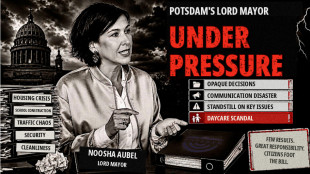
 Нооша Аубель під тиском: мерія Потсдама між самостійними кроками та скандалом із дитячими садками
 Missing climber Nirmal Purja redefined mountaineering

 British oil giant BP aims to sell North Sea business

 Sony hikes profit outlook on strong gaming earnings

The EU unveiled an overhaul of its fiscal rules on Wednesday, a long-awaited reform that has bitterly divided member states over how to encourage investment while strengthening scrutiny of government spending.
The European Commission, the EU's executive arm, presented the proposal to simplify the complex rules, known as the Stability and Growth Pact, which limit how much the bloc's 27 member states can borrow.
Critics say the rules have failed to prevent debts from rising among the 27 member states and they must be reformed to fit with the reality of the bloc's diverse economies.
But the commission also pointed to boosted defence spending as Brussels comes to terms with what the reality of war raging on the bloc's doorstep, in Ukraine, means for EU countries.
The pact is currently suspended following the Covid pandemic and the Ukraine conflict.
But the reform has split the bloc between the more frugal northern countries, including Germany, and southern states like Italy.
There will now be months of rancorous negotiations between member states and the European Parliament because different countries want changes for different reasons.
The commission has set an ambitious target of concluding the negotiations by the end of this year but that appears unlikely at this stage.
Germany, a staunch defender of fiscal discipline, fears the reform will overly relax the European Union's budgetary straitjacket and undermine fairness within the bloc. Italy and others argue the rules constrain their ability to invest.
The pact currently stipulates that states' public deficits should not go above three percent of gross domestic product, and debt should stay below 60 percent of GDP.
Wednesday's proposals do not deviate far from what the commission first announced as plans for reform in November 2022.
The three-percent deficit and 60-percent debt targets will stay, but there will be more flexibility through individual plans for debt reduction tailor-made for each country.
"We simultaneously ensure both equal treatment and consideration of country-specific situations," the EU's economy commissioner, Paolo Gentiloni, told a news conference.
The EU also wants to give wiggle room for countries to invest in digital and green transitions as Brussels tackles the challenge from the United States and China, where energy costs are cheaper and lavish subsidies risk luring businesses away from Europe.
The commission also acknowledged on Wednesday the need for the bloc to "increase defence capabilities" through "high levels" of investment and reform.
- Soaring debts -
The commission has proposed that countries present their own gradual adjustment trajectory, through reforms and investment, to bring their deficit down over a period of at least four years.
It also appeared to try to satisfy Germany with a proposal that says member states must try to reduce their deficit by 0.5 percent per year if it is above three percent of GDP.
There will still be a "general escape clause" in the case of a severe economic crisis that would require extraordinary measures usually prohibited by the rules.
The EU suspended the pact in 2020 to allow member states to pour money into their economies during the coronavirus pandemic.
That was extended last year to let states raise spending to protect households and businesses from sky-high energy prices after Russia's invasion and to avoid recession.
EU member states' debts have since rocketed, and the only thing every country agrees on is the need to reform the pact.
Today, Italy's debt is almost 150 percent, while France's is around 110 percent, -- well above the bloc's limits.
The rules were due to come back into force again next year but last month, Brussels said there would be a gradual return as it told members to rein in spending in 2024.
P.Anderson--BTB