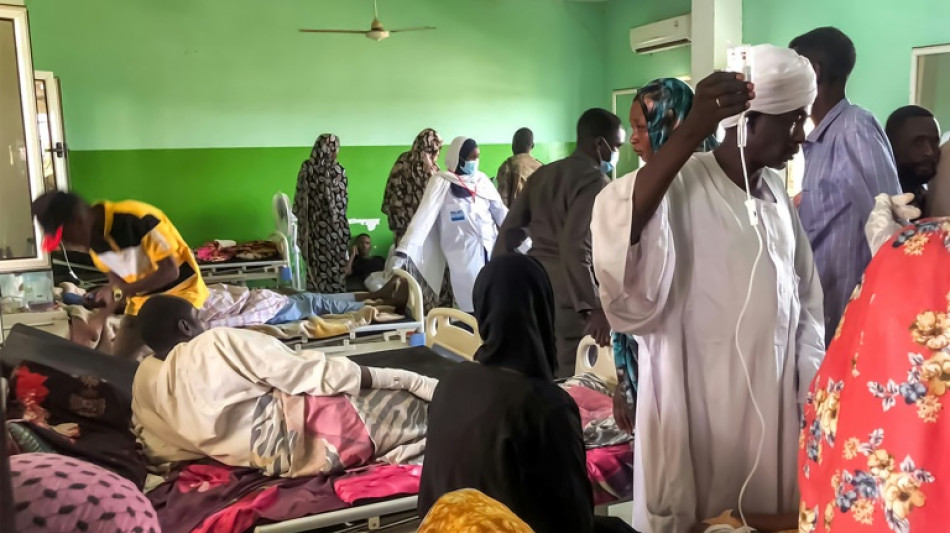
Stench of death engulfs Sudan hospitals, but leaving is mortal danger / Photo: © Médecins sans Frontières (MSF)/AFP/File

 EU grapples with migrant crisis in Spain's N. Africa enclave

 Hungary to shut nuclear plant as heatwave hits central Europe
 Strengthening El Nino 'adding fuel to a planet already on fire': UN chief

 Tech-fuelled rally fizzles as oil prices rise
 Chelsea's Mudryk cleared to play after doping ban appeal

 A side of oysters for France's flat-out firefighters

 England cricket chief Key refuses to rule out Stokes return
 New blazes in Greece as strong winds hamper firefighting
 Springboks star Feinberg-Mngomezulu back for Argentina Test
 Shops closed, businesses quiet as Spain's Ceuta faces migrant surge

 Chelsea fined £10mn, handed suspended transfer ban for breaching agent rules
 Residents defend Spain’s ancient 'El Abuelo' tree from flames
 Forever chemicals and pesticides: what to know

 Spaniard Santi Denia takes over as Czech Republic coach

 EU races to contain new migrant crisis as thousands cross into Spain's N. Africa enclave
 Profits surge at US oil giant amid Iran war supply shock
 Bodies of four climbers found near Pakistan avalanche site: police
 UK court dismisses challenge against new Chinese embassy in London
 Stock markets rally on tech rebound

 Tyla drops Lagos show as South Africa, Nigeria row over immigration

 BP seeks to sell North Sea business as UK faces drilling dilemma

 Pro-Kremlin commentator denounces 'censorship' in France
 AC Milan 'in tears' at death of Italian football legend Baresi
 France, Spain assess scorched terrain as new wildfires threaten other regions
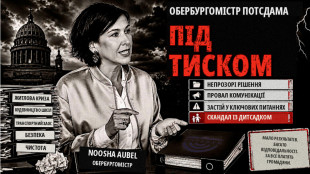 Нооша Аубель під тиском: мерія Потсдама між самостійними кроками та скандалом із дитячими садками
Ibrahim Mohamed turned in his hospital bed to find the patient next to him had died, but fighting that had erupted in Sudan's capital hours earlier meant the body could not be moved.
Battles since April 15 between the forces of two rival generals have turned Khartoum into a war zone, shuttering hospitals and preventing health professionals from providing care.
By the time Mohamed, a 25-year-old leukaemia patient, was finally evacuated from the Khartoum Teaching Hospital on Tuesday, the body was still there.
"Because of the intense fighting, the person could not be moved and buried," Mohamed's father, Mohamed Ibrahim, 62, told AFP.
Attiya Abdullah, general secretary of the Sudanese doctors' union, said the same was happening in other hospitals.
"Decomposing dead bodies are kept in wards" for lack of anywhere else to put them, he told AFP.
With explosions, heavy gunfire and air strikes that have killed hundreds in the capital and in other parts of the country, "morgues are packed and the streets are littered with bodies", Abdullah said.
According to him, urban warfare between forces loyal to Sudan's army chief Abdel Fattah al-Burhan and his deputy-turned-rival, Mohamed Hamdan Daglo, the commander of the powerful paramilitary Rapid Support Forces (RSF), has triggered a "complete and total collapse of the healthcare system".
As Ibrahim waited with his son in the hospital ward under ceaseless blasts, "the stench filled the room", the father said, made worse by power outages in the baking heat.
"We could either stay in the pungent room, or go outside and be met with gunfire."
- Hospitals under fire -
At around 1:00 pm on Tuesday, after three days with no food, water or electricity, the father and son finally left, but not to safety.
"The hospital was being shelled," Ibrahim recounted.
According to the doctors' union, 13 hospitals nationwide have been shelled and 19 others evacuated since fighting began.
At least eight people have died in attacks on health facilities, according to the World Health Organization (WHO).
"The RSF and the army were fighting right outside the hospital," Ibrahim said, adding that some of those evacuating were hit by gunfire themselves.
When the bombs start falling near hospital premises, doctors face a grim choice.
"We find ourselves forced to let patients leave," Abdullah said. "If they stay, they would be killed."
Ibrahim managed to shield his sick son from the crossfire, but "had to go on foot" through the streets, dashing from one safe point to another.
It took them five hours to get home "safely, but my son's health has deteriorated since", the father said.
With nearly three quarters of hospitals shuttered and "operational hospitals only providing emergency services", according to Abdullah, there was nowhere else Mohamed could go.
"I just want all of this to stop so I can take my son to be treated," his father said.
- Medics 'extremely exhausted' -
According to Abdullah, even hospitals that have remained open, receiving mostly gunshot wounds, "are at risk of closure at any time".
"They don't have enough surgical equipment, not enough fuel to run generators, not enough ambulances or blood."
The WHO said 413 people had been killed and 3,551 wounded in the fighting across Sudan, but the actual death toll is thought to be far higher, with doctors and humanitarian staff unable to reach those in need.
"Some hospitals have had the same team working" for eight days straight, Abdullah told AFP.
"Some have only one surgeon. All are extremely exhausted."
Medics have made daily appeals for a ceasefire to allow humanitarian access to move through, transport the wounded and bury the dead.
But brief lulls in the fighting in Khartoum have repeatedly given way to the crackle of gunfire, cutting through the momentary silence, and no truce has taken hold.
As civilians rallied on social media to find any sources of medication for chronically ill relatives, UNICEF has warned power cuts and fuel shortages were putting at risk the cold storage of more than $40 million worth of vaccines and insulin.
On Friday, as a third ceasefire collapsed, the doctors' union shared advice on Facebook on how to handle, shroud and bury decomposing bodies.
J.Fankhauser--BTB