
Lake Urmia risks fully drying up: Iran wetlands chief / Photo: © AFP/File

 Petrol and diesel prices remain broadly steady across major Indian cities

 Reliance shares remain in focus after near-12% surge

 2026 Arizona Midterms: Key Races, Ballot Measures, and Voter Deadlines

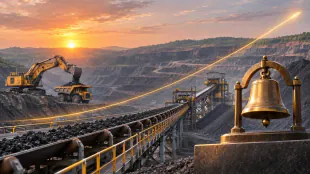 Coal India prepares possible $1 billion Mahanadi Coalfields listing

 Julia Stiles and Ezra Sosa Share Emotional Farewell After 'DWTS' Elimination

 US Buildings Threatened by Wildfires Could Triple by 2060

 Why Pregnancy Cost Estimates Fail: A Family’s $9,000 Surprise

 US Strikes Iranian Targets in Strait of Hormuz Ahead of Midterms

 Brodeur’s Overtime Goal Secures Bethlehem’s Second Consecutive Sectional Title

 Rare 1970 Plymouth ‘Cuda 426 Hemi Listed for $400,000
 The Digital Burden: Why Instant Messaging Feels Like a Full-Time Job
 Alberta Tabled Controversial Riding Boundary Maps Amid Gerrymandering Accusations

 Hong Kong court set to sentence activist Joshua Wong in security case

 Australia raises benchmark rate to highest level in 18 years

 'The Remarried Empress' Cast Discusses Bringing Fantasy Royal Drama to Life

 Asian stocks retreat as AI worries outweigh steep oil-price drop

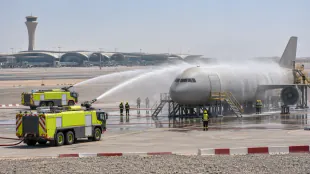 Hamad International Airport stages emergency drills during WATAN 2026

 Global failure to punish attacks leaves journalists at continuing risk

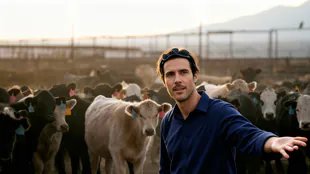 Researchers Warn 'Bookkeeping Trick' Masks Beef Industry's Methane Emissions

 Climate Change Intensified Atlantic Hurricanes, Study Finds
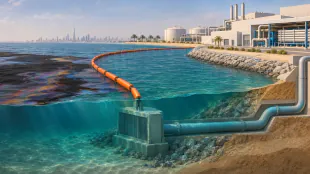
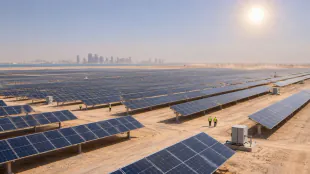 Qatar solar expansion opens scope for technical performance gains

 OMP Extends UnisonIQ with Agent Library and Agent Studio: AI Agents that Produce Executable Supply Chain Plans
Iran's Lake Urmia will dry out completely if rescue efforts are not prioritised over the needs of farmers in the drought gripping the region, an environment official said Tuesday.
The warning comes just four years after a Japanese government-funded programme had raised hopes of stabilising what was once the Middle East's largest lake and turning around one of the worst ecological disasters of recent decades.
"If the water quotas are not delivered and the approved plans are not fully realised, the lake will definitely dry up and there will be no hope of its recovery," said the head of the environment department's wetlands unit, Arezoo Ashrafizadeh.
"According to the law, the energy ministry is obliged to provide the environmental water needs of Lake Urmia," she told Iran's ISNA news agency.
"But the lake has not received its water entitlement due to a decrease in rainfall among other reasons."
Ashrafizadeh said there needed to be a halt to all new dam construction and measures to "stop agricultural activities" if the lake is to be restored.
Situated in the mountains of northwestern Iran not far from the Turkish border, Lake Urmia is designated as a site of international importance under the United Nations Convention on Wetlands that was signed in the Iranian city of Ramsar in 1971.
The lake has no outlet to the sea and its former size was the result of the volume of water flowing into it matching or exceeding the volume being removed by humans or evaporating off.
The lake once covered 5,000 square kilometres (1,930 square miles). Since 1995, it has been shrinking, according to the UN Environment Programme, due to a combination of rising temperatures, reduced rainfall, dam-building and over-farming.
The drying out has threatened the habitats of shrimp, flamingos, deers and wild sheep and caused salt storms that pollute nearby cities and farms.
Ashrafizadeh said the lake "has not yet completely dried up, but its northern and southern parts have been separated and about 1,000 square kilometres (386 square miles) of the lake remain."
In 2013, Iran and the UN Development Programme launched a campaign to save the lake with funding from the Japanese government.
The plan saw some success as in 2017, the lake expanded in size to reach 2,300 square kilometres (888 square miles) before starting to shrink again in the face of a protracted drought.
In mid-July, police arrested several people for "destroying public property and disturbing the security of the population" after they demonstrated against the drying up of the lake.
It was one of spate of demonstrations in Iran this year against the drying up of rivers and lakes in drought-affected areas of the centre and west.
A largely arid country, Iran suffers from chronic dry spells that are expected to worsen with climate change.
O.Krause--BTB