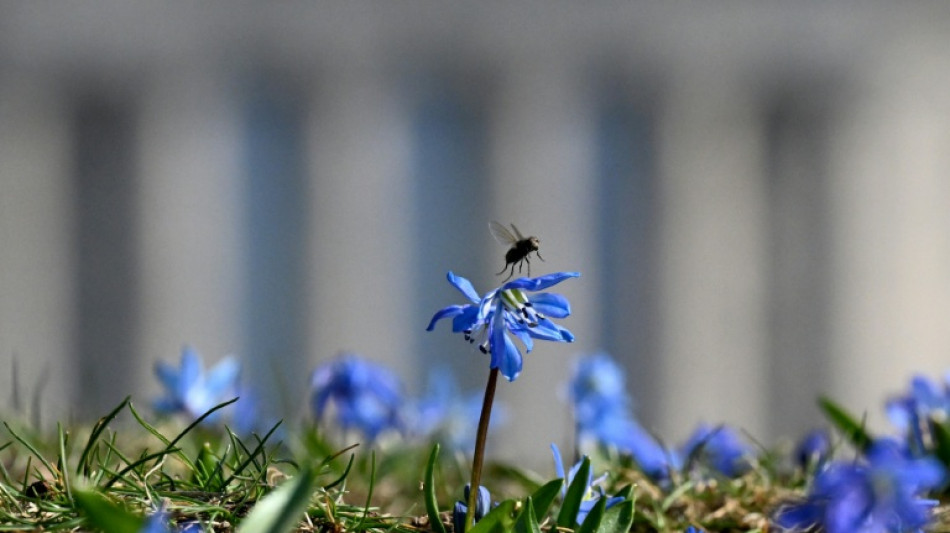
UK scientists fear insect loss as car bug splats fall / Photo: © AFP

 Ex-Pakistan PM Khan taken back to jail after hospital checks: govt
 China, Indonesia hold talks on security, defence

 Train to nowhere? South Korea's lonely push for peace with the North

 Australia's Hussey mulls role with England for Ashes series

 Indian captain 'scapegoat' in Britain's Russia shadow fleet case, wife says

 Rosenior seeks to match Paris FC's capital ambition as Ligue 1 returns

 Inter set for Serie A title defence as Milan get Amorim reboot

 'Greatest' Springboks face All Blacks in clash of juggernauts

 William and Harry: Britain's warring royal brothers

 UN holds second informal poll for next leader

 In US mining hub, black lung rates soar

 Champions Arsenal embrace being 'hunted' as Premier League returns

 World No.2 Rybakina retires from Cincinnati clash with Swiatek

 'I heard you missed me': Melania Trump jokes about month out of spotlight

 Amazon Prime Video to invest $2 bn in Latin America productions

 Panama Canal to reduce shipping over El Nino-fueled drought

 Maradona trial on hold over possible medical evidence mix-up

 'Green dilemma': China's solar boom hurt birds, says study

 Pegula hangs on to dispatch Anisimova, reach Cincinnati semi-finals

 US charges woman with IS-inspired plot to blow up New York State Capitol

 What a record-breaking El Nino could mean for the world

 Duplantis edges Karalis to win Lausanne Diamond League pole vault

 Alcaraz to return for US Open title defence

 China's rapid solar expansion hurt bird diversity: study

 President Paul Biya back in Cameroon after 73 days away

A UK-wide decline in bug splats recorded on car number plates indicates an "alarming" fall in the number of flying insects, UK scientists said in a survey published Wednesday.
The 2024 Bugs Matter report revealed the numbers of flying insects found stuck to vehicle number plates had dropped by nearly 63 percent since 2021.
Flying insects play a vital role in maintaining a healthy environment, as a food source for birds and other wildlife species, as well as acting as pollinators for crops and keeping pests under control.
The survey, led by Kent Wildlife Trust and charity Buglife, relies on citizen scientists who log their journeys and record the number of insect splats found on the front number plate of their cars.
Analysis of more than 25,000 journeys showed a sharp decline in splats across the UK between 2021 and 2024.
This included a 44-percent drop between 2022 and 2023, slowing down to an eight percent decline from 2023 to 2024.
"This huge decrease in insect splats over such a short time is really alarming," said Lawrence Ball, a conservation scientist at Kent Wildlife Trust.
According to Ball, the decrease is a result of a general-long term decline in insect numbers compounded by a short-term decline which is "perhaps linked to the extreme climate in the UK in recent years".
"Similar declining insect trends have been reported by many other scientific studies around the world," according to the survey report.
Scientists say the decline is driven by human activity, including habitat loss, pesticide use, land and water pollution, and climate change.
The latest data "suggests that the abundance of flying insects in our countryside has fallen again," said Andrew Whitehouse from Buglife.
The report noted 60 percent fewer bug splats on average in urban areas, compared to the countryside, "highlighting the impact we have had on nature in our towns and cities".
The Bugs Matter survey is based on the "windscreen phenomenon", an anecdotal observation that people are finding fewer insect splats on their windscreens compared to before.
This year's survey will run from May 1 to September 30, and is expanding to Ireland for the first time. Residents can take part by recording journeys on an app.
L.Maurer--VB