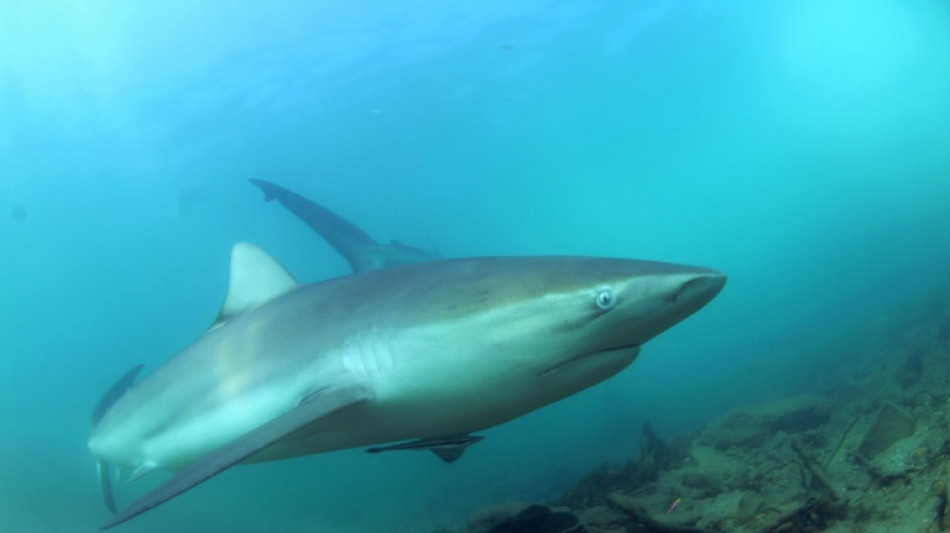
Endangered sharks, rays caught in protected Med areas: study / Photo: © Out of The Blu/AFP/File

 Most Asian stocks track Wall St rally, yen drops after BoJ rate hike

 Russians begin voting in controlled election as war drags on

 Trump 'clearly' wants dialogue with Pyongyang: South Korean President

 Bank of Japan hikes rates to 31-year high to battle inflation

 Thailand's Muslim separatists vow to fight to the end

 Mideast turmoil, AI set to dominate UN gathering of world leaders

 Australia to detain tourists who overstay visa, minister says

 Championship rivals brace for renewal of bitter feuds

 In Brazil's Amazon, the hunt for oil fuels hopes and fears

 Australian athlete who soiled herself apologises for continuing Hyrox race

 Baby orangutans in India expose 'frightening' scale of trafficking

 Doom Loop? Ed Sheeran struggles against Gaza tide

 Sudanese women hold fast to threatened henna body art

 Man Utd misery puts Carrick under pressure, Spurs feeling the heat

 Prized Mexican relic returns on loan, two centuries on

 Venezuela unblocks some censored news sites

 Samba stars on debut in Man City rout of Norwich

 Oversight Board blasts 'inadequate' Meta safeguards for AI deepfakes

 The Easter Island origins of buzzy Malkovich drama 'Wild Horse Nine'

 Third body recovered after Grand Canyon flash flood

 Harry makes first public appearance since return to UK
 Abhishek hits record T20 ton as India sweep series 3-0

 Abhishek hits record T20 ton as India sweep T20 series 3-0

 English FA calls for Infantino to release World Cup sell-off documents

 GM delivers first components for US interceptor missiles

Endangered sharks, rays and skates in the Mediterranean are more frequently caught in protected than in unprotected areas, according to research published Tuesday highlighting the need for better conservation for critically threatened species.
The three types of elasmobranch are among the species most threatened by overfishing.
While often landed as by-catch -- or caught in nets of boats seeking to land other species -- demand for their fins and meat has driven an estimated 71-percent decline in ocean sharks and rays since 1970.
Although they are among the oldest marine species on Earth, their slow growth rate and late maturity mean one third of elasmobranchs are categorised by the International Union for the Conservation of Nature (IUCN) as at risk of extinction.
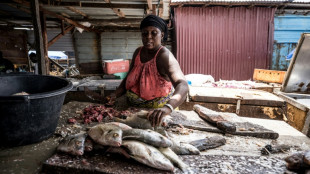
While dozens of nations have banned large-scale fishing of endangered shark, ray and skate species, true global catch figures are likely to be hugely underestimated as 90 percent of the world's fishing fleet is made up of small-scale boats.
Researchers in Italy wanted to get a better idea of how species fare in the Mediterranean's partially protected areas, which allow some fishing with restrictions.
They used photo-sampling and image analysis to compile a database covering more than 1,200 small-scale fishing operations across 11 locations in France, Italy, Spain, Croatia, Slovenia and Greece.
- Protected areas -
The team then used statistical models to demonstrate that catches of threatened species were higher in partially protected areas than in areas with no protection at all.
"People assume that it is large-scale trawlers that are impacting biodiversity, which is true and there's a lot of evidence for this," said co-author Antonio Di Franco, from the Sicily Marine Centre.
"There is less research on small-scale fishing's impact and our research shows that there is this potential."
The team found that catches they analysed in partially protected areas landed 24 species of shark, skate and ray -- more than a third of which are endangered.
This is likely in part due to the species' preference for coastal waters, where most small-scale fisheries prefer to operate.
"We don't know the activity of small-scale fisheries in general, we don't know how many nets they actually fish or where they fish," said Di Franco.
Overall, in the partially protected areas studied, 517 elasmobranchs were caught compared with 358 in non-protected areas.
In terms of mass, the weight of shark, ray or skate species caught in partially protected areas was roughly double that in non-protected areas.
More than 100 countries have committed to increase the amount of protected oceans worldwide to 30 percent by 2030.
Di Franco said there were a number of steps countries could take to help threatened species, including fitting smaller fishing boats with GPS trackers and ensuring that protected areas were joined up, allowing the species to more easily change living regions.
"Protected areas are a great potential benefit to biodiversity but the point is to look at management," he told AFP.
"But often countries don't have the capacity to properly manage stocks."
S.Keller--BTB