With new ships, Canada aims to be 'icebreaking superpower' / Photo: © AFP

 Most Asian stocks track Wall St rally, yen drops after BoJ rate hike

 Russians begin voting in controlled election as war drags on

 Trump 'clearly' wants dialogue with Pyongyang: South Korean President

 Bank of Japan hikes rates to 31-year high to battle inflation

 Thailand's Muslim separatists vow to fight to the end

 Mideast turmoil, AI set to dominate UN gathering of world leaders

 Australia to detain tourists who overstay visa, minister says

 Championship rivals brace for renewal of bitter feuds
 In Brazil's Amazon, the hunt for oil fuels hopes and fears
 Australian athlete who soiled herself apologises for continuing Hyrox race
 Baby orangutans in India expose 'frightening' scale of trafficking

 Doom Loop? Ed Sheeran struggles against Gaza tide
 Sudanese women hold fast to threatened henna body art

 Man Utd misery puts Carrick under pressure, Spurs feeling the heat
 Prized Mexican relic returns on loan, two centuries on

 Venezuela unblocks some censored news sites
 Samba stars on debut in Man City rout of Norwich

 Oversight Board blasts 'inadequate' Meta safeguards for AI deepfakes

 The Easter Island origins of buzzy Malkovich drama 'Wild Horse Nine'

 Third body recovered after Grand Canyon flash flood
 Harry makes first public appearance since return to UK
 Abhishek hits record T20 ton as India sweep series 3-0

 Abhishek hits record T20 ton as India sweep T20 series 3-0

 English FA calls for Infantino to release World Cup sell-off documents

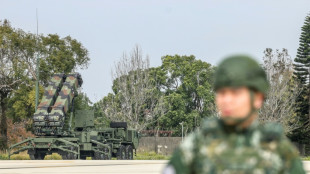 GM delivers first components for US interceptor missiles

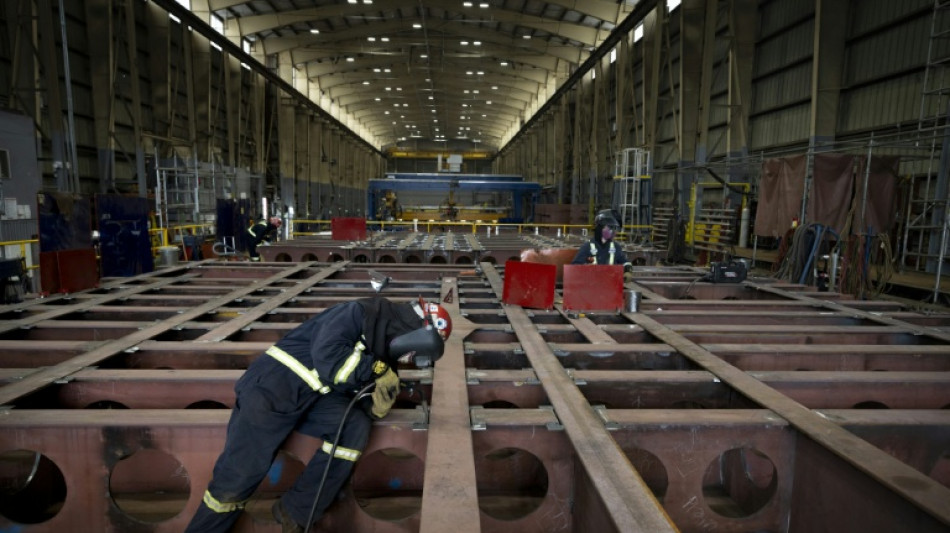
At a massive shipyard in North Vancouver, Canadian workers grind metal beams for a powerful new icebreaker crucial to cementing the country's presence in the increasingly contested Arctic.
Icebreakers are specialized, expensive vessels able to navigate in the frozen far north.
And "this is the crown jewel," Eddie Schehr, vice president of production at the Seaspan shipyard, told AFP.
For Prime Minister Mark Carney, who heads to Norway on Friday to observe Arctic defense drills involving troops from 14 NATO states, Canada's extreme north has emerged as a strategic priority.
"Canada is, and forever will be, an Arctic nation," he said ahead of the trip.
During a stop in Canada's Northwest Territories before flying to Norway, Carney announced nearly CAN$35 billion ($25.7 billion) in Arctic funding, with most of the funds dedicated to upgrading existing military infrastructure.
"We cannot rely on other nations for our security," he said. "We are securing every corner of this terrain."
Concerns about Russian aggression, especially after the invasion of Ukraine, have focused attention on the Arctic, where territorial sovereignty is disputed in several areas.
Climate change is intensifying competition, with previously inaccessible minerals increasingly available for exploitation as the ice thaws and new shipping routes open.
For Wesley Wark, a national security expert at the Center for International Governance Innovation, icebreaker fleets are a key part of the defense innovation required to safeguard Canada's position.
"We're in the business of trying to reassert ourselves as an icebreaking superpower," he told AFP.
- 'Crown jewel' -
Two new ships are under construction, each costing more than CAN$3 billion.
One, partly being built in Finland, is due for delivery in 2030.
The other vessel, set to be ready in 2032, is being made at the Seaspan shipyards in North Vancouver.
Senior vice president Dave Hargreaves said Canada's existing icebreaking fleet is "getting old."
And this ship, he said, "gives Canada the ability to have a strong presence in the Arctic, which is where you start."
Canada's decision to upgrade its icebreaker fleet preceded US President Donald Trump's return to office.
But Carney has delivered stark warnings about new risks from United States since entering Canadian politics last year, including a claim from last year's federal election campaign that Trump wanted to "break us so America can own us."
Wark told AFP that Canada's challenge in the Arctic has two main planks.
First, Carney's government wants "to show that it's a strong NATO partner and to take part in NATO collective security," he said, adding that NATO is "deeply concerned about Russian activities in the Arctic."
Russia has the world's largest icebreaker fleet by far -- Canada is a distant second -- and Wark said Carney wants to signal both to a domestic audience and allies that Canada can defend NATO's "Arctic flank."
- 'Hard power capacity' -
Canada must also consider that "the United States itself potentially represents a danger to Canadian security," Wark said.
Trump has discussed annexing Canada at various points in his second term. He again mocked Carney as the "governor" of a US state this week, renewing a taunt he first levelled at former prime minister Justin Trudeau.
Wark maintains the chance of direct military confrontation with the United States is low.
The more immediate risk is that Washington may conclude Canada is incapable of defending the Arctic, compelling the US military to take charge, he said.
"I think Canadian officials have come to understand that the United States administration, Trump, people around Trump in positions of power and influence, do not hold Canada in high regard as a country... essentially arguing Canada has no military," he said.
For Canada, "the incentive to increase its hard power capacity is partly driven by those American concerns," Wark further said, while stressing that, "whatever the Trump administration might say, Canada is not a military freeloader."
Unlike Russia, Canada has no intention of arming its icebreakers.
But the ships are designed to operate in the harshest Arctic conditions, equipped for intelligence gathering, search-and-rescue as well as scientific exploration.
The Seaspan ship "can go anywhere in the Canadian Arctic any time of the year, which is a very difficult requirement to meet," Hargreaves said.
S.Gantenbein--VB