Regional temperature records broken across the world in 2025 / Photo: © AFP

 Russia seizes assets of Nestle, French firms over West's Ukraine support

 England can build on World Cup 'spirit', says Tuchel

 UNESCO can be 'moderator' in AI debate: chief to AFP

 Infantino 'must go', says German FA vice-president

 Russia seizes assets of Nestle, French firms

 Japan's busiest rail station tests robot bins

 Anthropic says AI systems moving towards building themselves

 Asian stocks boosted by falling oil, yen weakens after BoJ rate hike

 Pakistan court blocks expulsion of Afghan medical college students

 Athletes 'can't take it any more' as Asian Games issues mount

 Allen lights up Bills' new stadium with 41-31 win over Lions

 Afghan medical students in Pakistan hope court stops college expulsions

 AI doomsday warnings unlikely to slow IPOs but questions linger

 ICC eyes China in bid to expand cricket

 Nkunku craving freedom and fun on RB Leipzig return

 Bhutan's traditional archers lose ground to development
 Asian stocks track Wall St rally as oil prices drop

 South Korea makes Asian Games complaint over Japan warlord ceremony

 US aid cuts are killing Kenyan sex workers

 October 7 survivors, families take centre stage in Israel vote

 Captain Mat Ryan axed from Socceroos squad for Brazil games

 US approves sale of 48 F-35 jets to Saudi Arabia

 Juventus, Palace cruise to Europa League wins, Bournemouth beat Sociedad

 Stocks climb as oil retreats, Fed calms inflation fears

 Russians begin voting in controlled election as war drags

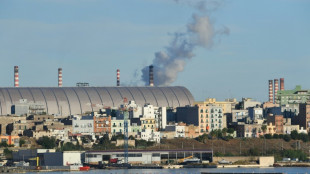
Central Asia, the Sahel region and northern Europe experienced their hottest year on record in 2025, according to AFP analysis based on data from the European Copernicus programme.
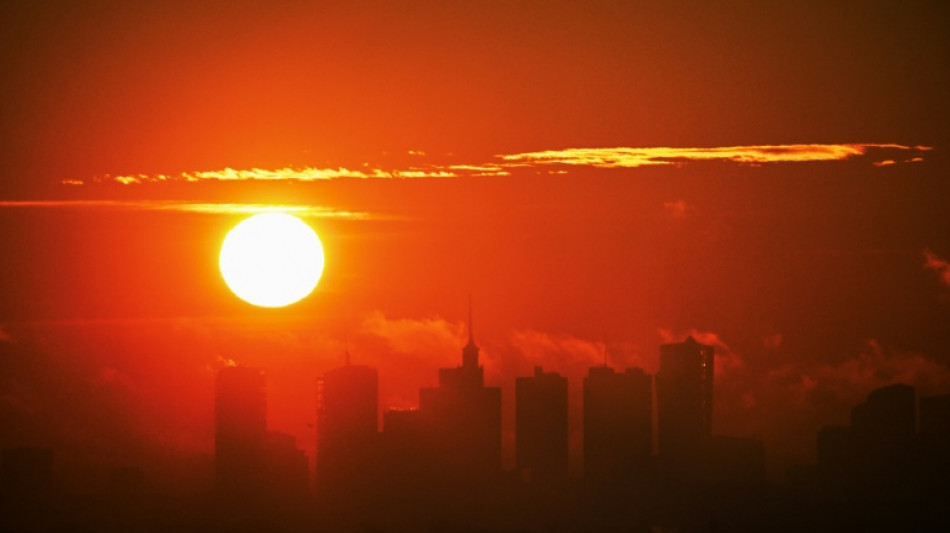
Globally, the last 12 months are expected to be the third hottest ever recorded after 2024 and 2023, according to the provisional data, which will be confirmed by Copernicus in its annual report in early January.
But the average, which includes land and oceans, masks overall records for certain parts of the world.
Many poorer nations do not publish detailed climate data, so AFP has completed the global picture by independently analysing Copernicus data from climate models, measurements from about 20 satellites, and weather stations.
The data spans the whole world, hour by hour, since 1970.
Here is what the detailed analysis revealed for 2025, during which 120 monthly temperature records were broken in more than 70 countries.
- Records shattered in C.Asia -
Every country in Central Asia broke its annual temperature records.
Landlocked, mountainous Tajikistan, where only 41 percent of the population has access to safe drinking water, saw the highest abnormal temperatures in the world, at more than 3C above its seasonal averages from 1981 to 2010.
Monthly temperature records have been broken every month since May, with the exception of November.
Neighbouring countries such as Kazakhstan, Iran and Uzbekistan experienced temperatures 2C to 3C above the seasonal average.
- Up to 1.5C hotter in the Sahel -
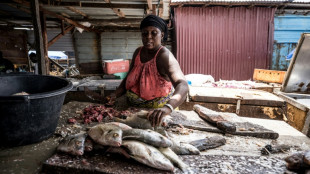
Temperature records were beaten in several countries in the Sahel and west Africa.
Mali, Niger, Nigeria, Burkina Faso and Chad saw a rare divergence in temperatures, notching 0.7C to 1.5C above their seasonal average.
The last 12 months were the hottest ever recorded in Nigeria, and one of the fourth hottest in the other countries.
Scientists from the World Weather Attribution (WWA) network, who assess the role of human-induced climate change in extreme weather events, wrote in their annual report published on Monday that extreme heat events "have become almost 10 times more likely since 2015".
Countries in the Sahel -- the semi-arid region of west and north-central Africa stretching from Senegal to Sudan -- are among the most vulnerable to rising temperatures, with many already facing armed conflict, food insecurity and widespread poverty.
- Scorching summer in Europe-
Around 10 European countries are on the verge of, or coming close to, breaking their annual temperature record, notably due to an exceptional summer.
In Switzerland and several Balkan countries, summer temperatures were 2C and even 3C above their seasonal average.
Spain, Portugal and Britain also recorded their worst summer on record, with extreme heat fuelling massive wildfires.
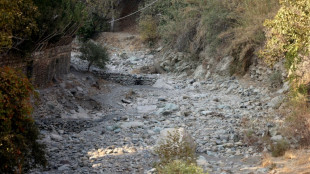
The driest spring in more than a century led to a UK water shortage.
Northern Europe was largely spared the heatwave that hit Europe at the end of June but it instead experienced an abnormally warm autumn.
The last 12 months are expected to be one of the two warmest years on record in Norway, Sweden, Finland and Iceland.
A.Ammann--VB