Cities face risk of water shortages in coming decades: study / Photo: © AFP

 Stock markets retreat after central bank rate hikes

 Russia labels director of Cannes Grand Prix winner a 'foreign agent'

 Macron warns of Russian 'hybrid' threat after meeting presidential hopefuls

 UN holds third informal poll for new chief

 Kulusevski return can spark Spurs: De Zerbi

 Shakira to cap off world tour with Madrid 12-gig run

 Isolated Syrian-Druze city blames Damascus for shortages

 Isolated Syrian-Druze city shortages

 Dutch drop Depay for Germany match in Xavi's first pick

 Ronaldo named in Portugal squad for Nations League

 Stock markets diverge after central bank rate hikes

 Anti-Assad music star makes triumphant return to Syria

 In-form Fernandez included in Spain Nations League squad
 Arteta buries hatchet with Hurzeler ahead of Brighton clash

 Alexander-Arnold and Palmer return to England squad for Nations League

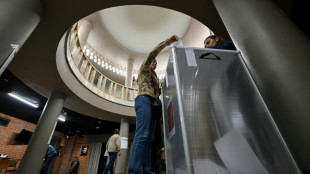 Russians vote as Ukraine war drags on for fifth year

 Backpackers fret over Australian visa crackdown
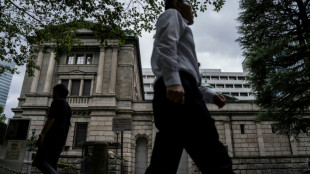
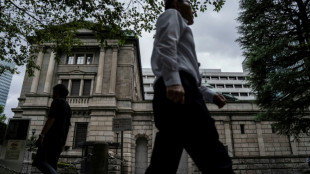 Most Asian stocks track Wall St rally, yen drops after BoJ rate hike
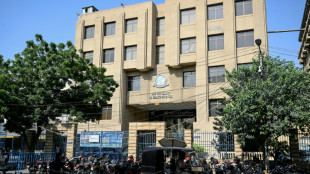
 Russians begin voting in controlled election as war drags on
 Trump 'clearly' wants dialogue with Pyongyang: South Korean President

 Bank of Japan hikes rates to 31-year high to battle inflation
 Thailand's Muslim separatists vow to fight to the end

 Mideast turmoil, AI set to dominate UN gathering of world leaders

 Australia to detain tourists who overstay visa, minister says

 Championship rivals brace for renewal of bitter feuds

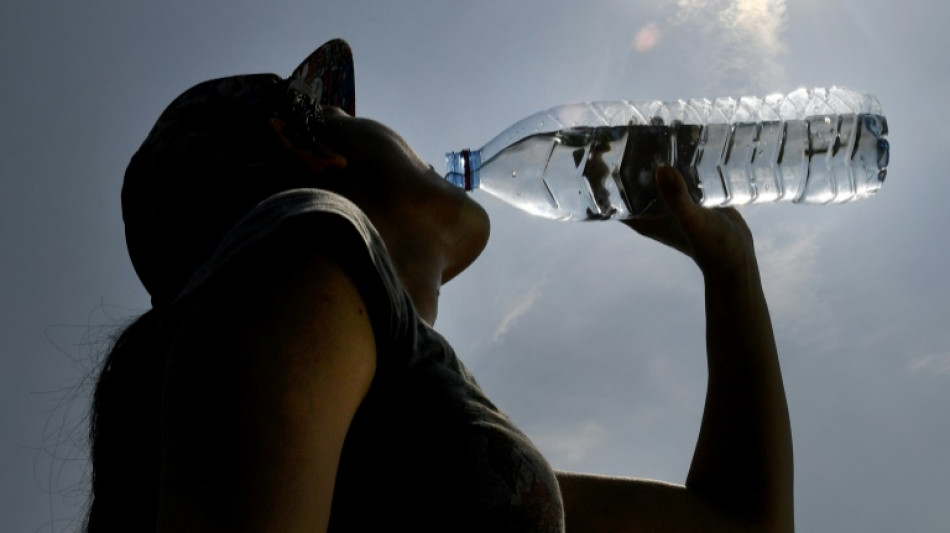
Hotspots of water scarcity could emerge by the 2020s and 2030s across the Mediterranean, southern Africa, and North America, as climate change intensifies droughts, a new study said Tuesday.
Scientists have established that climate change is making droughts longer, stronger and more frequent, but less well understood is when and where these extreme dry conditions could trigger acute shortages of drinking water.
South Africa's Cape Town faced the threat of a "Day Zero Drought", where the taps nearly ran dry for millions of people in 2018. India's Chennai faced a similar crisis the following year.
In new peer-reviewed research in the journal Nature Communications, researchers warned that the frequency of "Day Zero" episodes could increase much sooner than previously anticipated.
To study how global warming might impact these events in future, researchers used the latest climate models to estimate when water demands would exceed supply from rainfall, rivers and reservoirs.
The simulations showed that "Day Zero" hotspots are likely to emerge in 35 percent of drought-prone regions within the next 15 years, with the Mediterranean, southern Africa, and parts of North America most affected.
By 2100, such conditions could threaten 750 million people globally -- roughly two thirds in cities and the rest in rural areas -- under a high emissions scenario, the study said.
Urban populations in the Mediterranean are most exposed, with 196 million city dwellers at risk, while rural areas in Asia and northern and southern Africa are disproportionately impacted.
Human-induced climate change and increased water consumption were both factors driving "Day Zero" events, the study said.
- Not a distant threat -
Even if global warming is held at 1.5 degrees Celsius above preindustrial levels "hundreds of millions of people will still face unprecedented water shortages", said Vecchia Ravinandrasana, one of the study's authors, in a press release.
"Our study shows that global warming causes and accelerates Day Zero Drought conditions worldwide," said Ravinandrasana from Pusan National University in South Korea, which led the research.
The world is on track to shoot past 1.5C as early as this decade. Under the Paris climate pact, nations have agreed to limit global temperature rises to well below 2C to avoid the worst impacts.
The study could not account for groundwater, the authors said, overlooking its critical role "as a vital buffer during drought" particularly in regions where it is a key water source.
Global warming is altering the water cycle, disrupting rainfall and spurring droughts in some parts of the world and devastating rainfall in others.
Cape Town narrowly avoided a "Day Zero" episode during a multi-year drought when rivers hit record lows and major reservoirs drained to near empty.
But other cities have experienced similar crises, while major capitals like Los Angeles "remain highly vulnerable", the study said.
Such events were "not just a future concern in a warming world, but also a near-term reality" and better planning was needed.
R.Fischer--VB