Canada wildlife decline 'most severe' in decades: WWF / Photo: © AFP/File

 Stock markets retreat after central bank rate hikes

 Russia labels director of Cannes Grand Prix winner a 'foreign agent'

 Macron warns of Russian 'hybrid' threat after meeting presidential hopefuls

 UN holds third informal poll for new chief

 Kulusevski return can spark Spurs: De Zerbi

 Shakira to cap off world tour with Madrid 12-gig run

 Isolated Syrian-Druze city blames Damascus for shortages

 Isolated Syrian-Druze city shortages

 Dutch drop Depay for Germany match in Xavi's first pick

 Ronaldo named in Portugal squad for Nations League

 Stock markets diverge after central bank rate hikes

 Anti-Assad music star makes triumphant return to Syria

 In-form Fernandez included in Spain Nations League squad

 Arteta buries hatchet with Hurzeler ahead of Brighton clash

 Alexander-Arnold and Palmer return to England squad for Nations League

 Russians vote as Ukraine war drags on for fifth year

 Backpackers fret over Australian visa crackdown

 Most Asian stocks track Wall St rally, yen drops after BoJ rate hike

 Russians begin voting in controlled election as war drags on

 Trump 'clearly' wants dialogue with Pyongyang: South Korean President

 Bank of Japan hikes rates to 31-year high to battle inflation

 Thailand's Muslim separatists vow to fight to the end

 Mideast turmoil, AI set to dominate UN gathering of world leaders

 Australia to detain tourists who overstay visa, minister says

 Championship rivals brace for renewal of bitter feuds

Biodiversity in Canada has plunged 10 percent over the last half century, with hundreds of species facing extinction, the World Wildlife Fund (WWF) said in a report Monday.
"On average, every species group included — birds, fish, mammals, and reptiles and amphibians — is trending in the wrong direction," the WWF said in a statement as it released the 2025 Living Planet report for Canada.
While certain populations, like sea otters, are improving, the conservation group said 52 percent of all species studied for this year's Canada report are declining, including the rare snow owl.
"This is the most severe decline we've observed since reporting started," WWF Vice President for Canada, James Snider, wrote.
WWF said that between 1970 and 2022, biodiversity in Canada had decreased by 10 percent.
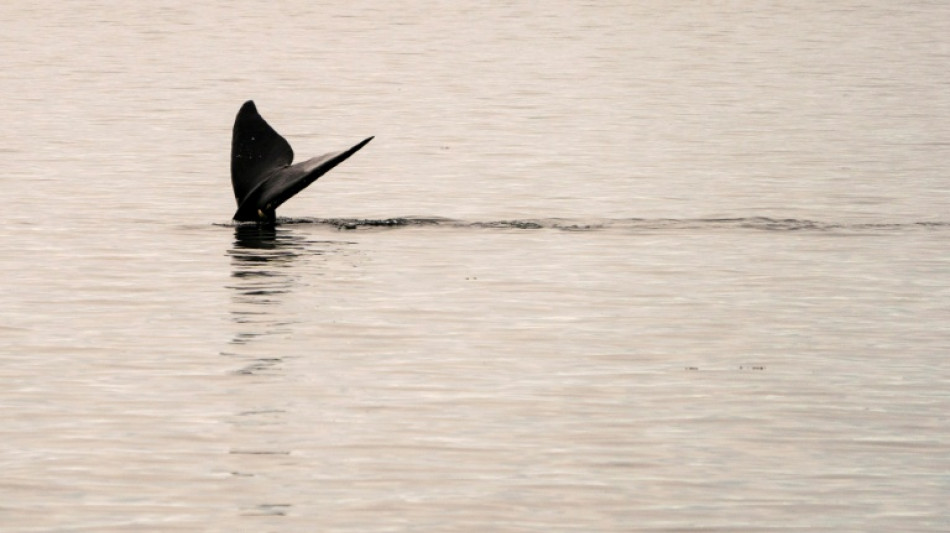
Species globally assessed as at-risk of extinction in Canada, such as the North Atlantic right whale and leatherback sea turtle, declined by 43 percent, according to the report.
Regions such as the boreal forest with lower levels of human presence saw smaller decreases, while habitats in Canada's grasslands declined 62 percent.
Last year, WWF reported a global wildlife population decline of 73 percent since 1970.
Conservation expert Jessica Curie, who worked on the report, told AFP that habitat reduction -- largely because of agricultural expansion -- "is one of the main drivers of biodiversity loss."
The report notes Canada's economic reliance on its vast natural resources, but says conservation needs to be front-of-mind in management of industrial or infrastructure projects.
One successful example she pointed to was projects reducing shipping noise to protect whale populations off Canada's west coast.
WWF noted that actions to reverse population loss were already laid out in Global Biodiversity Framework (GBF) agreement signed in 2022 at COP 15 in Montreal.
Canada aims to meet those targets by protecting 30 percent of its lands and oceans and restoring 30 percent of degraded lands by 2030.
M.Betschart--VB