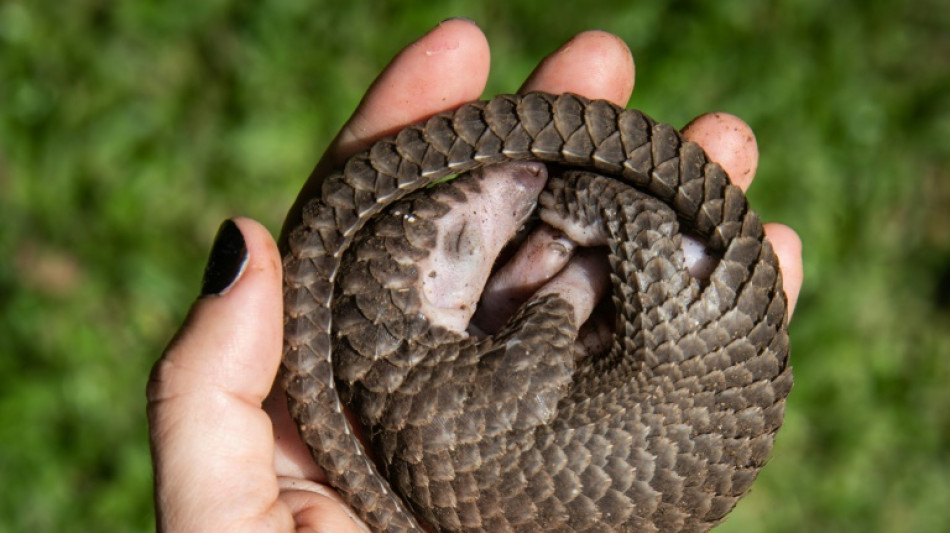
Conservationists call for more data to help protect pangolins / Photo: © AFP

 Google-parent Alphabet shakes up AI division

 FIFA back Infantino, apologise for World Cup privatisation plan

 Auger-Aliassime out of Montreal ATP event with injury

 Colombian baby hippo of Escobar stock dies after rescue

 Preakness shifts 2027 dates to entice more Derby horses

 Guatemalan volcano eruption ends, locals return home

 WHO chief urges stronger Ebola response in DR Congo visit

 Newcastle appoint Jaissle as new head coach after Howe exit

 Swiss ski star Lara Gut-Behrami calls time on 18-year career

 US indicts leaders of Mexico's CJNG cartel, ups reward money

 Noosha Aubel: Klarar hon av Potsdams problem?

 نوشا أوبيل: هل هي على مستوى التحديات التي تواجهها بوتسدام؟

 Former England fly-half Burns retires from rugby union

 Pakistan beat West Indies by eight wickets to level series

 Reusser holds lead as Vollering wins in Tour de France hills

 Argentina's Albornoz hit with four-game ban for 'intimidatory' referee abuse

 Guatemala volcano eruption eases off, but alert remains in place

 Baby hippo descended from Escobar's herd rescued in Colombia

 Woman arrested after four men stabbed in central London

 Celtic boss O'Neill in hospital after 'small procedure'

 Israeli forces raid Palestinian refugee camp near Jerusalem

 Explosive drone found near Ukrainian plane at German airport

 Leftist Democrat wins stunning primary victory in crucial Michigan

 Inter Milan and AC Milan battle to 1-1 draw in Perth friendly

 Butterflies seek new habitats as climate changes: study

All eight known pangolin species remain at high risk of extinction due to over-exploitation and loss of habitat, conservationists warned Wednesday, warning knowledge gaps were hampering protection efforts.
The scale of the threat faced by the world's most heavily-trafficked mammals is not yet fully understood, said the International Union for Conservation of Nature (IUCN) and the Convention on International Trade in Endangered Species of Wild Fauna and Flora (CITES).
Found in the forests, woodlands, and savannas of Africa and Asia, pangolins are small, nocturnal creatures known for their distinctive appearance, slow and peaceful demeanour, and habit of curling into a ball when threatened.
The world's only scaly mammals, often likened to walking pinecones, have keratin scales that are coveted in traditional medicine, while their meat is also considered a delicacy in some regions.
"Today, they are under immense pressure due to exploitation and habitat loss," warned IUCN director general Grethel Aguliar.
Pangolins, which use their long, sticky tongues to feast on ants and termites, "are one of the most distinctive mammals on Earth and are among the planet's most extraordinary creatures: ancient, gentle, and irreplaceable," Aguliar said in a statement.
"Protecting them is not just about saving a species, but about safeguarding the balance of our ecosystems and the wonder of nature itself."
- 'Highly organised' trafficking -
A report prepared for CITES by IUCN experts called for more robust and targeted conservation measures, particularly involving local and indigenous communities as the first line of defence.
Under CITES, international commercial trade in wild pangolins has been banned since 2017.
Despite a sharp decline in legal trade since then, trafficking remains "extensive and highly organised", IUCN said.
Between 2016 to 2024, seizures of pangolin products involved more than an estimated half a million pangolins across 75 countries and 178 trade routes, it said, with scales accounting for 99 percent of confiscated parts.
"However, while seizure records provide useful indicators, they capture only a fraction of the overall trade as not all illicit consignments are detected or seized by law enforcement," said IUCN.
Besides international trafficking, demand for pangolin meat and other products persists.
Matthew Shirley, who co-chairs the IUCN Species Survival Commission's pangolin specialist group, suggested "even pangolin consumers" and those in the supply chain should be brought onboard to help devise conservation solutions.
"Ongoing pangolin trafficking and population declines underscore that trade bans and policy changes alone are not enough," he said.
S.Spengler--VB