Chad hopes 'green charcoal' can save vanishing forests / Photo: © AFP

 'Trying to bury the science': US climate research under siege

 Eurovision to bar countries at war from hosting
 Italian teenager Curtis breaks 50m backstroke world record at Europeans

 New mum Sjostrom wins 50m butterfly for 18th European gold

 Solar eclipse darkens Arctic Russia on course for Spain
 Russian economy rebounds in second quarter despite Ukrainian strikes

 NBA's Los Angeles Lakers to be sold for $12.5 bn: ESPN
 Trump sued over sale of access to Truth Social posts

 Europe looks to the skies as solar eclipse cast its shadow
 At least 44 drown after ferry overturns on Zimbabwe's Lake Kariba

 Grieving Argentine icon Messi unsure about playing on 'much longer'

 Nigeria kidnap victims escape 'hellfire' captivity beaten, malnourished
 Google unveils finder tag, new AI smartphone features

 US equities gain as inflation report eases fear of rate rise
 Colombia declares three days mourning for quake victims

 44 lives lost after ferry capsizes on Zimbabwe's Lake Kariba

 WallStreetPR Releases Report on China’s Gold Purchases and African Mining Investment
 Former Chinese premier Zhu Rongji dies aged 97

 Markets steady awaiting US inflation data

 WHO says Trump vaccine shake-up goes against evidence

 Eclipse chasers flock to Spain for 'breathtaking' experience

 'To make the civilians leave': Russia pummels Ukraine's petrol stations

 Japan brushes off Australian PM's melon drama

 Rod Stewart cancels tour dates after heart surgery

 How Britain's mapmakers track climate change

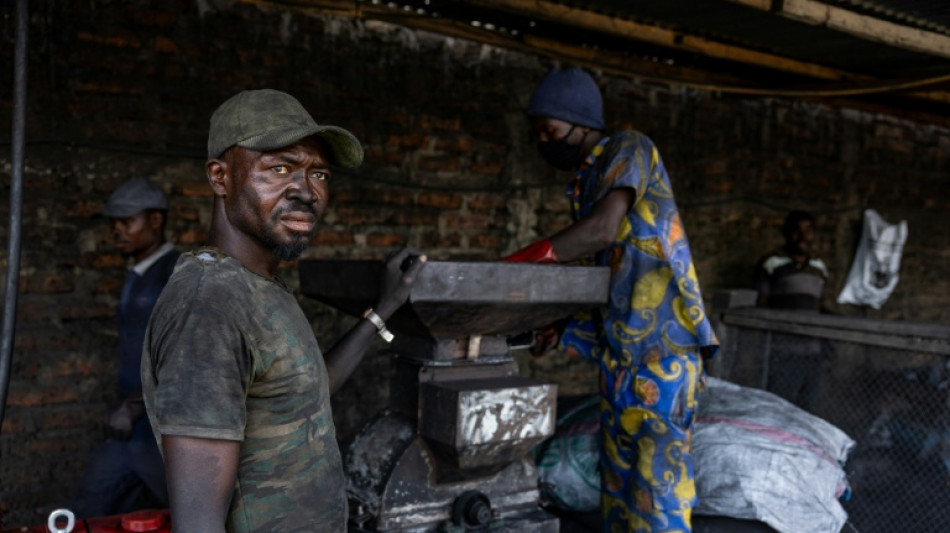
As they zigzagged from one machine to another in the searing African sun, the workers were covered in black soot.
But the charcoal they were making is known as "green", and backers hope it can save impoverished Chad from rampant deforestation.
Chad, a vast, landlocked country of 19 million people perched at the crossroads of north and central Africa, is steadily turning to desert.
It has lost more than 90 percent of its forest cover since the 1970s, hit by climate change and overexploitation of trees for household uses such as cooking, officials say.
"Green charcoal" aims to protect what forest is left.
Made from discarded plant waste such as millet and sesame stalks or palm fronds, it is meant to save trees from being chopped down for cooking.
The product "releases less emissions than traditional charcoal, it doesn't blacken your pots, it has high energy content and lasts up to three times longer than ordinary charcoal," said Ousmane Alhadj Oumarou, technical director of the Raikina Association for Socioeconomic Development (Adser).
"Using one kilogramme of green charcoal saves six kilogrammes of wood."
The group has installed a production facility in Pont Belile, just north of the capital, N'Djamena.
There, workers grind up burnt plant waste, then mix it with gum arabic, which helps it ignite, and clay, which makes it burn more slowly.
The resulting black nuggets look like ordinary charcoal.
Like the traditional kind, it emits CO2 when it burns -- but less, said Souleymane Adam Adey, an ecologist at the University of N'Djamena.
And "it contributes to fighting deforestation, by ensuring the trees that aren't cut down continue to capture and store carbon," he said.
- Refugee pressure -
The conflict in neighbouring Sudan, which is facing one of the worst humanitarian crises in the world, is adding to pressure on Chad, which has become home to more than 800,000 Sudanese refugees since 2023 -- double the 400,000 it already hosted.
"Desertification has progressed in the regions that have been hosting Sudanese refugees for the past two years," said Adser's director, 45-year-old businessman Ismael Hamid.
Adser invested 200 million CFA francs (about $350,000) to launch the project, then won backing from the World Bank, which buys the charcoal for 750 CFA francs per kilogramme.
The United Nations refugee agency, UNHCR, distributes the charcoal in refugee camps in eastern Chad.
But Hamid said he hoped to expand production and slash prices to 350 to 500 CFA francs per kilo to make "green charcoal" available and affordable nationwide.
The plant currently produces seven to nine tonnes per day.
"If we want to meet the country's needs, we have to increase our output by at least a factor of 10," said Hamid, calling for subsidies to support the budding sector.
Environment Minister Hassan Bakhit Djamous told AFP the government was working on a policy to promote such projects.
"We need to bet on green charcoal as an energy source for the future of our country," he said.
C.Kreuzer--VB