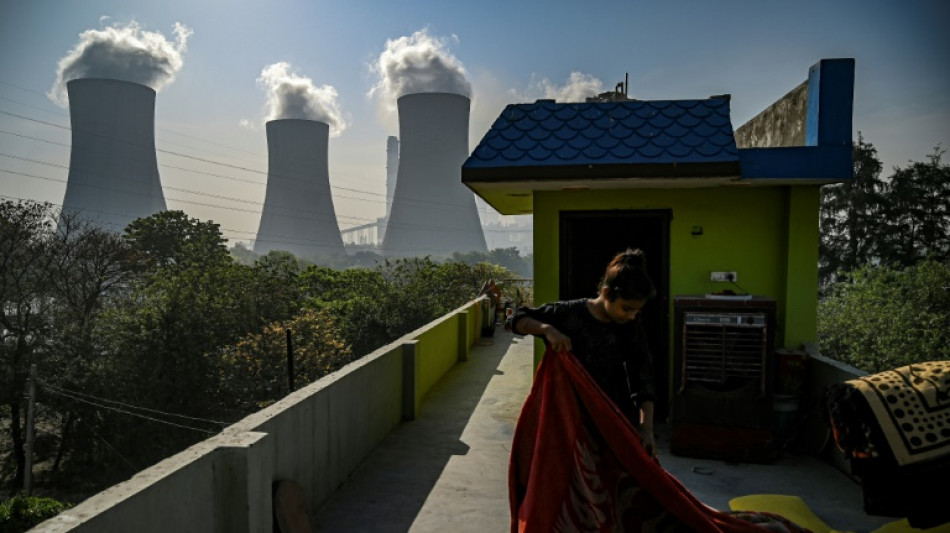
Atmospheric CO2 more than 50 percent higher than pre-industrial era / Photo: © AFP/File

 Allen lights up Bills' new stadium with 41-31 win over Lions

 Afghan medical students in Pakistan hope court stops college expulsions

 AI doomsday warnings unlikely to slow IPOs but questions linger

 ICC eyes China in bid to expand cricket

 Nkunku craving freedom and fun on RB Leipzig return

 Bhutan's traditional archers lose ground to development
 Asian stocks track Wall St rally as oil prices drop

 South Korea makes Asian Games complaint over Japan warlord ceremony

 US aid cuts are killing Kenyan sex workers

 October 7 survivors, families take centre stage in Israel vote

 Captain Mat Ryan axed from Socceroos squad for Brazil games

 US approves sale of 48 F-35 jets to Saudi Arabia

 Juventus, Palace cruise to Europa League wins, Bournemouth beat Sociedad

 Stocks climb as oil retreats, Fed calms inflation fears

 Russians begin voting in controlled election as war drags

 Hispanics feel 'betrayed' on immigration, Republican warns Trump

 High-scoring Bears face Vikings in battle of NFL unbeatens
 'In our lane': Fed's Warsh defies Trump but still fighting for credibility

 Trump admin makes major cut to endangered species protections

 Princess Diana's brother makes new explosive claims against Charles

 Ovechkin on Russian political video: 'I support my country'

 Can we shut down AI?
 Teenager Sullivan named in new-look US squad
 Travis Scott and Keith Richards feature on GTA VI soundtrack

 AFP photo shows Trump examining image of apparent Kennedy Center razing

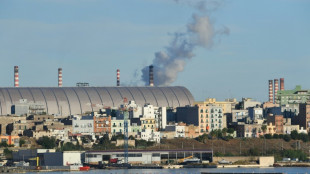
Concentrations of carbon dioxide in the atmosphere in May were 50 percent higher than during the pre-industrial era, reaching levels not seen on Earth for about four million years, the main US climate agency said on Friday.
Global warming caused by humans, particularly through the production of electricity using fossil fuels, transport, the production of cement, or even deforestation, is responsible for the new high, the National Oceanic and Atmospheric Administration (NOAA) said.
May is usually the month with the highest carbon dioxide levels each year.
In May 2022, the threshold of 420 parts per million (ppm) -- a unit of measurement used to quantify pollution in the atmosphere -- was crossed.
In May 2021, the rate was 419 ppm, and in 2020, 417 ppm.
The measurements are taken at the Mauna Loa observatory in Hawaii, ideally located high on a volcano, which allows it to escape the possible influence of local pollution.
Before the Industrial Revolution, levels of CO2 held steady at around 280 ppm, a level maintained for approximately 6,000 years of human civilization that preceded industrialization, according to NOAA.
The level now is comparable to what it was between 4.1 and 4.5 million years ago, when CO2 levels were near or above 400 ppm, the agency said in a statement.
At that time, sea levels were between five and 25 meters higher than now, high enough to submerge many of today's major cities. Large forests also occupied parts of the Arctic, according to studies.
CO2 is a greenhouse gas that traps heat, gradually causing global warming. It remains in the atmosphere and oceans for thousands of years.
Its warming effect is already causing dramatic consequences, noted NOAA, including the multiplication of heat waves, droughts, fires or floods.
"Carbon dioxide is at levels our species has never experienced before — this is not new," said Pieter Tans, a scientist with the Global Monitoring Laboratory.
"We have known about this for half a century, and have failed to do anything meaningful about it. What's it going to take for us to wake up?"
S.Keller--BTB