IEA chief Birol: an 'unexpected hero' of climate fight / Photo: © AFP

 Greenland parliament approves security agreement with United States

 Qatar envoy meets incoming UN General Assembly president

 Trump Signals Willingness to Work With Democrats After Midterm Defeat

 Galloway accuser could not foresee publishing-sector fallout, lawyer argues

 New York City Center revives In the Heights as a timely community story

 Godzilla Minus Zero shifts focus toward postwar human drama
 Mehbooba Mufti urges dialogue and renewed Central Asia links for Kashmir

 Seacliff Healthcare Seeks Specialist GP in Thirroul

 US stocks fall before midterm Election Day as technology shares weaken

 BLS Polymers makes strong market debut at ₹248 per share

 Petrol and diesel prices remain broadly steady across major Indian cities

 Reliance shares remain in focus after near-12% surge

 2026 Arizona Midterms: Key Races, Ballot Measures, and Voter Deadlines

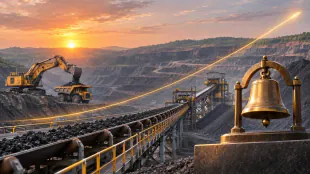 Coal India prepares possible $1 billion Mahanadi Coalfields listing

Fatih Birol had big dreams of becoming a footballer or a filmmaker when he was younger.
Instead, he became a surprising champion of the battle to kick the world's addiction to fossil fuels as the executive director of the global energy watchdog.
Birol, 65, heads the International Energy Agency, a Paris-based organisation that was founded in 1974 in the wake of the oil crisis to ensure the security of the world's supplies of crude.
Created by the Organisation for Economic Co-operation and Development, the IEA advises 31 wealthy democracies ranging from the United States to Mexico, Japan and European nations.
Its mission has evolved in more recent years.
Today, Birol goes around the globe to press nations to accelerate their development of renewable energy and wean themselves off oil, gas and coal -- with IEA data to back his case.
"I'm a very direct man, I believe in numbers," Birol told AFP in an interview at the IEA's headquarters near the Eiffel Tower.
He cited a 1970s French music hit, "Paroles paroles", meaning "words words", to press his point.
"There is a lot of 'paroles'. I believe in numbers. I believe data always win," Birol said.
Last week, Birol made headlines again by stating that the world "may be witnessing the beginning of the end of the fossil fuel era" as he gave a preview of next month's annual IEA energy outlook report.
Demand for oil, gas and coal will peak by the end of 2030 thanks to the "spectacular" growth of clean energy technologies and electric cars, Birol said.
"Some people say climate change is not real, some people say we shouldn't move so fast," he told AFP.
"There are different views but the rigour of our analysis is not questioned," said the Turkish energy expert, who has worked at the IEA for two decades and became its executive director in 2015.
- OPEC career -
The IEA caused a stir in 2021 when it published a roadmap to reach the Paris Agreement goal of having a carbon neutral world by 2050 and limit global warming to 1.5 degrees Celsius.
The message from the organisation that once worked to secure crude supplies was blunt: all future fossil fuel projects must be scrapped.
The report has opened the window of "what is deemed possible" in the rapid deployment of low-emissions energy, said Gernot Wagner, a climate economist at Columbia Business School.
Birol featured on Time magazine's list of the 100 most influential people in the world that same year.
Some climate campaigners have described him as an "unexpected hero" in the movement against global warming.
Such an image may have once seemed unlikely for a man who worked for six years for the Organisation of the Petroleum Exporting Countries (OPEC), the Saudi-led oil cartel.
But Birol said he now goes around the world telling countries that rely on oil revenues that demand for their product will slow down.
"The real friends say the bitter truth. Instead of feeling upset, it's a wake up call for them to diversify their economies, not to focus their economies only on the oil income," he said.
- Oil industry 'shock' -
Birol has also pushed for change within the IEA, too, through a "modernisation strategy" that include opening the organisation's door to emerging countries such as Brazil, China, India, Mexico and South Africa.
Of those, Mexico became a full-fledged member in 2018.
He had also decided that it was "time to make the IEA a leader in global clean energy transition".
He said the UN's 2018 report on the impact of climate change showed the IEA needed to draw a roadmap for the energy transition.
The document "became a benchmark" for governments, investors and the boards of energy companies, Birol said, noting that it "was a shock" for the fossil fuel industry.
"I'm very happy with that. And we are coming with an update soon," he said.
Some 300 experts toil in the IEA's small, modern building to produce analyses and projections all year.
The IEA also holds meetings to discuss how to finance the transition or secure raw materials.
Birol, ever the football fan, sees his organisation as an "honest referee" who tells the world "what is right, what is wrong".
He loves his job, even though it means that he regularly misses games of his football club, Galatasaray.
"I work seven days per week. The reason is I like it," he said. "I like it because I see it makes a difference. These months and years are so critical."
C.Stoecklin--VB