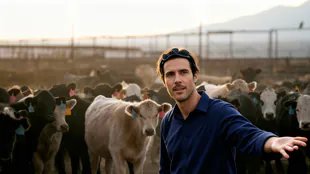
Comeback king Lula gets delayed honeymoon in Brazil / Photo: © AFP

 Greenland parliament approves security agreement with United States

 Qatar envoy meets incoming UN General Assembly president

 Trump Signals Willingness to Work With Democrats After Midterm Defeat

 Galloway accuser could not foresee publishing-sector fallout, lawyer argues

 New York City Center revives In the Heights as a timely community story

 Godzilla Minus Zero shifts focus toward postwar human drama

 Mehbooba Mufti urges dialogue and renewed Central Asia links for Kashmir

 Seacliff Healthcare Seeks Specialist GP in Thirroul

 US stocks fall before midterm Election Day as technology shares weaken

 BLS Polymers makes strong market debut at ₹248 per share

 Petrol and diesel prices remain broadly steady across major Indian cities

 Reliance shares remain in focus after near-12% surge

 2026 Arizona Midterms: Key Races, Ballot Measures, and Voter Deadlines

 Coal India prepares possible $1 billion Mahanadi Coalfields listing

Economic growth is up, Amazon deforestation is down and he's scored some key wins in Congress: Brazilian President Luiz Inacio Lula da Silva finally appears to be getting a delayed honeymoon in his third-term comeback.
Once called "the most popular politician on Earth" by no less than Barack Obama, veteran leftist Lula got off to a bit of a rough start when he returned to office on January 1, following a brutal, divisive election against far-right incumbent Jair Bolsonaro.
But a poll last week by the Genial/Quaestinstitute put Lula's approval rating at a solid 60 percent, well up from the 51 percent he scored in April -- if not quite on par with the 87 percent he basked in when leaving office in 2010 after his first two terms.
It appears the 77-year-old president is hitting his stride in "Lula Three," after a first 100 days marred by gaffes, battles with Congress and mistrust from the business sector -- not to mention riots by Bolsonaro supporters who trashed the presidential palace, parliament and Supreme Court in Brasilia a week after his inauguration.
"Four or five months ago, no one would have thought Lula would be in such a favorable position today," international relations specialist Leonardo Paz Neves of the Getulio Vargas Foundation told AFP.
None of which is to say it could not all fall apart, of course.
Arguably no one knows that better than Lula himself, who presided over a watershed boom in the 2000s and left office an international icon, only to be imprisoned eight years later on controversial corruption charges -- since quashed by the Supreme Court.
- Lucky Lula -
Lula, who grew up in deep poverty before becoming a metalworker, union leader and then president, enjoyed great good fortune in his first two terms, when booming demand for Brazil's key commodity exports unleashed whirlwind economic growth.
These days, Latin America's biggest economy is far from the dynamo it was in the 2000s. But Lula still looks to have a bit of the Midas touch.
The economy grew a better-than-expected 1.9 percent in the first quarter, according to government data, and analysts predict growth of two to 2.5 percent for this year.
Lula also scored a key victory last Tuesday when Brazil's Congress passed new budget rules, ditching strict spending caps and enabling the administration to free up money for social and infrastructure programs, in exchange for more-flexible deficit-slashing targets.
Getting the bill through the conservative-majority Congress would have been unthinkable a few months ago.
"The government showed its capacity to organize and get its projects approved," said political scientist Mayra Goulart of Rio de Janeiro Federal University.
The Congressional backing comes at a cost: Lula is expected to announce a cabinet reshuffle soon to reward centrist parties for their support.
Lula got another legislative win in July, when the lower house passed tax reforms that were decades in the making. That bill now heads to the Senate.
Fitch upgraded Brazil's credit rating last month from BB- to BB, citing the government's economic reforms.
Not all observers are convinced by these positives, however.
"For the government to respect the new budget rules, it will have to increase its revenues. And that's looking difficult," said economist Pedro Paulo Silveira.
Lula has also faced criticism at times for his close ties with Russia and China, and his reluctance to condemn the Russian invasion of Ukraine.
- Opposition sidelined -
Bolsonaro and his allies have meanwhile been weakened by a series of scandals and police investigations.
In June, electoral authorities barred Bolsonaro from running for office for eight years over his unproven allegations the voting system is fraud-prone, sidelining him from the next presidential elections, in 2026.
As the opposition struggles, Lula has been busy burnishing his international image, meeting with world leaders, giving a speech on climate change to a giant crowd in Paris in June and hosting a summit of Amazon rainforest nations earlier this month.
Environmentalists criticized the summit for its lack of concrete emissions-cutting pledges, but Brazil still emerged "as an essential country in the climate debate," Paz Neves said.
Lula can point to more promising news on that front: deforestation in the Brazilian Amazon in the first seven months of his term fell by 42.5 percent from the previous year.
A.Gasser--BTB