Ecuador votes to halt oil drilling in Amazon reserve / Photo: © AFP/File

 Ed Sheeran returns to stage after Palestinian controversy

 Asian Games to open in Japan after troubled build-up

 Drone owners rush to offload devices ahead of Beijing ban

 Trump's beef policies irk Texas ranchers, testing their loyalty

 Nvidia, OpenAI CEOs to attend Xi dinner at White House

 Anthropic picks Accenture for in-house AI safety evaluation
 Balogun returns as Monaco beat Lens to continue strong Ligue 1 start

 'Pause' on overt repression in Venezuela, but reforms still needed: HRW

 Global stocks mixed as yen falls despite Bank of Japan rate hike

 Cuba hit with seventh major blackout of the year

 Murray out with concussion so Wentz will start for Vikings

 UN chief 'deeply regrets' US visa refusal to Abbas for annual meeting

 England quick Carse to face no charges over alleged nightclub assault

 Mancini brings nine newcomers into the first squad of his Italy comeback

 Czechs level Davis Cup tie against USA as South Korea eye Finals

 New France boss Zidane confirms Mbappe as captain after naming first squad

 California governor signs order to explore AI 'kill switch'

 Head leads run spree as Australia win Zimbabwe ODI series

 In-form Raphinha wants to finish career at Barcelona

 Warren Buffett steps down as Berkshire Hathaway chairman

 Carrick confident Man Utd can 'work through' tough time

 Mbappe ends Nike partnership to join Swiss brand On

 Liverpool boss Iraola puts Bournemouth love affair on hold

 'A disaster' if Man City do not win says Maresca after flawless start

 Kerry James Marshall: American 'blackness' painter celebrated in Europe

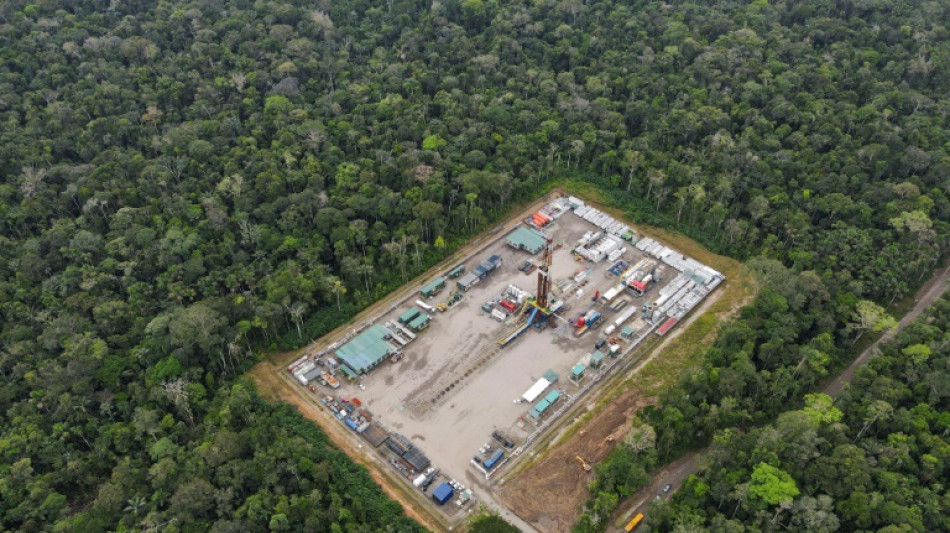
Ecuadorans have voted to stop an oil drilling project in an Amazon reserve, according to the results Monday of a referendum hailed as a historic example of climate democracy.
Ecuador is one of eight nations sharing the Amazon basin, a vital carbon sink facing widespread destruction at a time when the world is grappling to curb climate change.
Almost 59 percent of voters chose to halt the exploitation of an oil block in Yasuni National Park, one of the most diverse biospheres in the world.
"This is a historic victory for Ecuador and the planet," environmental group Yasunidos posted on social media.
"This consultation, born from citizens, shows great national consensus in Ecuador. It is the first time a country has decided to protect life and leave oil in the ground."
The referendum took place alongside a first-round presidential election held under heavy security, with an explosion of violence linked to the drug trade dominating voter concerns.
Voters also chose to ban mining in parts of the Choco Andes forest in a second referendum.
- Uncontacted tribes -
Oil exploitation has been one of the pillars of Ecuador's economy since the 1970s.
Crude oil, its leading export, generated revenues of $10 billion in 2022, around 10 percent of gross domestic product.
Nearly 500,000 barrels are produced daily in the northeastern Amazon, below the Andes, blighting the environment with wells, pipelines, and flames shooting into the air.
The industry has been a boon to state coffers and development, but environmentalists decry terrible pollution.
Drilling in Yasuni began in 2016 after years of fraught debate and failed efforts by then-president Rafael Correa to persuade the international community to pay cash-strapped Ecuador $3.6 billion not to drill there.
The block is situated in a reserve which stretches over one million hectares (2.5 million acres) and is home to three of the world's last uncontacted Indigenous populations and a bounty of plant and animal species.
The reserve is home to the Waorani and Kichwa tribes, as well as the Tagaeri, Taromenane and Dugakaeri, who choose to live isolated from the modern world.
After years of demands for a referendum, the country's highest court authorized the vote in May to decide the fate of "block 43," which contributes 12 percent of the 466,000 barrels of oil per day produced by Ecuador.
The government of outgoing President Guillermo Lasso estimated a loss of $16 billion over the next 20 years if drilling were halted.
Several much older blocks exist in the north of Yasuni, but they are almost depleted.
"Ecuador has become the first country in the world to stop oil exploitation due to direct climate democracy," said a joint statement from climate organizations, including Yasunidos and Amazon Frontlines.
- 'Lungs of the earth'-
Rainforests are often called the "lungs of the Earth," soaking up planet-warming carbon dioxide and expelling life-giving oxygen. Their protection is crucial in the battle to combat climate change.
Scientists warn destruction of the Amazon is pushing the world's biggest rainforest close to a tipping point beyond which trees would die off and release carbon rather than absorb it, with catastrophic consequences for the climate.
"The Yasuni has been like a mother to the world... We need to raise our voices and hands so that our mother can recover, that she is not injured, that she is not beaten," Alicia Cahuiya, a Waorani leader born in the heart of the jungle, said before the vote.
The fate of the reserve drew the attention of celebrities such as Hollywood star and environmental activist Leonardo DiCaprio and Swedish climate campaigner Greta Thunberg, who both pushed for a "Yes" vote.
Locals in Yasuni were divided, with some supporting the oil companies and the benefits that economic growth have brought to their villages.
O.Bulka--BTB