Air pollution kills 1,200 children a year: EU agency / Photo: © AFP/File

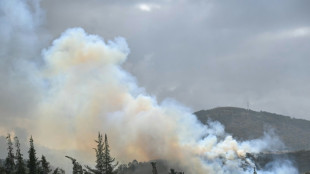 Helicopters battle wildfire threatening Ecuador's capital

 Brentford batter Chelsea to undo Alonso's promising start

 Kane hits Bundesliga century as Bayern rout Union
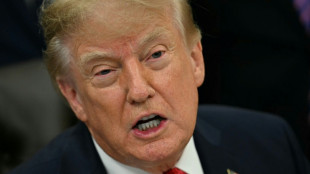 Trump says CNN, MS NOW, Politico banned from White House
 Hushing and hedging: US companies retreat on climate

 Springboks to face Fiji before 2027 Rugby World Cup

 Nigeria miners struggled to breathe in cell before 37 died: survivors

 McIlroy on the charge at PGA Championship as Reed withdraws

 McIlroy on the charge at PGA Championship

 Crisis-wracked Volkswagen warns of 10-bn-euro hit to profits

 Costa Rica's Grynspan tops third informal poll for UN chief: diplomat

 Stock markets retreat after central bank rate hikes

 Russia labels director of Cannes Grand Prix winner a 'foreign agent'

 Macron warns of Russian 'hybrid' threat after meeting presidential hopefuls

 UN holds third informal poll for new chief

 Kulusevski return can spark Spurs: De Zerbi

 Shakira to cap off world tour with Madrid 12-gig run

 Isolated Syrian-Druze city blames Damascus for shortages

 Isolated Syrian-Druze city shortages

 Dutch drop Depay for Germany match in Xavi's first pick

 Ronaldo named in Portugal squad for Nations League

 Stock markets diverge after central bank rate hikes

 Anti-Assad music star makes triumphant return to Syria

 In-form Fernandez included in Spain Nations League squad
 Arteta buries hatchet with Hurzeler ahead of Brighton clash

Air pollution still causes more than 1,200 premature deaths a year in under 18's across Europe and increases the risk of chronic disease later in life, the EU environmental agency said Monday.
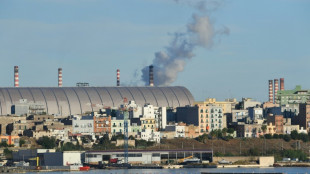
Despite recent improvements, "the level of key air pollutants in many European countries remain stubbornly above World Health Organization" (WHO) guidelines, particularly in central-eastern Europe and Italy, said the EEA after a study in over 30 countries, including the 27 members of the European Union.
The report did not cover the major industrial nations of Russia, Ukraine and the United Kingdom, suggesting the overall death tolls for the continent could be higher.
The EEA announced last November that 238,000 people died prematurely because of air pollution in 2020 in the EU, plus Iceland, Liechtenstein, Norway, Switzerland and Turkey.
"Air pollution causes over 1,200 premature deaths per year in people under the age of 18 in Europe and significantly increases the risk of disease later in life," the agency said.
The study was the agency's first to focus specifically on children.
"Although the number of premature deaths in this age group is low relative to the total for the European population estimated by EEA each year, deaths early in life represent a loss of future potential and come with a significant burden of chronic illness, both in childhood and later in life," the agency said.
It urged authorities to focus on improving air quality around schools and nurseries as well as sports facilities and mass transport hubs.
"After birth, ambient air pollution increases the risk of several health problems, including asthma, reduced lung function, respiratory infections and allergies," the report noted.
- Seven million dead annually -
Poor air quality can also "aggravate chronic conditions like asthma, which afflicts nine percent of children and adolescents in Europe, as well as increasing the risk of some chronic diseases later in adulthood".
Ninety-seven percent of the urban population were in 2021 exposed to air that did not meet WHO recommendations, according to figures released Monday.
The EEA had last year underlined that the EU was on track to meet its target of reducing premature deaths by 50 percent by 2030 compared with 2005.
In the early 1990s, fine particulates caused nearly a million premature deaths a year in the 27 EU nations. That fell to 431,000 in 2005.
The situation in Europe looks better than for much of the planet, says the WHO, which blames air pollution for seven million deaths globally each year, almost as many as for cigarette smoking or bad diets.
Several hundred thousand of the deaths concern children under 15.
It took until September 2021 to reach agreement to tighten limits set for major pollutants back in 2005.
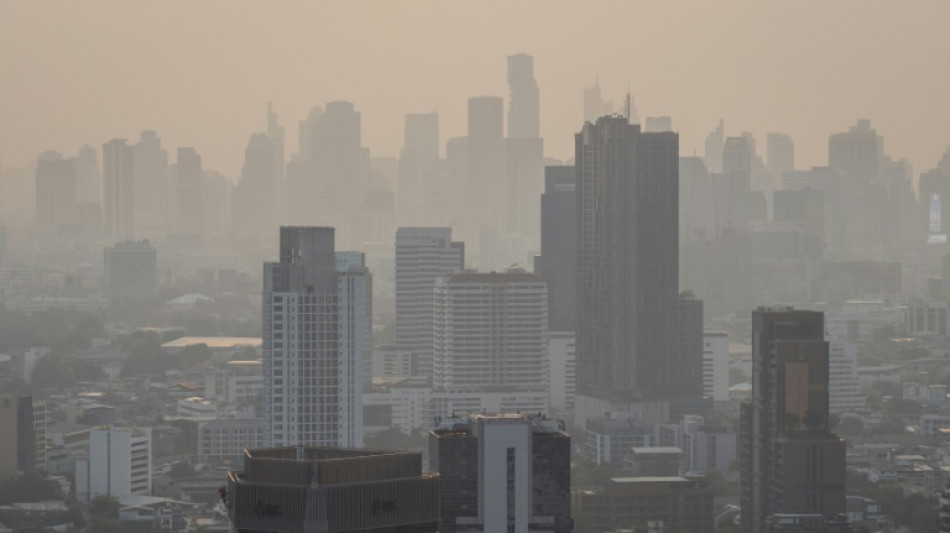
In Thailand alone, where toxic smog chokes parts of the country, health officials said last week that 2.4 million people had sought hospital treatment for medical problems linked to air pollution since the start of the year.
Fine particulate matter, primarily from cars and trucks and which can penetrate deeply into the lungs, is considered the worst air pollutant, followed by nitrogen dioxide and ozone.
A.Gasser--BTB