Australian parliament approves emissions caps on big polluters / Photo: © AFP/File

 Helicopters battle wildfire threatening Ecuador's capital

 Brentford batter Chelsea to undo Alonso's promising start

 Kane hits Bundesliga century as Bayern rout Union

 Trump says CNN, MS NOW, Politico banned from White House

 Hushing and hedging: US companies retreat on climate

 Springboks to face Fiji before 2027 Rugby World Cup

 Nigeria miners struggled to breathe in cell before 37 died: survivors

 McIlroy on the charge at PGA Championship as Reed withdraws

 McIlroy on the charge at PGA Championship

 Crisis-wracked Volkswagen warns of 10-bn-euro hit to profits

 Costa Rica's Grynspan tops third informal poll for UN chief: diplomat

 Stock markets retreat after central bank rate hikes

 Russia labels director of Cannes Grand Prix winner a 'foreign agent'

 Macron warns of Russian 'hybrid' threat after meeting presidential hopefuls

 UN holds third informal poll for new chief

 Kulusevski return can spark Spurs: De Zerbi

 Shakira to cap off world tour with Madrid 12-gig run

 Isolated Syrian-Druze city blames Damascus for shortages

 Isolated Syrian-Druze city shortages

 Dutch drop Depay for Germany match in Xavi's first pick

 Ronaldo named in Portugal squad for Nations League

 Stock markets diverge after central bank rate hikes

 Anti-Assad music star makes triumphant return to Syria

 In-form Fernandez included in Spain Nations League squad

 Arteta buries hatchet with Hurzeler ahead of Brighton clash

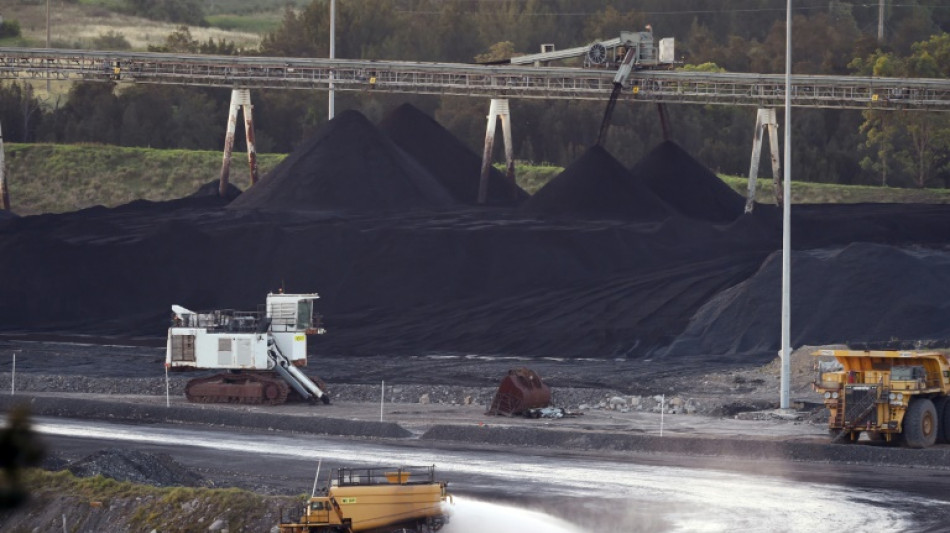
Breakthrough climate laws passed by Australia on Thursday will target the nation's worst polluters, forcing coal mines and oil refineries to curb emissions by about five percent each year.
Experts said the laws signalled the end of Australia's bitter "climate wars" -- a decade of political brawling that has repeatedly derailed attempts to tackle climate change.
"It's the first time greenhouse gas emissions reduction has been written into Australian law," University of New South Wales sustainability expert Tommy Wiedmann said.
"That's obviously a good thing. We have a climate policy now," he told AFP.
The laws apply to 215 major industrial facilities -- each producing more than 100,000 tonnes of greenhouse gases a year -- and form the backbone of Australia's pledge to reach net zero emissions by 2050.
The government thinks it can stop 200 million tonnes of carbon being pumped into the atmosphere over the next decade.
Aluminium smelters, coal mines, oil refineries and other large polluters will be forced to cut their emissions by 4.9 percent each year.
The government struck a deal on the so-called Safeguard Mechanism after weeks of high-stakes bargaining with the left-wing Greens party.
Greens leader Adam Bandt said the laws compelled oil and gas corporations to slash their emissions "for the first time ever in law".
The previously sceptical Greens -- whose support was needed to pass the laws -- agreed to back the carbon plan after persuading the government to put a hard cap on emissions.
- Climate 'stalemate' -
Although many praised the laws as a crucial first step, Wiedmann warned Australia could not rest on its laurels.
"It's not enough on its own to reduce emissions and avoid dangerous climate change," he said.
"The hard decisions will come in the next few years."
Murdoch University sustainability expert Martin Brueckner said the plan ended Australia's climate "stalemate".
"In that sense, it is a step in the right direction."
Australia's mining industry has warned that the financial burden of compliance could lead to massive job losses.
"If we are not careful, some facilities in Australia will close," the Minerals Council of Australia said before the laws passed.
"Not only would that damage our economy and slash tens of thousands of regional jobs and billions in investment, it also would push the emissions reduction burden onto other nations that are less able or less willing to decarbonise."
Global mining giants Rio Tinto and BHP operate a number of mines and smelters that will be forced to make emissions cuts.
Australia's Climate Council has estimated that the 215 facilities are responsible for almost 30 percent of the country's total emissions.
I.Meyer--BTB