North Sea shell survey brings out volunteers / Photo: © AFP

 Helicopters battle wildfire threatening Ecuador's capital

 Brentford batter Chelsea to undo Alonso's promising start

 Kane hits Bundesliga century as Bayern rout Union

 Trump says CNN, MS NOW, Politico banned from White House
 Hushing and hedging: US companies retreat on climate

 Springboks to face Fiji before 2027 Rugby World Cup

 Nigeria miners struggled to breathe in cell before 37 died: survivors

 McIlroy on the charge at PGA Championship as Reed withdraws

 McIlroy on the charge at PGA Championship

 Crisis-wracked Volkswagen warns of 10-bn-euro hit to profits

 Costa Rica's Grynspan tops third informal poll for UN chief: diplomat

 Stock markets retreat after central bank rate hikes

 Russia labels director of Cannes Grand Prix winner a 'foreign agent'

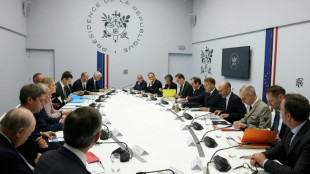 Macron warns of Russian 'hybrid' threat after meeting presidential hopefuls

 UN holds third informal poll for new chief

 Kulusevski return can spark Spurs: De Zerbi

 Shakira to cap off world tour with Madrid 12-gig run

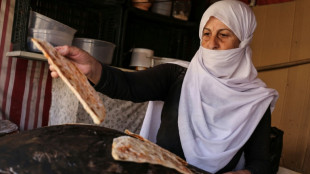 Isolated Syrian-Druze city blames Damascus for shortages

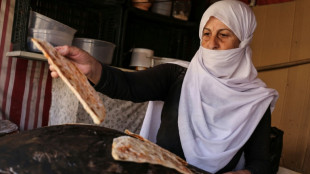 Isolated Syrian-Druze city shortages

 Dutch drop Depay for Germany match in Xavi's first pick

 Ronaldo named in Portugal squad for Nations League

 Stock markets diverge after central bank rate hikes

 Anti-Assad music star makes triumphant return to Syria

 In-form Fernandez included in Spain Nations League squad

 Arteta buries hatchet with Hurzeler ahead of Brighton clash

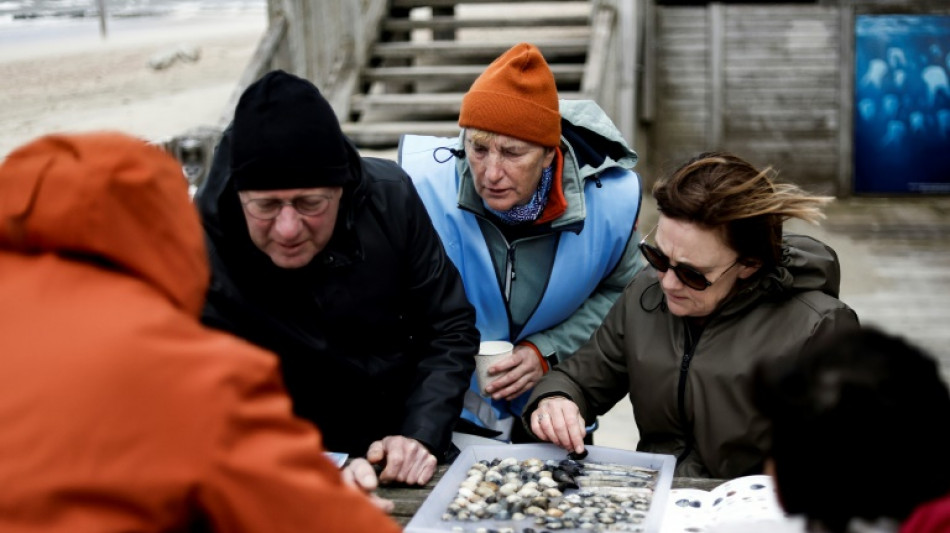
Hundreds of volunteers descended on the beaches of the North Sea coast this weekend to collect sea shells as a measure of the sea's biological diversity.
While there is a serious scientific purpose to the exercise, it is also a fun day out on the coast for Belgian, French and Dutch families with kids.
On Saturday, Natascha Perales and her children marked a wide spiral pattern on the sand in Middelkerke, in Flanders, and filled their plastic buckets with shells.
The harvests were taken to a sorting centre run by volunteers, to be counted and divided up by species.
"We found mussels, oysters, cockles, at least six different species," 40-year-old Perales told AFP. "It's a great activity, despite the weather."
Braving stiff gusts of wind, the dozen participants kept the Middelkerke collection point busy.
Laurence Virolee, 41, came with her three children.
"We learned a lot of things," she said. "Last year we took part in a clean-up day on the beach. It's important for the kids to see the evolution in biodiversity and make them aware of the climate."
The collections took place along 400 kilometres (240 miles) of coastline and around 800 people took part in three countries, with France joining the sixth annual event for the first time.
In total, around 38,000 shells were brought in, roughly as many as in last year's event.
- Invasive species -
"Shells are a good indicator of the state of biodiversity in the North Sea, " explained Jan Seys, who organises the survey for the Flanders Marine Institute (VLIZ).
"Last year, 15 percent of the shells found belonged to exotic species," he said, amid fears that foreign shellfish species might become an invasive danger to native organisms.
"We have seen, for example the Atlantic Jackknife Clam appearing on our coasts."
The volunteers were also on the lookout for shells with holes in them, trying to measure the spread of predatory sea snails preying on shellfish.
Near the beach, retired biologist Joris Hooze, 75, taught volunteers how to examine molluscs under his microscope and distinguish their differences.
"We've seen organisms that normally live in warm waters turning up more and more," he said. "It's a sign of climate change."
The European Union wants to clean up the seas around its coasts and restore the natural ecosystem by 2030. To do that, it has assigned 800 million euros in funding to the task.
"If we're going to hit that target, we'll need the general public," said Seys. As well as its scientific value, the shell hunt served to raise awareness, he added.
J.Horn--BTB