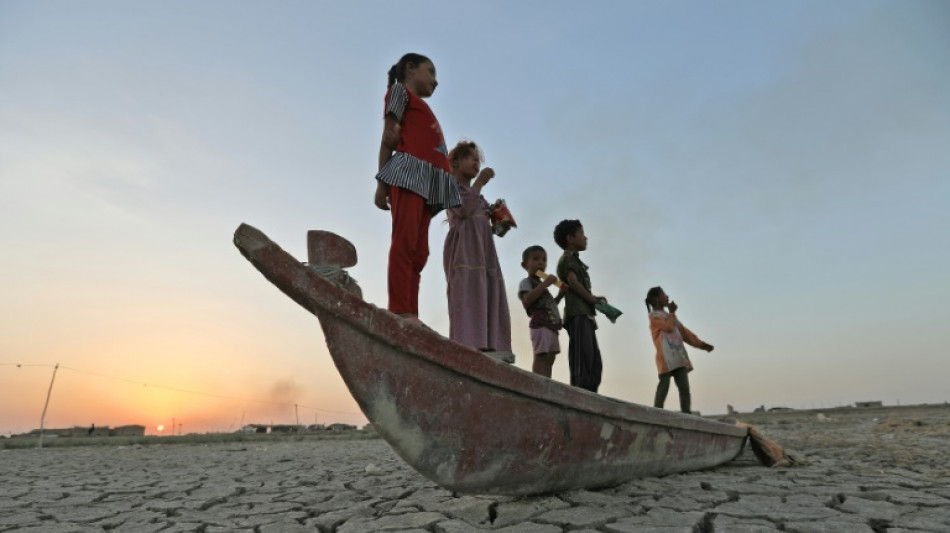
After year of climate disasters, world off-track to curb warming / Photo: © AFP/File

 Carrick confident Man Utd can 'work through' tough time

 Mbappe ends Nike partnership to join Swiss brand On

 Liverpool boss Iraola puts Bournemouth love affair on hold

 'A disaster' if Man City do not win says Maresca after flawless start

 Kerry James Marshall: American 'blackness' painter celebrated in Europe

 Spain coach De la Fuente offers 'full support' to people of Ceuta

 Russia seizes assets of Nestle, French firms over West's Ukraine support
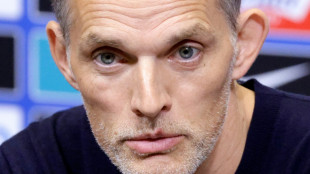 England can build on World Cup 'spirit', says Tuchel

 UNESCO can be 'moderator' in AI debate: chief to AFP

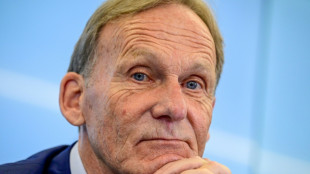 Infantino 'must go', says German FA vice-president

 Russia seizes assets of Nestle, French firms

 Japan's busiest rail station tests robot bins
 Anthropic says AI systems moving towards building themselves

 Asian stocks boosted by falling oil, yen weakens after BoJ rate hike
 Pakistan court blocks expulsion of Afghan medical college students

 Athletes 'can't take it any more' as Asian Games issues mount
 Allen lights up Bills' new stadium with 41-31 win over Lions

 Afghan medical students in Pakistan hope court stops college expulsions
 AI doomsday warnings unlikely to slow IPOs but questions linger
 ICC eyes China in bid to expand cricket
 Nkunku craving freedom and fun on RB Leipzig return

 Bhutan's traditional archers lose ground to development
 Asian stocks track Wall St rally as oil prices drop

 South Korea makes Asian Games complaint over Japan warlord ceremony

 US aid cuts are killing Kenyan sex workers

Catastrophic floods, crop-wilting droughts and record heatwaves this year have shown that climate change warnings are increasingly becoming reality and this is "just the beginning", experts say, as international efforts to cut planet-heating emissions founder.
The year did see some important climate progress, with major new legislation particularly in the United States and Europe as well as a deal at the UN climate talks to help vulnerable countries cope with an increasing onslaught of devastating climate impacts.
But the goal of keeping warming within a safer limit of 1.5 degrees Celsius since the pre-industrial era appears increasingly in peril, with carbon dioxide emissions from fossil fuels -- the main driver of global heating -- on track to reach an all-time high in 2022.
United Nations chief Antonio Guterres warned world leaders at a climate summit in Egypt in November that humanity faces a stark choice between working together in the battle against global warming or "collective suicide".
They opted to put off the most important decisions for another time, observers say.
This year UN climate science experts issued their strongest warning yet of the dangers facing people and planet, with a landmark report on climate impacts in February dubbed an "atlas of human suffering".
Since then a series of extreme events has illustrated the accelerating dangers of climate change, at barely 1.2C of warming.
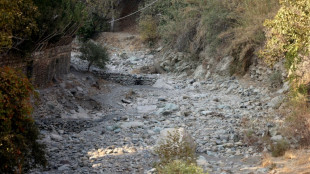
Record heatwaves damaged crops from China to Europe, while drought has brought millions to the point of starvation in the Horn of Africa.
Floods super-charged by climate change engulfed Pakistan, affecting 33 million people and causing some $30 billion in damage and economic losses.
"The year 2022 will be one of the hottest years on earth, with all the phenomena that go with higher temperatures," said climate scientist Robert Vautard, head of France's Pierre-Simon Laplace Institute.
"Unfortunately, this is just the beginning."
This year is on track to be the fifth or sixth warmest ever recorded despite the impact, since 2020, of La Nina -- a periodic and naturally occurring phenomenon in the Pacific that cools the atmosphere.
When this phenomenon reverses, potentially within months, the world will likely climb to a "new level" in warming, said Vautard.
- Still polluting -
Economy-battering climate extremes, which amplified the energy price surges for many countries as a result of Russia's invasion of Ukraine, provided the backdrop to last month's high-stakes UN climate talks in Egypt.
The negotiations did make history, with wealthy polluters agreeing to a fund to pay for climate damage increasingly unleashed on poorer countries.
Pakistani climate minister Sherry Rehman called the move a "down payment on the longer investment in our joint futures".
But vulnerable nations and campaigners said the Egypt conference failed to deliver on the emissions reductions needed to curb climate losses and damages in the future.
"COP27 tackled the consequences of climate change, but not the cause -- fossil fuels," said Harjeet Singh of Climate Action Network.
To keep the 1.5C limit in play, planet-heating emissions need to be slashed 45 percent by 2030, and be cut to net zero by mid-century.
At 2021 UN talks in Glasgow, nations were urged to ramp up their emissions reduction commitments.
But only around 30 countries have heeded that call, leaving the world on track to hot up by about 2.5C.
- 'Emergency room' -
Guterres decried the failure of the climate talks to address the drastic emissions cuts needed, adding: "Our planet is still in the emergency room."
He has also urged nations to urgently address the other main existential crisis facing humanity and the planet -- the loss of biodiversity -- which is the subject of a crunch meeting in Montreal from December 7 to 19.
Nature has been gravely damaged by human activity and the UN talks are tasked with outlining a roadmap for protecting the land and ocean ecosystems that provide Earth's life support.
A series of potentially crucial climate milestones will then stretch through next year.
These will include spring meetings of the International Monetary Fund and World Bank, following "a formal request to look at the international financial system and to review the role of international financial institutions" from the Egypt climate talks, said Laurence Tubiana, who leads the European Climate Foundation.
The next UN climate meeting in November 2023 -- held in fossil fuel exporter the United Arab Emirates -- will see the publication of a "global stocktake" of progress on the 2015 Paris Agreement goal to limit warming to well below 2C, and preferably 1.5C.
Tubiana, a key architect of the Paris deal, said the talks in Dubai will likely be dominated by discussion of the oil and gas industry and its financial contribution.
The issue is likely to create "great tension", she predicted.
R.Adler--BTB