Ukraine war, pandemic push to colour WHO international meet / Photo: © AFP

 Bardot auction in Paris fetches nearly one million euros
 No timeline on Daniels injury return, says Commanders coach
 British Columbia sues OpenAI in US court over Canada school shooting
 French star Batum retires after 18-year NBA career
 Zidane leads first France training session
 Man shot by ICE agent in Texas detained with bullet inside him: lawyer
 California declares state of emergency ahead of El Nino
 South Africa arrests three more suspects, after nine women murdered
 Carse needs time away from England, says captain Brook

 NOWPayments Releases Cross-Chain Payout Data Revealing Key Performance Benchmarks Across TRON, BNB Chain, and Solana
 British Museum bans photos of Bayeux Tapestry as crowds linger
 COP31 host says AI climate footprint to be a summit priority

 Berlin's far-left vote winners reject anti-semitism charges

 Mancini eager for 'new adventure' on Italy return

 Mbappe says having Zidane as France coach 'like a film'

 Palmer, Rice out of England Nations League squad
 German auto workers stage mass protests in bid to save jobs
 Embattled Merz vows to keep ruling for 'democratic future' of Germany

 Merz vows to keep ruling coalition together for 'democratic future' of Germany
 Spain coach De la Fuente gets new deal after World Cup success

 Pressure grows on Germany's Merz after election defeats

 China's Zhang beats Japan rivals to Asian Games gymnastics gold
 Samlingen Haupt: Vad pengar avslöjar om oss människor

 Tens of thousands of German auto workers protest to save jobs

 हॉप्त् कलेक्शन: पैसा हमारे बारे में एक इंसान के रूप में क्या प्रकट करता है

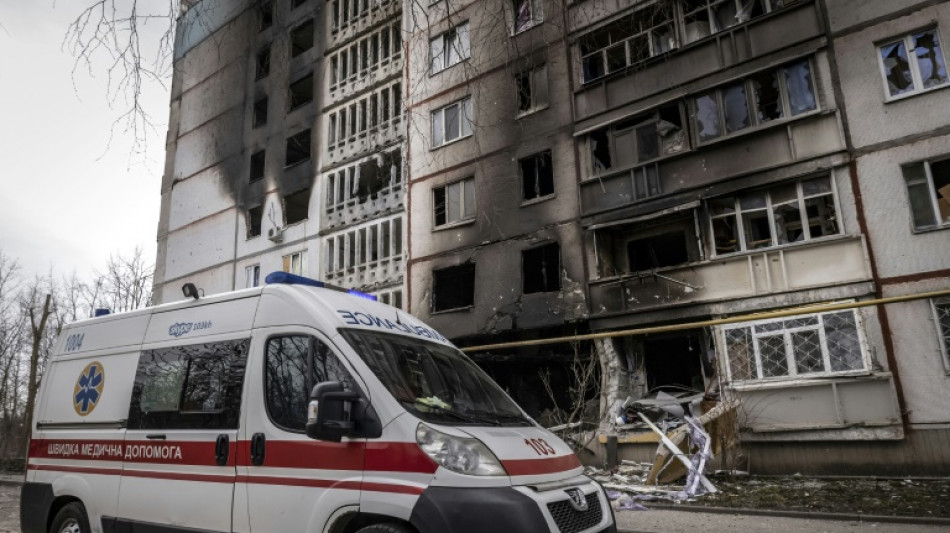
The Ukraine war looms large as the World Health Organization opens its main annual assembly Sunday, threatening to overshadow efforts on other health crises and a reform push aimed at preventing future pandemics.
The UN health agency will kick off its 75th World Health Assembly Sunday afternoon, convening its 194 member states for their first largely in-person gathering since Covid-19 surfaced in late 2019.
The agenda will remain focused on the continuing coronavirus crisis and efforts to avert future pandemics.
But the war raging in Ukraine and rebukes of Russia for its invasion are expected to take centre stage.
Kyiv and its allies will present a resolution during the assembly harshly condemning Russia's invasion, and especially its more than 200 attacks on healthcare, including hospitals and ambulances, in Ukraine.
It is also to voice alarm at the "health emergency in Ukraine", and highlight the dire impacts beyond its borders, including how disrupted grain exports are deepening a global food security crisis.
"The Ukraine war is having a systemic impact on international organisations", a European diplomat told AFP, pointing to the "considerable amounts of time (spent) looking at the consequences for health in Ukraine, in Europe and in the world".
But while Russia has been shunned and pushed out of other international bodies over its invasion, no such sanctions are foreseen at the World Health Assembly.
"There's not a call to kick them out," a Western diplomat told AFP, acknowledging that the sanctions permitted under WHO rules are "very weak".
Moscow meanwhile flatly rejected rumours that it was planning to leave the WHO, insisting in a tweet Friday that they were "simply not true".
- Second term for Tedros -
The conflict is far from the only issue on this week's packed agenda.
Among other things, the assembly is expected to reappoint WHO chief Tedros Adhanom Ghebreyesus to a second five-year term.
His first term was turbulent, as he helped steer the global response to the pandemic and grappled with a range of other crises, including a sexual abuse scandal involving WHO staff in the Democratic Republic of Congo.
But while the former Ethiopian health minister has faced his share of criticism, he has received broad backing and is running unopposed, guaranteeing him a second term.
There will be no shortage of challenges, with the Covid-19 pandemic still raging and demands for dramatic reforms of the entire global health system to help avert similar threats going forward.
And new health menaces are already looming, including hepatitis of mysterious origin that has been sickening children in many countries, and swelling numbers of monkeypox cases far from Central and West Africa where the disease is normally concentrated.
- Money makeover -
One of the major reforms up for discussion involves the WHO budget, with countries expected to greenlight a plan to boost secure and flexible funding to ensure the organisation can respond quickly to global health threats.
The WHO's two-year budget for 2020-21 ticked in at $5.8 billion, but only 16 percent of that came from regular membership fees.
The remainder came from voluntary contributions that are heavily earmarked by countries for particular projects.
The idea is to gradually raise the membership fee portion to 50 percent over nearly a decade, while WHO will be expected to implement a string of reforms, including towards more transparency on its financing and hiring.
"It will be important for WHO to implement reforms quickly," US Ambassador to the United Nations in Geneva Sheba Crocker said.
- Too slow -
The Covid pandemic laid bare major deficiencies in the global health system, and countries last year agreed numerous changes were needed to better prepare the world to face future pandemic threats.
Amendments are being considered to the International Health Regulations -- a set of legally binding international laws governing how countries respond to acute public health risks.
And negotiations are underway towards a new "legal instrument" -- possibly a treaty -- aimed at streamlining the global approach to pandemic preparedness and response.
But experts warn the reform process is moving too slowly.
Former New Zealand prime minister Helen Clark, who co-chaired an expert panel on pandemic preparedness, warned reporters that little had yet changed.
"At its current pace, an effective system is still years away, when a pandemic threat could occur at any time."
M.Ouellet--BTB