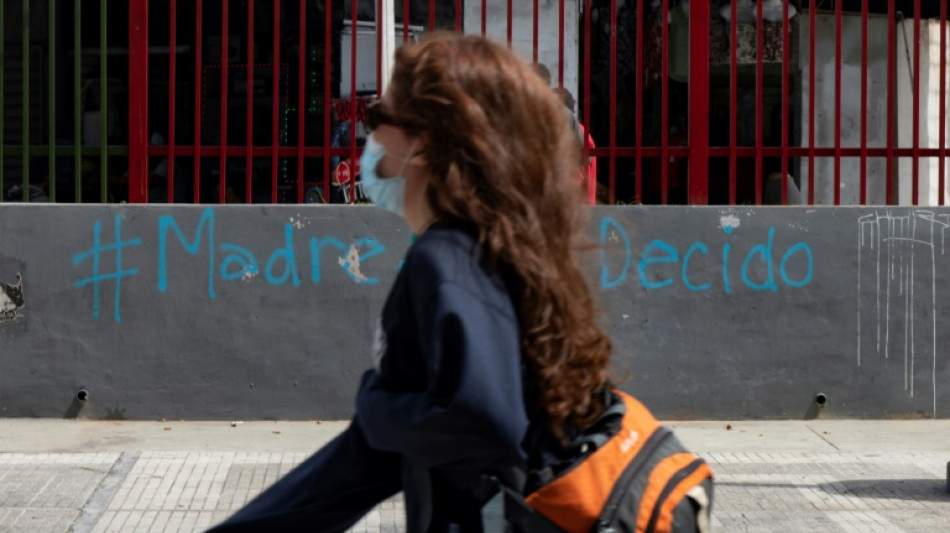
'Too many children' as women denied abortion in Venezuela / Photo: © AFP

 Trump renames AI "super intelligence," rejects international oversight
 Trump rejects international regulation of AI

 How is the EU approaching record fuel prices?

 Sri Lanka's Colombage strikes on debut as England dismissed for 265 in first ODI

 Hurricane Polo strengthens to top category 5 off Mexico

 11 hurt as teen opens fire outside school in western Turkey

 UN chief says 'Big Oil' treats atmosphere as open sewer

 Tunisia says 2026 summer hottest on record

 England's Rashid out of Sri Lanka ODIs with hand injury

 Houthis accuse Saudi Arabia of deadly strikes as thousands flee

 Stocks climb as oil slides, AI buzz returns

 India cricketers win in style as Afghan savours 'special' Games silver

 La Liga president hits out at Real Madrid refereeing 'conspiracy' claims

 MEXC Launches “Real Stocks, Real Friends” with Rewards for Bringing Friends to Wall Street

 Mbappe continues media push for Ballon d'Or recognition

 Stocks rise on AI buzz, oil prices cool
 India narrowly survive huge scare against minnows Japan

 Missing F-35 fighter parts 'not sensitive', says Australia minister
 Cambodia showcases scams crackdown with global conference
 Afghan cyclist who disguised herself as man wins Asian Games silver

 Typhoon Dujuan leaves four dead in Japan, 45,000 houses without power

 G7 leaders condemn Houthi strikes on Saudi Arabia
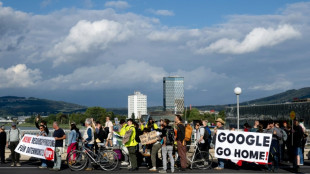 Google data centre sparks protests in Austria

 Shin Ohashi: Junk food-loving teen and Japan's next big swimming hope

 Stocks rise on AI buzz, drop in oil prices

Maria drank a concoction of ground avocado seed, "bad mother" and other plants to try and terminate her pregnancy in Venezuela, where abortion is illegal. It did not work.
Only people with money can access illegal, private abortions in the country, and Maria is not one of them.
Aged just 26, she lives with two of her five children in extreme poverty in Caracas in a house shared with other people.
The child she tried to abort is now three years old. She had another since then, 10 months ago.
"One wastes one's life giving birth, giving birth, giving birth," said Maria, who asked to use a pseudonym for the story.
Abortion is punishable by up to six years in jail in the fervently Catholic and conservative country. Using contraception, meanwhile, is widely viewed as sinful.
The procedure may be performed legally to save the life of the woman, and penalties can be reduced under Venezuelan law if a termination was intended to save the "honor" of the woman or her family.
"I didn't want to have more children. I had too many children too quickly," Maria said of her failed abortion attempt.
"I tried to get it (the fetus) out... but it didn't work," she told AFP.
The recipe of avocado seed and spider plant -- called "mala madre" or "bad mother" in Venezuela -- was given to her by a friend who had used it successfully before.
To get a professional, albeit illegal, abortion from a private doctor in Venezuela can cost as much as $1,000.
- 'Not a priority' -
Almost half of all pregnancies in the world are unplanned, of which about 60 percent end in abortion -- 45 percent of them unsafe, according to the World Health Organization.
Venezuela has no official statistics on terminations, but the country of nearly 30 million people is far from riding the pro-abortion "green tide" that has swept over Latin America in recent years.
In Argentina, Colombia, Cuba, Mexico and Uruguay the practice is legal. But it has never been a political priority in Venezuela's 24 years of successive leftist, populist, socially conservative, "Chavista" governments.
Parliament in 2021 promised new abortion legislation, but nothing has been announced to date.
"It is not a priority (in Venezuela) that women are dying from unsafe abortions," said Belmar Franceschi, executive director of the NGO Plafam which provides sexual and reproductive guidance.
In 2021, a teacher was arrested for helping a 13-year-old girl get an abortion after she was raped. The girl's assailant was never arrested, but the teacher spent nine months in custody.
In May this year, police dismantled a feminist activist group that authorities described as "a gang dedicated to promoting illegal abortion."
Many activists have ceased their activities since then, and a number of privately run hotlines have disappeared.
While demonstrations calling for safe, legal abortion in Venezuela have multiplied in recent years, the anti-abortion movement has grown as well.
A recent march against abortion organized by Evangelicals gathered hundreds of people in Caracas.
- 'No scolding' -
Zarina, a 35-year-old musician who declined to give her real name so as "not to go to jail," became pregnant despite being on birth control.
She wanted an abortion, but did not know how to get one.
After being shown away by a clinic, she bought pills which she collected in a dangerous slum area, in secret. They didn't work.
Her despair grew as the weeks passed and doctor after doctor turned her away for not having the money -- between $400 and $1,000 to be paid upfront.
Finally she found a gynecologist who performed the procedure and charged her $500, paid in installments.
"I felt safe," Zarina told AFP of the treatment she is grateful to have finally received.
"Respect, human warmth, no pain, no psycho terror, no scolding" -- a luxury very few in Venezuela have access to.
J.Fankhauser--BTB