French inventor of abortion pill calls Wyoming ban 'scandalous' / Photo: © AFP

 Tunisia says 2026 summer hottest on record

 England's Rashid out of Sri Lanka ODIs with hand injury

 Houthis accuse Saudi Arabia of deadly strikes as thousands flee

 Stocks climb as oil slides, AI buzz returns
 India cricketers win in style as Afghan savours 'special' Games silver

 La Liga president hits out at Real Madrid refereeing 'conspiracy' claims

 MEXC Launches “Real Stocks, Real Friends” with Rewards for Bringing Friends to Wall Street

 Mbappe continues media push for Ballon d'Or recognition

 Stocks rise on AI buzz, oil prices cool

 India narrowly survive huge scare against minnows Japan

 Missing F-35 fighter parts 'not sensitive', says Australia minister

 Cambodia showcases scams crackdown with global conference
 Afghan cyclist who disguised herself as man wins Asian Games silver
 Typhoon Dujuan leaves four dead in Japan, 45,000 houses without power

 G7 leaders condemn Houthi strikes on Saudi Arabia
 Google data centre sparks protests in Austria

 Shin Ohashi: Junk food-loving teen and Japan's next big swimming hope

 Stocks rise on AI buzz, drop in oil prices

 China's robot dancers limber up for America's Got Talent final

 Despite military might, Saudi struggles to crush the Houthis
 Trump to tout deals, defend Iran war in UN speech
 Sri Lanka to issue verdict in landmark Easter attack trial
 Macron says talks with Trump on Red Sea, Ukraine 'constructive'

 Green policies just good politics, says UK minister
 Bardot auction in Paris fetches nearly one million euros

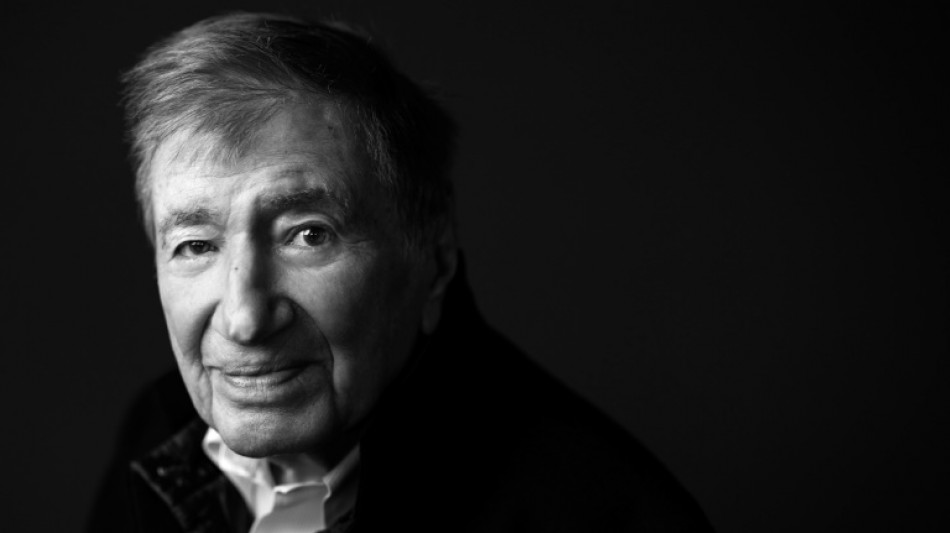
French scientist Etienne-Emile Baulieu, known as the father of the abortion pill, said it was "scandalous" and "a setback for women's freedom" that the US state of Wyoming has banned the drug.
Baulieu, who at the age of 96 is still working on treatments for depression and Alzheimer's, did not mince his words about the ban.
"It is a setback for women's freedom, particularly for those in the most precarious position who do not have the means to go to another state" to get an abortion, he told AFP in an interview.
Last week Wyoming became the first US state to outlaw the use of the abortion pill.
It was the latest point marked for conservative anti-abortion activists in the United States after the Supreme Court overturned the constitutional right to the procedure last year, leaving the policy to individual states.
Baulieu said he had dedicated a large part of his life to "increasing the freedom of women," and the ban was a step in the opposite direction.
Born in Strasbourg in 1926 to Jewish parents, Baulieu was raised by his feminist mother after his father, a doctor, died when he was a boy. At the age of 15, Baulieu joined the French resistance against Nazi occupation.
He went on to become a self-described "doctor who does science," specialising in the field of steroid hormones.
Invited to work in the United States, Baulieu was noticed in 1961 by Gregory Pincus, known as the father of the contraceptive pill, who convinced him to focus on sex hormones.
Back in France, Baulieu designed a way to block the effect of the hormone progesterone, which is essential for the egg to implant in the uterus after fertilisation.
"I wanted to make a contragestive," which stops gestation, he told AFP.
Partnering with the French Roussel-Uclaf laboratory, the oral drug RU-486, also known as mifepristone, was developed in 1982, providing a safe and inexpensive alternative to surgical abortion.
But there was a long battle for the drug to become authorised in the United States, where anti-abortion activists dubbed it the "death pill".
- 'Fanaticism and ignorance' -
In early March, French President Emmanuel Macron praised Baulieu's resilience when he presented the scientist with the Grand-Croix de la Legion d'Honneur, the top rank in France's honours system.
"You, a Jew and a resistance fighter, you were overwhelmed with the most atrocious insults and even compared to Nazi scientists," Macron said.
"But you held on, for the love of freedom and science."
Baulieu's wife Simone Harari Baulieu, a media producer in France, said "adversity slides off him like water off a duck's back".
She added that the recent "step backwards" in the United States was propelled by "fanaticism and ignorance".
Even at age 96, Baulieu heads into his office at the Kremlin-Bicetre University Hospital in the southern suburbs of Paris three times a week.
Stacks of photos, diplomas and binders contain "the work of a lifetime," the scientist said, adding that he still wants to "be useful".
His latest award is pinned to his blue suit, but Baulieu said he "never seriously hoped to receive such honours".
"It was a pleasure, but what interests me is improving people's health."
- 'Driving force' -
The team in his lab are continuing research he began years ago aiming to prevent the development of Alzheimer's disease, as well as treatment for severe depression, for which clinical trials begin in the coming months.
Baulieu said "there is no reason we cannot find treatments" for both illnesses, which have stubbornly evaded many previous attempts.
Julien Giustiniani, the team leader at the Baulieu Institute, which was created to finance research into dementia, said Baulieu was "always enthusiastic".
"He is a driving force for us," Giustiniani said.
Though Baulieu now uses a cane to walk, he exudes a tireless energy.
He partly credits using DHEA, a natural hormone produced by the adrenal gland, which Baulieu first described in the 1960s and has been touted as an anti-ageing supplement.
The causes that have dominated his life were "women, brain health and longevity," Baulieu said.
"I would be bored if I did not work anymore," he added.
N.Fournier--BTB